


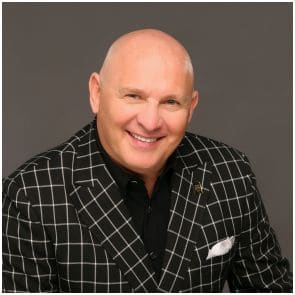
On Monday, February 16, at 6 a.m., Saga Communications President and CEO Chris Forgy was wheeled into an operating room at the Cleveland Clinic for open-heart surgery. He was 12 weeks removed from a holiday visit with his grandchildren, six weeks out from a PICC line threaded to just above his heart, and days removed from a stroke.
Nine hours later, the staph infection that had plagued him for months and nearly ended his life was gone. The next morning, he was in a step-down unit. By Friday, he was discharged. On March 12, he led Saga Communications’ fourth-quarter earnings call.
From February until April 15, Forgy had been away under a quiet announcement of indefinite leave that said nothing, but led to entirely too many rumors about one of radio’s most enthusiastic voices.
As is often the case with real life, the truth was, ultimately, far more incredible.
In this exclusive conversation with Radio Ink, Forgy tells the full story for the first time: what happened to his body and his resolve somewhere between the ICU and a hotel room near the Cleveland Clinic, and why he’s not going anywhere.
Chris Forgy: Back in early December, I went to see my grandkids. We celebrated an early Christmas on December the eighth, and two of my grandkids were fighting colds. I came back home and found out that, even though I’d had a vaccination for RSV, I caught RSV and pneumonia. I was treated with prednisone and fought through it. We had budget meetings, a lot of discussion, and I just kept going — I have a tendency to push through when I’m not feeling well and figure I’ll come out the other side. But I never really got better over those several weeks.
Then I found out through bloodwork that I had a blood infection — a staph infection. You get a cut on your arm, and the staph that lives on the surface of your skin finds its way into your bloodstream. Some cardiologists and others have said it may have been there for some time, just lying dormant. When I got sick from RSV and pneumonia, it started feeding — which is what staph does. It finds something to eat and goes to work. So it attacked my bloodstream, and I spiked a fever around 103 degrees.
They ran some tests and decided to put me on a PICC line. That’s a very small tube they’ll put into your bicep or arm to feed you intravenously with antibiotics. In my case, it ran down my arm and just above my heart, because they believed the infection was going to the heart. My wife had to administer it three times a day — morning, midday, and night — for six weeks.
So this is when the fun began.
My wife and I had a trip planned. I’d just gotten the PICC line out. We went to dinner, had a glass of wine, came home, went to bed. I woke up at four in the morning — 12 hours after they’d removed the line — with a 103-degree fever. The infection hadn’t gone away. It immediately came back and was feeding again. I was rushed to the hospital, and they began testing all over again.
Because I had previous open heart surgery in 2021, they were concerned that the staph was feeding on the bio valve that had been implanted. Those bio products have a tendency to draw staph — the staph loves them. So they’ll feed on them. So the hospital wanted to perform what’s called a TEE, a transesophageal echocardiogram — they go down the back of your throat to look at the back of your heart and determine whether the staph is feeding on any of your artificial parts.
Many miracles happened in this, by the way. The first miracle was the timing of that fever. We were planning to leave for that trip in about two hours. If I’d gotten the fever any later, we would have been on a plane to Florida — away from my doctors, away from my home base, with no support. I would have been in deep, deep trouble.
The second miracle: about 10 minutes before I was scheduled to go in for the TEE, I said to my wife — we were waiting in a little room at the hospital — I said, “I don’t feel good.” And I’ll be damned if I didn’t have a stroke right then and there.
And here’s the thing — 15 minutes later, they would have put me under for the TEE. If I’d had the stroke then, I probably wouldn’t be talking to you right now.
So they put me in stroke protocol. When it first hit, it affected my right side. I couldn’t move my right arm or my right leg. I had no feeling in either. I couldn’t put a sentence together. I couldn’t remember my wife’s middle name. I couldn’t remember one of my grandchildren’s names. I knew the answers were there — I could feel them — I just couldn’t pull them out. I was basically paralyzed on the right side of my body.
And then miracle number three: 12 hours later, I had no symptoms. Completely recovered. Feeling back in my arm, feeling back in my leg. I was talking normally. The hospital couldn’t believe it. They kept me an extra two or three days in stroke protocol just to be certain, because in the middle of all this, the infection was still wreaking havoc in my body.
After I cleared stroke protocol, my wife said, “Forget the TEE. We need to get him out of here because this isn’t working.” I was in a Detroit hospital, and she said, “We’re going to the Cleveland Clinic,” where I’d had the original 2021 open-heart surgery. They life-flighted me there.
At the Cleveland Clinic, they ran the full battery of tests and ultimately did the same TEE that Detroit had planned. They found that the staph was all over my artificial parts. I had a thoracic aortic aneurysm repair in 2021, and I had a bio valve as part of that. As I said, staph loves bio valves and anything synthetic.
The cardiac team came to me and said the only way to fix this is to open you up again, take all the synthetic parts out, and replace them with cadaver tissue — human parts — because staph won’t attack those.
I said I’m not doing that. I’m not going through that again. It took me about two days to change my mind. I didn’t have any real choice.
On February 16th, they performed the surgery. Nine hours. They cleaned out all the infection, removed the bio parts, and replaced them with human tissue.
Miracle number four: the surgery was Monday morning at 6 a.m. By Tuesday at 5 a.m., I was already in a step-down unit. I barely spent any time in the ICU. The surgeon said he’d never seen anyone respond to that kind of serious surgery as quickly. They started pulling tubes immediately. I had surgery on Monday and was discharged Friday morning.
My wife and I spent a couple of days at a hotel near the Cleveland Clinic, went back for a checkup, and then went home. That was February 16th. And on March 12th, I led Saga’s Q4 earnings call, which was one of the goals I’d set before I left. I told myself: I’m going to do the earnings call and the president’s letter, and otherwise lay low.
Well, that didn’t happen because one thing leads to another. I started working about three weeks out of the hospital, which was good therapy for me because I wanted to get back in for, really, one reason.
In the hospital, I had resigned myself that I was going to retire, that I was going to stop doing this. I was going to stop pushing myself so hard, healthy or not — because my heart is healthy, it just had an infection, and they had to deal with it. And then I had the stroke on top of that, which wasn’t fun and complicated a lot of things, but I was to the point where, you know, maybe God’s trying to tell me something.
I was ready to just call it quits and say, I’m not going to do this anymore. I want to live and not have to deal with the stress and the downdraft of the industry, because nothing is easy anymore, as you know. I was going to be done.
Then, about four days later, around the time I got discharged, I was looking through some notes, and I came across my Why Statement. Since becoming CEO of Saga, this is also the first time in my life that I’ve had a why statement consistent across both my professional and personal life. And my wife said something I’ll never forget: “If you’ve got your why, you can always handle the how.”
My Why Statement reads: To create a transparent environment where people feel safe, respected, challenged, and inspired, so that they can exceed their expectations and find fulfillment and success in their career and in their life.
That’s why I do what I do, and why I wasn’t going to quit or give up. Very quickly, I came back to: wait a minute. You love doing this. You’re doing this for your people — to grow people, to impact others in a positive way. And if you stop, yes, you’re easy to replace. But who’s going to carry on? So I didn’t quit, and I’m not going to.
We’d already put out an SEC announcement that I approved to put out, saying that I was on indefinite leave. And it created all kinds of speculation. “Is he in rehab?” I heard that, by the way. “Is he in rehab?” “Does he have cancer?”
This was not only outside of our company, it was also inside of our company because it was very secretive. Chris is out. Don’t bother him. He’s on a limited pitch count. Even those of you who have very close relationships with him, don’t reach out to him. And so there was a lot of uncertainty as to, “My gosh, is he ever coming back?”
So when I did come back, I said to our team — we put out an announcement that I was away, it stands to reason we should put out one saying I’m back. And when we do that, I want to be clear and open and transparent about what happened. That’s why I’m doing this now and with you. I want to tell this story, and I want to tell it honestly.
Radio Ink: During that earnings call, it was very apparent that it was an emotional moment for you, even without knowing these details. You opened with a story, as you often do, but it was a story about mission and mortality. It opened at [Saga Founder] Ed Christian’s funeral. That’s a bold topic for someone who had just skirted that line, himself. What was it like preparing for that call?
Forgy: I have a phrase I use: The end hangs on the beginning. In Latin, Finis origine pendet. When I was preparing for that call, I was still dealing with what it was — a near-death experience. Let’s call it what it was. I’m fortunate and blessed to still be here, because it could have gone very differently. It wouldn’t have taken much.
So, as I was preparing, I had to look back and ask: where did the strength come from to finish what Ed hadn’t finished when he passed? It came from a conversation I had with Al Lucarelli after Ed’s death. He said, “Whatever you do, do it fast, with purpose and with a mission.” I never forgot that.
I like to tell a story because I think it frames what you’re about to say. And I felt it was important to reflect on what I had gone through — because I was about four weeks out of surgery, still weak, still emotional, still uncertain, if I’m honest. So I had to go back to the beginning. The end hangs on the beginning. Start there to tell the story forward.
Radio Ink: What did this experience show you about the culture you’ve built at Saga?
Forgy: The whole time I was out, people like Wayne Leland, Sam Bush, Cathy Bobinski, Annette Calcaterra, our market managers, our sales managers, our media advisors — they were all holding the fort down. They knew what the mission was. It hadn’t changed just because I was gone. There was never any “what do we do now? Our leader’s out — now what?” They knew what to do because we’d established a culture.
And I’ll tell you — my top lieutenants were in tears. They were worried. They were upset. But they went and did the jobs they needed to do, and they did them impeccably. That means everything to me.
You really have to see it to understand the power of it. When you go into one of our markets, you can taste it and smell it. It’s everywhere. And what this experience showed me — gratefully — is that I am replaceable. The wheel didn’t fall off. That’s deeply rewarding. It means we built something real.
We pour ourselves into our people, we put them first, we listen, we hear them, we give them a voice. People feel safe. They can say just about anything without fear of retribution. And if it doesn’t work out, we move on — but at least everyone’s been heard.
Radio Ink: You mentioned multiple miracles, and you’re healthy enough to return to Saga. How are you feeling these days?
Forgy: I feel excellent. I really do. My wife is still amazed. I’m a quick healer — the scar from the open heart surgery healed in no time. I start cardiac rehab this week, and I think it’s the right thing to do, though honestly, I feel great. I’ve been working 8:00 a.m. to 6:30 p.m. every day for the last few weeks. I had to work into that and ease into that, but my energy is good. I’m eating right, lost some weight, and I feel more resolved than ever to finish what we started.
Radio Ink: Well, we’re certainly grateful and thankful that you’re okay and still here with us.
Forgy: I don’t want this to be about me — that’s genuinely not why I’m doing this. I want to use it as a platform. The power of prayer, for one. I heard from people I hadn’t spoken to in 30 years. I probably received 200 cards. Whatever your spiritual position or religious affiliation, prayer is a powerful thing — and I felt every bit of it.
There’s a line I share with our team when we talk about soft skills and building relationships — it’s from the Wizard of Oz, when the Wizard is granting the Tin Man a heart. He says, “A heart is not judged by how much you love, but by how much you are loved by others.” I couldn’t have felt that more deeply than I did going through this.
This, to me, is a privilege. It’s something that I’ve spent 45 years doing. I don’t know what else I would do. So I have a lot of gratitude and respect for people I work with and people that I compete with. Because they’re doing the hard work too. So we get to do this as a privilege. And I don’t think that a lot of times we look at it that way. It could all go away tomorrow because it’s not guaranteed.
Every day is a gift, and we should treat it as that. We get to wake up in the morning, we get to go to battle and stop the naysayers about radio. We get to go out and defend our position, and then we wake up and do it again.

My long-time sales mentor and forever friend, the late Dave Gifford had great respect for Saga Communications. Even though I don’t know your Mr. Forgy, I can see why Giff spoke so highly of Ed, Warren, and all the worker bees at Saga.
David Aamodt
Seattle, WA.
Chris you are a walking miracle for sure! I love your WHY statement and that it compelled you to keep going when no one would have judged you for getting out. I can only imagine how all that you went through changes your perspective, probably making you an even more effective leader and mentor. This story alone should be an inspiration to anyone!
When we think we can’t…. God says…. watch this!
So proud to work with you Chris Forgy. You lead by example. Never…. ever…. give up!
Miracle Worker…Hallelujah…
Comments are closed.