


In an era where automation dominates much of the radio industry, WVLG, serving 160,000 retirees in The Villages, FL, offers a distinctly different model – one that leans into live, local talent, listener relationships, and an unapologetically analog approach to community.
In part two of our conversation, Radio Ink sat down with The Villages Media Group’s Steve Rosen to explore how WVLG’s structure supports a deep bench of experienced on-air talent, how it has maintained its commitment to live radio in a digital-first world, and what lessons other broadcasters might take from a station where “your neighbors are on the air.”
Radio Ink: WVLG almost has a college radio feel, and I mean that in the most positive way. 16 hours of live shows every day with a roster of more than 20 hosts. What’s the structure behind the scenes?

Steve Rosen: We’ve been told in no uncertain terms: we will never be a voice-tracked station. Now, we do voice-track from 10p to 6a – because that makes sense; everyone’s asleep in this market. But daytime and evenings? We’ll never be a voice-tracked radio station. I need live talent. For the last 20-plus years, people have come and gone, obviously. But I think the staff we have right now is probably the best.
It’s pretty cool when you hear Freddie Brooks – Phoenix, Atlanta, Cedar Rapids. He’s been all over, major market talent, and he’s our afternoon guy two days a week. Rick Mitchell, who was in Syracuse and Albany for 40 or 50 years as a morning guy – he’s our Friday and Saturday morning guy. So yeah, it’s kind of cool to have that kind of talent.
I think the Villagers get a kick out of it, too, because they hear people their own age. It’s not a 22-year-old talking to a 62-year-old – it’s their neighbors talking to them. In fact, several of our imaging statements are along the lines of: “Your neighbors are on the air.” “Your friends are on the air talking to you.” It’s kind of cool.
Another thing: our jocks don’t have to worry about ratings. None of those usual concerns that everyday jocks have. If they mess up, they just keep going. Nobody’s calling them on the carpet. It’s just fun. It’s Disney World for adults.
Radio Ink: What’s the breakdown in terms of how people listen? You mentioned the station plays in many public spaces, like the squares. Obviously, folks are listening at home and in their cars – but what’s the spread between digital listening and over-the-air?
Steve Rosen: That’s a great question. I’d say our streaming numbers are going through the roof. People are listening in their golf carts. There are about 70,000 golf carts here for 160,000 people. They’re streaming through Bluetooth sound systems in their carts. They’re streaming while they’re golfing, running errands, driving around.
I’d say about 70% still listen on AM/FM and 30% stream regularly. We still have a lot of folks with transistor radios, FM sound systems in their homes, boom boxes – however you want to describe it.
During hurricane season, our streaming numbers went through the roof – until the power went out. Then it was AM that carried us through, 100%.
Radio Ink: Which is especially pertinent, given the AM Radio for Every Vehicle Act.
Steve Rosen: Yeah, I can’t speak for other broadcasters because I don’t know their markets, what kind of competition they face, or what their stations do. But I can tell you, based on our demographic, our location in Florida, and the fact that we’re a licensed AM station with two FM repeaters, AM is exceptionally important here, especially during severe storms. A lot of our listeners rely on it.
Radio Ink: Local news coverage is another important aspect of radio that’s often being left behind. What goes into that hyperlocal coverage for The Villages?
Steve Rosen: We don’t report any negativity. We’re a “happy, happy, joy” kind of operation – think Entertainment Tonight on both radio and TV.
On weekends, we do the WVLG Daily Sun News Update from the VNN newsroom, because we’re all about cross-promotion. That way, we have all three of our brands represented in one segment. It’s basically an update of what’s in the paper that day.
Our news is hyperlocal. We have the “Go-Go Road Report” that airs in the morning. We’re not allowed to say “traffic.” We don’t want to use that term. So it’s the Go-Go Road Report, which lets folks know where the slowdowns are, like repaving or replanting. We have fun with it. But if there’s something major, like a power outage or traffic lights out, then we step in. We’ll say, “There’s a slowdown on 466, you might want to find an alternate route.”
Radio Ink: You mentioned the paper and cross-promotion. A lot of radio companies are now trying to balance or integrate online news. What’s the digital news relationship like for you all?
Steve Rosen: Actually, we just took down our Facebook page. We just removed our website content. We’re rebuilding the website to be a promotional tool for sales and marketing. We’re very cautious about letting others take our content. You have to subscribe to it.
Our content is in print. Our news stories are in print. Down here, print is still sexy. It’s like ‘70s or ‘80s TV – when the guy in the movie is reading a newspaper, because it’s the cool, mature thing to do.
Phil Markward is the president of The Villages Media Group. He started all of this. He’s responsible for the growth of the radio station, the TV station, and the newspaper. When he took over 20-some years ago, the newspaper was a one-sheet bulletin. Now it’s a 72-page full paper. The radio station has grown exponentially. The TV station was big, then they downsized it, and now it’s getting big again under some different ideas I brought in. Dan Sprung is our General Manager. Cory Bollinger is my direct supervisor.
We stream our radio station. We stream our content. But we don’t necessarily promote it as such. This is a traditional media market, and it will be for probably the next 10 to 15 years.
Radio Ink: So, as someone with decades in the business, what’s a lesson you’ve learned since taking over WVLG?
Steve Rosen: The biggest lesson, and something I’ve always believed, is that there are two sides to your business: the numbers side and the personal side. Most of the time, we’re so focused on numbers. But numbers don’t happen without people.
Anyone can make numbers look good on paper, but they won’t grow or feel good if people aren’t engaged in your product. Anyone can buy a product. Anyone can listen for 30 minutes. But will they listen for six hours? Will they tune in when the hurricane hits? Or will they turn on the TV? National news?
If you’re not part of their everyday fabric, the numbers don’t matter. That’s what I’d say.
I’d love to take a bunch of AM stations and just help them realize they should go back to the way it was. I think AM station owners need to do a better job proving their value. And how do they do that? Again, it’s about connectivity. It’s the lost pets. It’s having live people on air. It’s communicating with the audience on their level: cognitive and emotional.
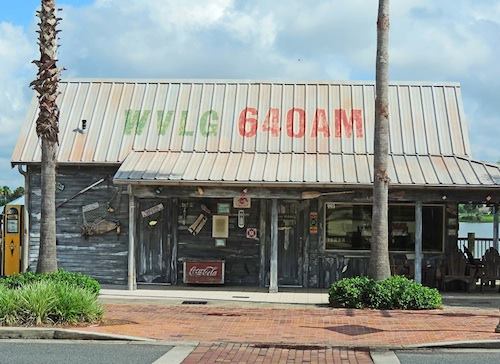
Our studio is in a small building in Lake Sumter Landing, with big windows facing the water – it’s even part of our legal ID. People walk by and wave – with all five fingers, which is great, not just one! They’re excited to see who’s on the air and what they look like.
My biggest fear is that 10 years from now, I’m not going to have many people to choose from to add to my staff. Because you’ve got one guy doing seven radio stations now. You don’t have seven people doing seven stations. It’s one person. And that limits the talent pool for the next five, ten, fifteen years.

No negative news? That’s really informing your public. Good grief.
Well Done Steve Rosen!!! I remember when The Villages was 3 golf courses by Arnold Palmer & Nancy Lopez. Keep doing it – Tim Slats
Love what is now a retro Radio concept. If my Oct to April months weren’t three hour away, I’d be on your doorstep.
Comments are closed.