

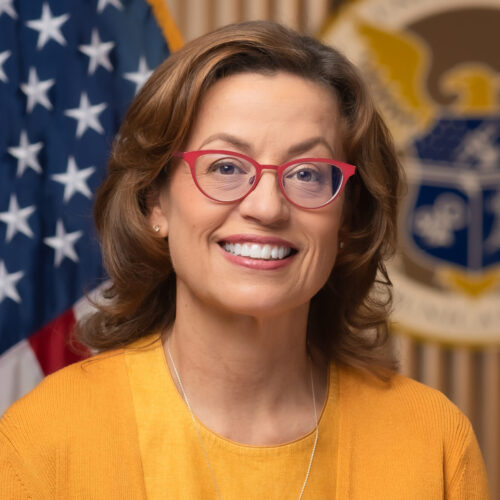
Even with the FCC in stasis during the government shutdown, Commissioner Anna Gomez is on the move. On her First Amendment Tour, she’s warning that the 2022 Quadrennial Review and any rollback of radio and TV ownership caps could silence local voices.
Acknowledging that broadcasters no longer enjoy the once-lucrative “license to mint money,” Gomez pointed attendees at the University of Mississippi’s Meek School of Journalism and New Media to the competitive squeeze from digital platforms and cable. Still, she argued consolidation is not the cure.
“Each merger or acquisition reduces the number of voices that may be heard. Each closure of a local newsroom makes our discourse narrower and our communities weaker,” Gomez said. “The FCC’s proposal to lift these ownership caps isn’t about innovation or competition; it’s about consolidation of viewpoints solely for financial gain.”
She suggested ownership rules might be tailored to specific markets, but stressed that national groups seeking further roll-ups are not the ones in need of regulatory relief.
Gomez also warned that cutbacks in public media funding, paired with commercial consolidation, would strip communities of reliable information sources, saying, “It is not good for us to be fat and happy and ignorant of what’s happening in our local governments, our local communities. And that is what I worry about with all of this consolidation.”
The Commission’s lone Democrat had additional matters to address, particularly around the firestorm of First Amendment raised by FCC Chairman Brendan Carr’s comments that led to the temporary suspension of Jimmy Kimmel. Gomez reminded her audience that Congress prohibited the FCC from censoring broadcasters when it established the agency.
“We take an oath when we are sworn into office to uphold the Constitution. And that means upholding the First Amendment,” she remarked. “Congress thought it was so important that we ensure that we honor the freedom of speech. They added another section of the Communications Act, which authorizes us, that specifically prohibits us from censoring broadcasters.”
Despite a fever pitch of partisan divisions in Washington, Gomez acknowledged, “One of the things that I’ve been heartened by with all of this whole Jimmy Kimmel thing and my First Amendment tour is the bipartisan support for pushing back against this administration’s violation of the First Amendment. It is a traditional Conservative platform to protect freedom of speech.”
When it comes to Carr’s FCC frustration with what he sees as the Commission’s retreat from enforcing broadcasters’ statutory duty to serve the public interest, Gomez reiterated the call she made after the FCC’s September Open Meeting to begin a rulemaking that would formally define broadcasters’ public interest obligations. She noted that the longstanding principles of localism, competition, and diversity of viewpoints remain too loosely applied.
Gomez did not address the comment made by Chairman Carr, suggesting that the FCC could one day decide to offer an auction for broadcast licenses without public interest obligations.

