


Radio’s “new normal” is testing old assumptions about where audiences listen. Even as commuting rebounds, a majority of daily audio time still happens at home, raising new questions about how stations keep listeners engaged beyond the car.
Edison Research’s latest Share of Ear report points to a listening pattern shaped by enduring in-home habits. In Q3 2025, Americans spent 55% of their daily audio time listening at home, holding above pre-pandemic levels for the third consecutive year.
Between 2015 and 2019, roughly 52% of daily listening took place at home. That share rose sharply to 59% in 2020 as lockdowns and remote work shifted behavior, peaking at 60% the following year before easing into a steady range between 54% and 56%. Edison said the stability suggests a lasting behavioral reset, with many listeners now dividing their day between home and work locations.
Analysis from Katz Radio Group using YouGov data reinforces that shift. As of July, more than 70% of employed adults now work outside the home, a 29% increase since 2020, marking a broad return to in-car listening, as well. Commuting is strongest among adults 65 and older (78%) and those aged 30–44 (74%), while workers 18–29 have seen the sharpest rebound, up 41% since the pandemic’s peak.
This shift makes a difference, as the car continues to be over-the-air radio’s stronghold. In Q2 2025, drivers whose primary vehicles lack CarPlay or Android Auto spend 62% of their in-car audio time with AM/FM. In vehicles equipped with those systems, traditional radio remains the leading choice but falls to 47% of total listening.
As noted, even as Americans spend more time back on the road, in-home audio remains central to daily life, and that may tie directly into smart technology.
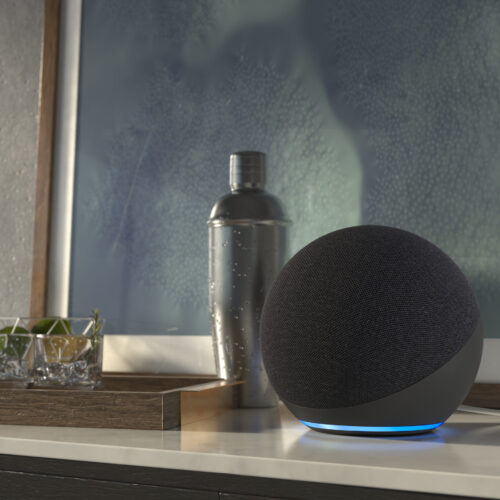
Previous Share of Ear findings show that smart speakers have become the dominant streaming platform for AM/FM radio, with listening minutes up 73% since 2020 and household ownership nearing 75%. Connected TV streaming has increased 23% over the same period, while mobile is up 8% and desktop use has dropped 31%.
Generational patterns reveal how these devices define listening habits. Boomers account for 38% of all smart speaker streaming minutes, followed by Gen X at 36%. Millennials represent 17% and Gen Z 9%. Meanwhile, Gen X continues to lead desktop listening, and Gen Z drives connected TV use, accounting for 38% of total streaming minutes in that category.
Together, the findings point to an audio ecosystem that reflects both the endurance of at-home listening and the reemergence of the daily drive; a “new normal” that keeps radio present wherever life happens.