


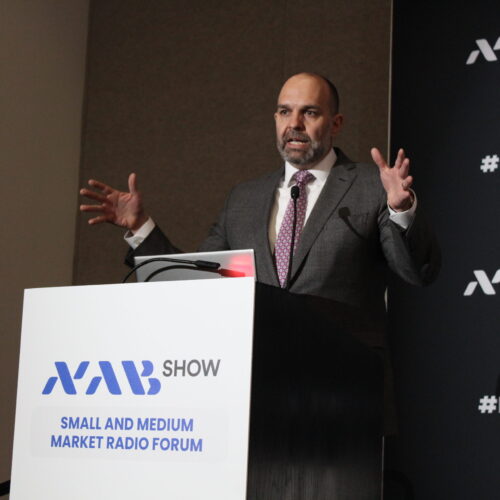
NAB CEO Curtis LeGeyt says the industry is “on the doorstep” of passing the AM Radio for Every Vehicle Act, describing a legislative environment where two of radio’s biggest priorities on Capitol Hill are expected to cross the finish line by December 31.
Speaking with RAB President and CEO Mike Hulvey on the Radio on Main Street podcast, recorded last month on the 2026 NAB Show floor and released on Wednesday, LeGeyt was direct: “I am very optimistic that we are going to get some modernization of these local radio ownership rules as well as passage of the AM for Every Vehicle Act this year.”
As for precisely when, LeGeyt was careful. “The exact timing on that’s a little above my pay grade because unfortunately I don’t have a vote in the Congress and I certainly don’t have one at the FCC,” he said, “but I can tell you just based on the level of engagement and want to break through this on behalf of our champions in Washington, DC, including the chairman of the FCC on this issue of ownership, very, very confident on where we are.”
What the dashboard fight is really about, LeGeyt stated, is not nostalgia for AM but control of the in-car experience. “In the dashboard, in the car, I think there’s an increasing understanding that the automakers and the tech companies have every incentive to monetize what’s happening in the automobile. And AM and FM radio sit outside of that ecosystem. Policymakers see that. They know it.”
“I always say that across our litany of advocacy issues that the NAB and our Broadcasters advocate, our adversaries are some of the most moneyed interests in Washington, D.C., whether you’re talking about the large wireless companies or big tech or the entertainment industry,” LeGeyt added. “And our competitive advantage will never be able to outspend those entities. But our competitive advantage is that policymakers live and breathe our story when they go home.”
Looking past the current legislative cycle, LeGeyt identified AI content scraping and voice protection for local personalities as the industry’s next frontier, regardless of how Washington’s political composition shifts after November. He also pointed to AI’s growing role in advertiser marketing decisions as both a risk and an opening.
“The threats are coming from all directions,” LeGeyt commented in closing. “And the best way for us to push back on those threats is to tell our story effectively, remind our advertising partners, our vendors in Washington, policymakers of what we uniquely do that no one else in media is doing. And we won’t be successful telling that story if we’re not telling it together.”