


From the C-suite ceiling to the challenge of stepping away for a new baby, the road for women in Hispanic radio is full of both barriers and opportunities.
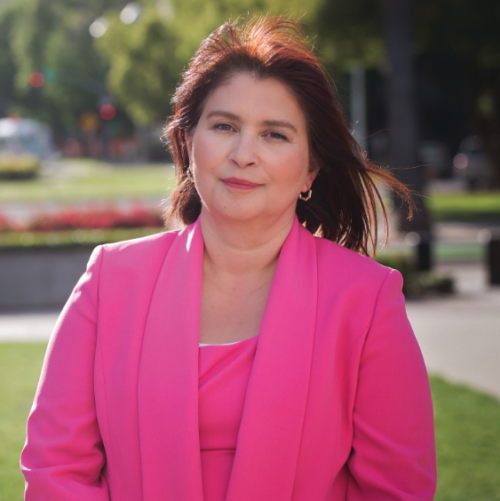
Radio Ink talked with Entravision Communications Sacramento SVP/General Manager Angie Balderas about what attendees can expect from “Women in Hispanic Broadcasting: Challenges and Opportunities,” at the Hispanic Radio Conference on May 27 at the Hilton Phoenix Tapatio Cliffs Resort.
Radio Ink: When you were creating the session for Hispanic Radio Conference, what was really your inspiration going in?
Angie Balderas: Well, I think there was inspiration and hesitation.
The hesitation was that I did not want to exclude 50% of the audience — men — thinking that this was going to be, quite frankly, a bitch session. I wanted to be able to do a session that’s going to be meaningful for everybody with takeaways for everybody.
The inspiration was to talk about how women have progressed in the radio industry. And certainly we have in terms of sales and management. Even at the General Manager level, there are more and more women, but we still have a lot of work to do in areas like programming and the C-suite.
So I wanted to look at everything. What are the opportunities? What have women’s journeys looked like? Can we bring in a man’s perspective on the benefits and challenges of having a strong female presence at your radio station?
There are unique challenges that women have to deal with — real ones. For example, women get pregnant and have to step away. How do you navigate that? And at the same time, women who choose to be mothers bring a tremendous skill set with them. You learn to do a lot of things at once, to multitask at a very high level. So the employer, the company, the organization gets the benefit of a very well-rounded employee.
Radio Ink: You alluded to your panel, and it’s a wide variety of experiences and positions. How did you go about putting the team together?
Balderas: I wanted to look at people who had gotten into the radio industry in a non-traditional way. The traditional path, especially for women, was typically an entry-level position — a receptionist, an intern, an on-air personality, or the traffic department. I wanted people who took a different route.
Claudia de León was actually studying to be an attorney at Ohio State when she got into radio and then moved into ownership, which is another barrier that women have broken slowly but surely. Back when I owned a radio station in the early 2000s, a local newspaper asked me how many women owned radio stations in the United States, and quite frankly, I didn’t know, because I had never thought of it that way. So I did some research.
This was around 2004, and at that time, there were only 300 women who owned radio stations, and only nine of them Latinas. Unfortunately, I think if we looked at those numbers today, they’ve probably inched up, but not by very much. Claudia’s journey is unique, and her current situation, where she is both a corporate employee and an owner working with Urban One, covers a broad spectrum.
Shirley Davenport is interesting because she came from TV and actually took a step back to get into radio and move into management, which is a different track entirely. And Tomás Martínez has had a lot of experience with different media companies, mostly on the corporate side, and most recently with Solmart Media, which he runs with his wife in central Florida.
I really wanted to tackle this from different perspectives, to have an honest conversation about the challenges and opportunities that women face.
Radio Ink: In our Hispanic radio issue, which is out now, Hispanic radio’s culture of family and community repeatedly came up in conversations. Those feelings apply outside and inside the station walls. Does that culture sometimes make it harder or easier to have honest conversations about gender equity?
Balderas: Both.
Radio Ink: In what sense?
Balderas: I think the sense of family depends on the makeup of your station. We have people attending the conference who might have six or seven English-language stations and only one Spanish station, while others are primarily Hispanic broadcasters. There is that tradition of coalescing and trying to treat it as a family, and I think that’s good. But like in a lot of families, if not tempered correctly, it can create dysfunction, right?
As females specifically, we have to be very careful not to get tagged as the mother hen of the radio station or organization, because, unfortunately, once somebody pegs you a certain way, it’s really hard to shake.
For those of us who are Hispanic and speak Spanish, this isn’t anything different — it’s how we live our normal lives. Where I notice the difference, or where I get the feedback, is from non-Spanish speakers or people who’ve worked at general market stations. They’ll say, “Hey, this is different here” — the way people treat each other. But there is respect, there is love. And like all families, there is sometimes a little dysfunction, a few disagreements. That’s just how families work.
Radio Ink: And so I know the session title names both challenges and opportunities. You’ve talked about a few of the challenges. What are some of the opportunities for female leaders right now in Hispanic radio?
Balderas: Going back to what I mentioned earlier, there are things that women have to deal with that perhaps men don’t — obviously giving birth, having children. Fathers are involved as well, of course, but I think the unique skill set that comes with that, being able to do more with less time and being more efficient, makes women very capable in terms of scaling and taking on more responsibility.
Women get a lot done because we take on so much. We’re the moms, we’re the wives, we’re the daughters. I know this in my own life, in myself. We’re the caregivers. We’re the ones making sure our parents get to the doctor, handling all these responsibilities — the team mom for the youth sports organization. Busy people get things done, and people tend to gravitate toward those who can get things done.
I think that is the biggest value. And not only that, it’s the passion. The same passion that women have for their families, for their loved ones, they bring to this industry. I see it all the time — not just in the sales arena, but in other positions within radio. Definitely on air. Some of the women who will be at the conference, successful people like Dana Cortez and Chiquibaby — look at those women. They’re mothers. They’re all making it happen, and they have such fantastic stories. So I think that the path for women is great, not without its challenges, not without its pitfalls, and certainly not without banging on and busting through a few doors for sure.
Radio Ink: As you said, this isn’t just a panel for women in attendance at Hispanic Radio Conference. This is for everyone.
Balderas: Everybody. And I want to encourage the people who are coming to the conference to ask us the tough questions, because I really want this to be an interactive — I want this to be an interactive conversation for sure.
Radio Ink: And what are you hoping that attendees leave with after this session?
Balderas: I hope that — because there are a lot of managers, owners in the conference — I hope that maybe they reflect on their current situation with their current staff and maybe look at the women within their organization and really open their mind to that they’re — what they could do more for them and what other opportunities there are for them.
I hope for the women who are in the audience who maybe have a little bit of self-doubt or are looking to make that next leap, whether that’s into management, ownership, or something else, that they see themselves in the people who are up on stage, that they’re able to visualize “I’m not limited to where I’m at. I can do better. I can provide more. I want more.
You have to want more, right? So if somebody wants more, that more is available to them. If we as a whole group can achieve that, then I will feel like we’ve had a great success.
It’s not too late to secure your seat at Radio Ink‘s Hispanic Radio Conference. Register now.