

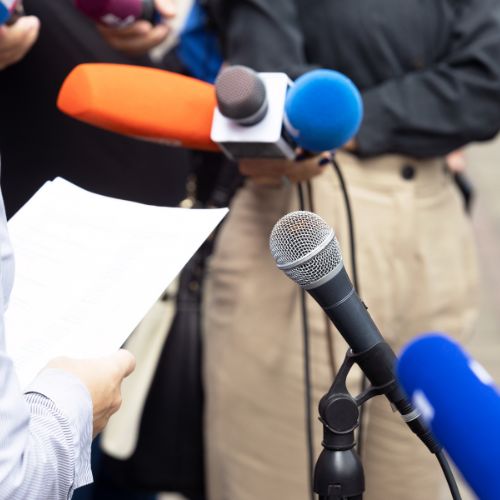
What makes someone a journalist in 2025? That’s not just a philosophical question; it’s an audience filter that’s reshaping who listeners trust, what voices cut through, and how radio newsrooms are being judged, especially when it comes to objectivity.
A new Pew Research Center report sheds light on how Americans view journalists in the digital age, revealing shifting expectations, growing skepticism, and a widening generational divide that directly impacts radio newsrooms.
While 59% of US adults say journalists play an important role in society, nearly half (49%) believe their influence is declining – a reality that affects radio reporters and anchors competing with an expanding range of digital-first news voices.
The study shows that traditional journalism, including radio news reporting, continues to carry weight with audiences. Fifty-nine percent of Americans consider radio reporters journalists, compared to 65% for TV anchors and 79% for newspaper or website writers. However, newer platforms are blurring the lines. 46% of respondents say podcasters qualify as journalists, 40% say the same about newsletter writers, and 26% classify social media news creators in that category.
Younger adults are significantly more likely to see podcasters and influencers as journalists, suggesting long-term shifts in how audiences evaluate credibility.
Pew’s findings show stark partisan divides in how Americans view journalism, affecting radio’s role as a primary source of local news. Among Democrats, 62% report having at least “a fair amount” of confidence in journalists, compared to just 27% of Republicans. This skepticism extends to perceptions of bias. While 63% of respondents describe most journalists as intelligent and 58% say they are well-intentioned, 58% also believe journalists are biased.
Across platforms, Americans want accuracy and expertise above all else.
Ninety-three percent of survey respondents say honesty is essential in news delivery, and 84% say reporters should focus on accuracy. Topical knowledge ranks higher than institutional credentials: seven in ten respondents want news providers deeply informed about their beats, compared to just 31% who prioritize affiliation with a news organization and 25% who believe a journalism degree is necessary.
A 2024 Katz Radio Group study found radio is America’s most trusted mass medium, with nearly 80% of adults rating it trustworthy. This was almost triple the trust of social media, which trails at just 27%.
The Pew study also underscores evolving expectations around journalists’ objectivity. 51% Americans say it’s acceptable for journalists to advocate for the communities they cover, but a majority reject reporters publicly expressing political or religious views, especially on social media.
Younger listeners, however, are more tolerant of journalists who openly share perspectives, suggesting stations serving Gen Z and Millennial audiences may need different approaches than those targeting older demographics.
The full findings are available via Pew Research Center.