




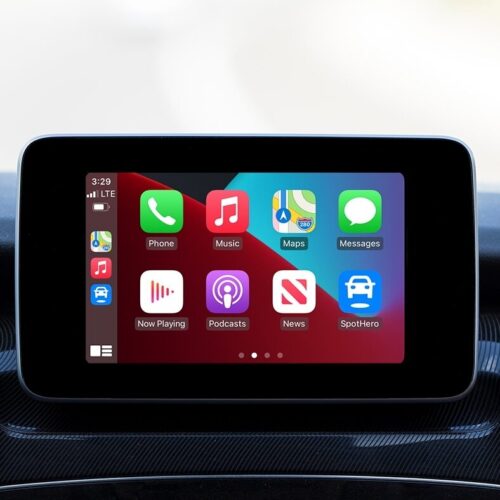
They’re no longer emerging dashboard technologies; Apple CarPlay and Android Auto have gone mainstream. And that shift is changing how Americans listen to audio in the car, with real implications for radio’s long-held leadership behind the wheel.
In 2024, Edison Research’s Infinite Dial study found that 32% of Americans have either CarPlay or Android Auto in their primary vehicle, up from 26% in 2023. While that number may still seem modest, the real headline is usage. Among adults 18+ who have been in a car in the past month and have access to these platforms, 83% use them, per Edison’s latest findings.
This rising adoption reflects a broader transformation of in-car listening environments.
A decade ago, infotainment screens were small, disconnected, and often clunky. Today, CD players have largely vanished, native AM/FM controls are harder to find, and drivers are increasingly immersed in smartphone-driven interfaces that don’t default to radio.
According to Quu’s 2025 In-Vehicle Visuals Report, only 26% of the top 100 best-selling vehicles now include a dedicated radio button, down from 36% the year prior. And with 74% of vehicles automatically resuming the last-used audio source at startup, AM/FM’s visibility depends heavily on what was playing last, or whether the driver chooses to switch.
Edison’s findings come as Apple and Google push deeper into the dashboard. In May, Apple introduced CarPlay Ultra, a system that replaces automaker interfaces entirely. Drivers can now control maps, climate, and even AM, FM, HD, and satellite radio without leaving Apple’s environment.
Android Auto is moving in the same direction, with its new “Car Radio” feature giving users access to terrestrial radio within Google’s interface.
As tech platforms take control of the dashboard, they have little incentive to surface free, ad-supported radio over paid content like Apple Music or YouTube Music. Edison’s data highlights the shift: 83% of users with CarPlay or Android Auto actively use them. That means broadcasters are now competing not just for ears, but for interface visibility where control, not content, increasingly decides what gets heard.
I never cease to wonder why folks seem surprised that an audio system would revert to the last played source. It isn’t new (for example reverting to the CD had been playing was standard), and it is the logical way for things to work.
Let’s focus on the very real concerns instead of getting sideline by this expected behavior.
Comments are closed.