


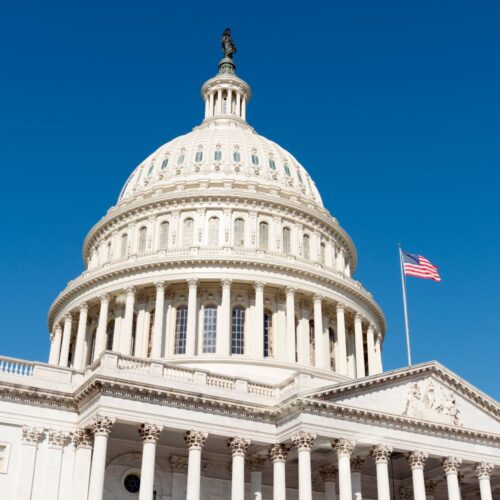
A renewed push to boost diversity in broadcast ownership is seeing daylight on Capitol Hill, as lawmakers in both chambers of Congress reintroduce legislation to restore tax incentives for the sale and donation of stations to women and other minority-led groups.
US Senator Gary Peters (D-MI) and Representative Steven Horsford (D-NV) are leading the bicameral effort behind the Broadcast Varied Ownership Incentives for Community Expanded Service Act, also known as the Broadcast VOICES Act. The legislation proposes to revive the long-defunct Minority Tax Certificate Program, a policy originally created in 1978 that fueled a 550% increase in minority ownership before it was repealed in 1995.
The Senate bill, which is currently unnumbered, is co-sponsored by Senators Richard Blumenthal (D-CT), Brian Schatz (D-HI), Tammy Baldwin (D-WI), Amy Klobuchar (D-MN), Martin Heinrich (D-NM), and Ben Ray Luján (D-NM).
The House version of the bill is dubbed H.R. 3879.
The new version of the bill would reestablish those tax incentives for sellers who transfer station ownership to qualified women and minority buyers. It would also create a separate tax credit for broadcasters who donate stations to organizations that train underrepresented talent for careers in station ownership and management.
Additionally, the FCC would be required to submit annual reports on diversity in broadcast ownership.
The effort comes amid ongoing concerns about the lack of representation in local media ownership. The FCC’s latest biennial ownership report shows women and minority groups continue to hold a small share of broadcast radio ownership. While there were modest gains in Black and Hispanic FM ownership from 2021 to 2023, white and male stakeholders remain dominant across commercial and noncommercial AM/FM stations. Overall, majority ownership by women increased only slightly, and white-majority control still accounts for more than 70% of stations.
The VOICES Act is backed by a coalition of civil rights and industry groups, including the NAB, National Association of Black Owned Broadcasters, National Urban League, Multicultural Media, Telecom & Internet Council, the League of United Latin American Citizens, and the Hispanic Federation.
Senator Peters commented, “Millions of Americans get their news every day through TV and radio. When broadcasters reflect the people they serve, it helps elevate different perspectives and stories that may not yet have been told.”