

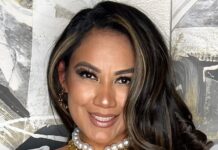


Will 2025 be the year when radio’s localism wins the hearts of advertisers? Will geo-targeting bring new life to local revenue? Will AI hit a wall when faced with radio’s human factor? With so many questions about the new year across the industry, Radio Ink took the conversation to Paul Kelly, the newly crowned CEO of audio ad agency AMA.
Radio Ink: This time last year you made some predictions for 2024 with AMA founder Steve Dunlop. You anticipated a surge in demand for audio, particularly ad-supported platforms. How accurate did this prediction end up to be? Where have you seen the most growth in audio this year?
Paul Kelly: Well, the stats are in, and I think it’s around maybe 14% growth in digital audio. That’s, I think, due to two major factors driving that growth: one being podcasts, of course, and maybe the second being a gradual shift from local and terrestrial radio over to digital audio – including terrestrial radio delivered via streaming. But I think that naturally contributes to the net aggregate growth for digital audio as a channel.
Radio Ink: There’s often a lingering question in our industry of how agencies perceive radio. What is the mood around terrestrial and streaming radio headed into 2025?
Paul Kelly: I saw Bob Pittman’s comments to his team at iHeart, and I think I can see why you continually remind people just how scaled radio is in the US. There’s a tremendously large audience for the medium. As he mentioned, that’s a great foundation if you can continue to serve that audience and transition them over time to a digital platform. I noticed that [iHeart] released a new version of their app, which is a significant update to a very, very important product.
Just using them as one example points to how the industry – and radio specifically – continues to innovate and move with the times while continuing to be one of the largest scaled media channels there is.
Radio Ink: Last year you highlighted a trend toward event-aware audio advertising using geo-targeting. Have you seen this gain traction this year?
Paul Kelly: We have. For event advertising, I think the election was a lightning rod for that. Of course, that doesn’t happen every year, but nonetheless, it was a very illuminating event for audio – perhaps podcasting more specifically. In terms of local, we’ve seen a lot of the large national advertisers who’ve always had local audio as an important part of their mix.
Think large QSR and large big box retail. While they’ve considered and looked at digital audio as a complement to radio, they really used our solution as a tool or a platform to effectively run a higher level of localization than what they’re used to, but with all the simplicity that comes with automated versioning.
So it has been very interesting for us because our platform is built to at least theoretically personalize every piece of creative across any number of simultaneous data parameters. It’s kind of like a matrix decisioning logic. We have a use case for a large group of advertisers that really heavily relies on pinpointing geo, of which I think there are 20,000 ZIP codes in the US, just to give you an example. That’s a lot of versions. So if you’re a large retailer, and you can version that creative while trafficking effectively one asset, that’s proven to be a tremendous benefit to those advertisers that were used to dealing with a high volume of asset management and a high level of complexity in terms of trafficking and delivering those assets.
So we’ve definitely seen localization be a core driver of our growth and a preeminent use case for our platform in digital audio for sure.
Radio Ink: Interesting – because radio is entering a brave new world on both fronts because the FCC just allowed radio to begin terrestrial geo-targeting via FM boosters. How could radio begin to harness this revenue on either side?
Paul Kelly: So the national advertisers, at least in my experience, have different types of offers based on region or it could be neighborhoods.
I’m thinking of telco. There might be Verizon Fios, which is not available everywhere, but it’s certainly available in a lot of places. Offers might change and the strength of coverage might vary relative to incumbents or competitors. So you have conquest messaging.
I think we can all agree, when we’re watching a national TV spot and it says a certain wireless provider has the best coverage nationwide, who’s number one nationally is really not that important to me. I just want service in my house. So you can imagine they’re just a national brand, but the value of being able to tailor that message to each local community is very powerful and beneficial.
Radio Ink: You’ve talked about the intimacy and memorability of audio advertising. With the growth of generative AI in content creation, how do you see this impacting the trust and intimacy that really give audio a superpower?
Paul Kelly: In truth, I see generative AI really being transformative for visual media. I don’t think enough is explained or documented about just how different visual and audio media are and how they work psychologically and in the brain. I don’t know who came up with the theater of the mind, but it’s something I refer back to quite often. With audio, there’s a much higher emphasis on delivering precision and specificity with the message. Of course, creativity loves constraints. And there are constraints with audio that you don’t have to the same extent with visual media, where you can play with many more aspects.
For me, generative AI with audio is a phenomenal tool from a creative perspective, generating ideas, thoughts, and concepts. I don’t see it as being a replacement to the extent that it almost could be with visual assets, where you have highly skilled graphic designers, but you also have image generation that is profoundly advanced and getting increasingly more sophisticated.
With audio, I see it more as an assistive tool, as opposed to seeing 50% of audio ads being fully AI-generated and consumers trying to identify whether it’s real or fake. I don’t see a compelling reason why that would be the case. That’s my personal view.
Radio Ink: Zooming in on 2025 – are there any new audio ad formats or strategies that you see dominating the year?
Paul Kelly: Dominating? No, but I certainly think that podcasting is going to continue to better monetize the mid and long tail. It’s still very much like a hits-driven business from a monetization perspective. We do believe that having some kind of dynamic native format that sits in between a host-read spot – which is very intimate, very effective, but of course difficult to scale beyond those really large shows for obvious reasons – and a regular, dare I say, static national audio spot, which is not very native.
I think there’s a lot of opportunity to curate a slate of similar titles found by a common theme or genre, and having some kind of native unit that demonstrates an understanding of what that listener is listening to. So I think podcasting will continue to innovate next year in terms of ad formats.
I also consider the connected car and the connected home. It may be beyond 2025 before the promise of that is truly realized, but I’m definitely bullish on that as well. I know that SiriusXM came out publicly about how much of a strategic priority the Connected Car is for them as a company and an organization. From where I’m sitting, I certainly wouldn’t argue with them.
Radio Ink: Are there any specific verticals or advertiser categories you’re seeing being of particular interest to audio in the year ahead?
Paul Kelly: Retail and CPG have always been, and you know as well as I do, very strong. We’ve also seen real growth in travel as a category. So going back again to the localization point, if you live in New York City, a travel operator is trying to stimulate a spontaneous weekend trip to Boston as opposed to San Diego, for example.
So travel being able to pick and select appropriate destinations based not just on a listener’s affinity or interest area, but more fundamentally on where they are has been really strong for us. Sports sponsorship is the same way. For the NFL, the NBA, MLB, their sponsors activate against those big tent poles and season-long initiatives. And so with a platform like ours, they’re able to keep pace with the season. Week after week, there’s new refreshed messaging talking about the upcoming game for the team that’s local to each listener, as opposed to a generic, “Hey, it’s another exciting football weekend.”
I just think that goes to prove why local radio is such a big thing to begin with. That interest, that passion, the community – those are very important access points for marketers and advertisers. That hasn’t changed. It’s just that digital media has put the emphasis more on what people have been watching or buying as a signal, and that’s of course valuable. But our clients have not lost sight of just the power of where a person is, their community, and their local team.
Local context is still very much prevalent.
Radio Ink: What are some of the biggest challenges that you foresee for audio at AMA in the year ahead?
Paul Kelly: We still as a channel lag behind social and digital video when it comes to attribution and measurement. There’s been loads of innovation on that front, and we work with all the third-party measurement companies. We understand the need to demonstrate performance, and now a lot of our clients use audio as a lower funnel tool. As we mentioned with travel, they’re interested in bookings. That’s been fantastic for us and our publisher partners because audio traditionally hasn’t been considered a lower funnel channel. It’s historically more about brand-building and awareness, so we’ve helped our publishers unlock and compete for budgets they might not ordinarily have been considered for.
But again, measurement and attribution will remain a challenge considering just how sophisticated and advanced things have become. Complaints about last-click attribution aside, it’s pretty hard to compete with something that says if you put a dollar in here, I’ll give you a buck fifty back.
Radio Ink: We’ll close with a two-prong approach – one at the penthouse and one at the ground floor. What do radio’s C-suite leaders need to know heading into 2025?
Paul Kelly: I would say the number one thing they need to know is that they have the ability, in my view, to fully transition and balance a linear audience and consumption with digital across a suite of audio experiences, which includes live, which of course is the strong domain of radio, but podcasting and the digital side that straddles that. It’s not live the way radio is, but it’s certainly topical. It has a shelf life that music streaming doesn’t.
Be able to cater to those different types of content and different use cases, and then aggregate all of that inventory for an advertiser to spread investment across those different touch points in a way that’s native to each.
They’ve got huge challenges in terms of the inherited tech infrastructure that they are now trying to update, but I absolutely believe that it will be a whole new world when audio can include podcasts, live radio, talk radio, sports radio, music streaming, all of the above, in a way that video is close to – consolidating between TV, CTV, and YouTube, which is often consumed as TV and is by many buyers now considered television.
I think the same can hold true for audio. Rather than being dispersed across different companies as is the case in video, I believe that those big operators like iHeart can really have that under one umbrella, which I think will be fantastic for the long-term health and sustainability of the channel moving forward.
Radio Ink: And the second prong – what do those selling directly to Main Street need to know?
Paul Kelly: What I’ve understood to be one of radio’s core value propositions – and one that I would very much agree with – is the resonance that talent have with the local community. When they speak, it cuts through and resonates, dare I say it, more effectively than almost any pre-produced ad creative can hope to achieve.
I think that we can naturally expect audiences to be increasingly sophisticated when it comes to tuning in and tuning out advertising that they want to engage with versus what they don’t. That’s an inevitable byproduct of just how much advertising we’re exposed to daily relative to just 10 years ago. But when you hear someone actually speak to you the way that local radio does, that’s truly, truly unique. I would endorse it wholeheartedly.


This is a great sharing
Comments are closed.