




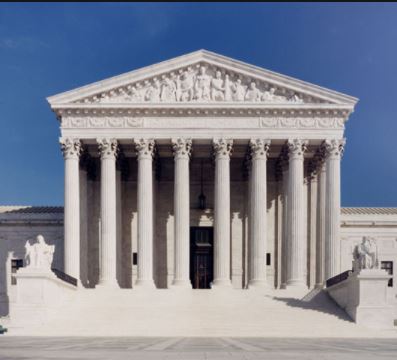
The US Supreme Court issued a landmark curtailing of FCC power today, ruling 8-1 that the Commission’s forfeiture process does not violate the Seventh Amendment, but in doing so, the Court made clear that FCC fines are far less binding than regulators have long implied.
The case, FCC v. AT&T, Inc., consolidated two challenges from AT&T and Verizon, each of which paid multimillion-dollar penalties after the FCC found the carriers had mishandled customer location data. Both companies paid under protest and argued the agency’s enforcement process, which makes no jury available, unconstitutionally stripped them of their trial rights.
Writing for an eight-justice majority, Chief Justice John Roberts ruled that the FCC’s forfeiture orders under the Communications Act do not create a binding obligation to pay. The Commission has no power to seize assets, impose interest on unpaid fines, or penalize a regulated party simply for ignoring a forfeiture order. If a company refuses to pay, the Department of Justice must file a civil enforcement suit and that suit, by statute, proceeds as a trial de novo, with a jury having the final word on the facts.
The ruling resolves a circuit split between the Fifth Circuit, which had vacated the FCC’s order against AT&T and found the agency’s enforcement scheme unconstitutional, and the Second Circuit, which had upheld the FCC’s order against Verizon. The Supreme Court reversed the Fifth Circuit and affirmed the Second.
For broadcasters, the implications are substantial. The decision establishes that a company facing an FCC forfeiture order can, in theory, decline to pay and force the government to prove its case before a jury; something no carrier had ever successfully done prior to this ruling. The DOJ retains discretion over whether to bring an enforcement action at all, and has a five-year window to do so.
The ruling may also complicate a pending challenge from one of the FCC’s most notorious pirate operators. Fabrice Polynice, the North Miami broadcaster behind “Radio Touché Douce,” had argued that the FCC’s $2.39 million PIRATE Act forfeiture against him violated his Seventh Amendment right to a jury trial, citing Jarkesy and the then-pending AT&T litigation as support.
Today’s decision cuts against that argument directly. The Court upheld the forfeiture framework as constitutional, finding that the availability of a de novo jury trial in any subsequent DOJ enforcement action is sufficient to satisfy the Seventh Amendment. Polynice, who has been operating on 90.1 FM without a license since at least 2012 and has accumulated forfeiture orders dating to 2013, did not dispute the underlying facts of his most recent violation, only his ability to pay.
Justice Clarence Thomas filed the lone dissent, agreeing with the majority’s constitutional framework but arguing that AT&T and Verizon deserved relief. At the time they paid, Thomas noted, the FCC’s own orders commanded payment within 30 days and explicitly asserted that its penalties were not subject to Seventh Amendment protections. The companies, he wrote, paid in good faith reliance on orders a court has now effectively recharacterized as nonbinding and the majority offers them nothing in return.
The Court left open whether the carriers might be entitled to a refund, declining to address that question.



Would this also have a negative impact on a license renewal or would this preclude the FCC from expediting a license renewal hearing?
Comments are closed.