

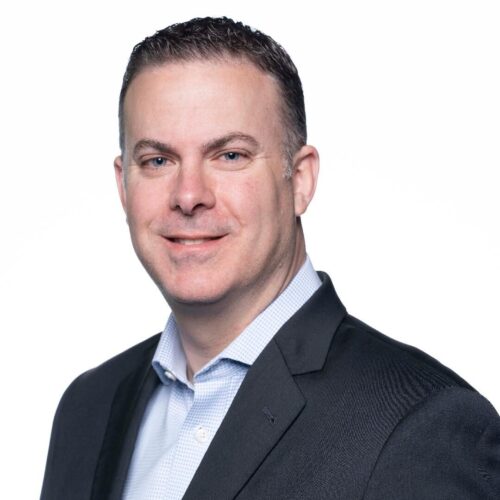
MediaCo Chief Revenue Officer Brian Fisher is heading into 2026 watching two forces pull at audio in opposite directions: resilient listening on one side, and a recovery in advertising that has not moved evenly across categories on the other. So how does radio keep up?
In a conversation with Radio Ink, Fisher describes what surprised him most about 2025, where he sees listening growth coming from, and how MediaCo is prioritizing digital audio reach, measurement, and local digital solutions while expanding the company’s New York brands and preparing to launch FAST TV channels tied to Hot 97 and WBLS.
Radio Ink: This time last year, broadcasters were making a lot of predictions for the new year. Things turned out a bit differently. What were your most pleasant and not-so-pleasant surprises in 2025?
Brian Fisher: One of the biggest pleasant surprises was really how resilient the audio listening remained overall. Americans listened to nearly about four hours a day on average to audio in 2025. Radio still makes up the majority of ad-supported listening time, with about 62 to 66% of that time going to radio versus podcasts and other formats. That consistency was stronger than many expected, given how much competition there really is for attention.
On the challenge side, the uneven pace of advertising recovery was tough. National spot revenue was much softer in some categories. The local and digital growth was real, but not as rich as some of the forecasts suggested, even as local digital ad revenue approached $3 billion.
Radio Ink: MediaCo spent a lot of 2025 reshaping its operating footprints, with Estrella Media and growing those New York brands in what CEO Albert Rodriguez calls “growth mode.” Entering 2026, what are the three growth priorities for MediaCo that matter most and why?
Fisher: One is growing digital audio and streaming reach. Total audio listening is shifting. Podcast streaming is gaining real traction. That is an important part of our evolution, and we’re looking to continue to add to our portfolio. By 2026, I think audio audiences are expected to top 180 million reachable listeners. So it’s making digital a really core part of our future revenue.
Second is integrating measurement and data. Advertisers want clarity on return. Some don’t want just an impression. They’re looking for outcomes. Radio still drives massive reach, but linking it to outcomes with stronger measurement tools is what makes the difference for investment. So we’re going to be investing in measurement and data.
Lastly, it’s expanding local digital solutions. Local markets still power our roots. With local digital ad spending growing and grassroots commerce coming back, we could support more clients with tailored solutions that tie back to broadcast presence and add to digital engagement.
Radio Ink: How are you balancing that growth with serving local markets and listeners?
Fisher: We keep the local connection at the center of everything we do. Local personalities, community news, events, relevant content – those are what make listeners loyal. That foundation has allowed us to layer broader digital products on top of what we’re currently doing without losing what’s unique in each market.
Growth isn’t an either/or between local and scale. It’s reinforcing local trust while expanding the audiences that are already there. It’s staying connected with the local community and being authentic. There’s no better outlet to be authentic with some of the audio solutions that we bring to the market.
Radio Ink: With MediaCo getting into FAST TV and putting radio products on television, are you seeing any early results from that? How do you hope the television side brings new audience into the audio fold?
Fisher: It’s too early to give you feedback on the FAST channels. They haven’t launched yet. We’ve built out Atlanta, so we have WHOT-TV in Atlanta as a full stick. We also have the same thing in Orlando. From a digital perspective, it’s too early to tell.
Hot and BLS, they’re national brands. We’re going to take advantage of that opportunity and start putting these audio networks into relevant markets. We’re looking at Riverside, Houston, Dallas, all over the country. This could be the future where we take audio and convert it to digital and have simulcast. There are opportunities for unique content that could live solely on the FAST channels that won’t have the ability to live on some of the terrestrial streams.
I think the key is building out a full FAST channel because you have to have enough content. With FAST, it’s free. Anyone across the country can watch it. FAST channels are discovery tools to find new content. When you come across a brand like Hot 97, you might stop and say, “Wow, this is new.” At that same point, we’re going to start driving consumer time to our own app and continue to build our audience on our platforms as well.
Radio Ink: Here in 2026, where do you see the listening coming from and what will threaten that – across legacy brands and also Hispanic radio?
Fisher: People will continue to listen to audio in high numbers every day. Traditional AM/FM still accounts for the largest share of ad-supported listening, but podcasts and connected devices are gaining ground quickly. Younger commuters use a broader mix of streaming and podcasts over the radio.
The real threat isn’t that audio declines. The threat is distraction and fragmentation across so many screens, services, and short-form content. There are so many choices for consumers. Radio’s advantage will be relevance. It’s part of the routine. The key element that’s powerful with radio is a local voice that listeners still turn to, especially during drive times. That community approach is going to be important, particularly in drive times, to make sure there’s an impact.
Radio Ink: What are the most common misperceptions advertisers still have about radio, particularly Hispanic radio? Headed into 2026, how does radio fight those misperceptions?
Fisher: The most common misconception is that radio is hard to measure, or that it only delivers broad reach without any depth. But with Hispanic radio in particular, it’s incredibly engaged and can deliver cultural resonance that few media can match. Nielsen data showed strong growth in Spanish-language formats early in 2025, and we’ve seen that as well with our regional Mexican.
The way to counter that is by showing radio works for reach, frequency, local relevance, measurable business impact, and pairing it with digital. It’s helping advertisers see radio not as an old-school channel, but as a partner in a multi-platform strategy that helps drive results. No one platform is the answer. You need a combination of outlets to facilitate your message and work to funnel, top down. With digital, you can do a lot of foot traffic. There’s attribution and a lot of elements there.
We just hired a couple of folks to help us build out more on the Hot 97 and the BLS side to build out that scale there. Hispanic radio has been very, very strong for us.
Radio Ink: Any parting predictions or missions for 2026?
Fisher: It’s about radio’s continued relevance and the power of trusted brands that connect locally and scale nationally. For MediaCo, the opportunity in front of us is to keep evolving how we show up for listeners and advertisers while staying true to the community and the culture that built our brands in the first place. If we keep focused, then I think it will be a very, very good year. We’re certainly all hoping for that.