

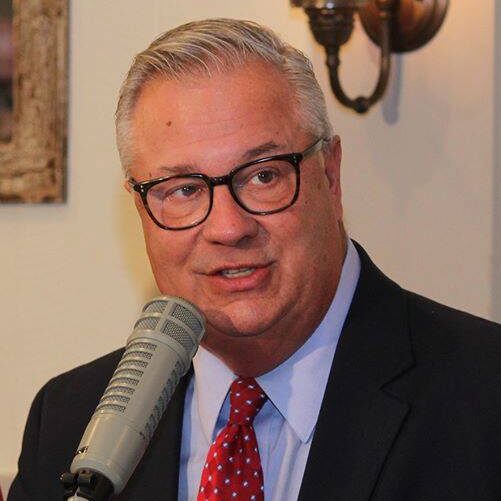
With the music industry pressing for new performance royalties as Congress nears year’s end, radio is mounting yet another full-force defense on Capitol Hill. NAB Radio Board Director Henry Hinton is going to the front lines to fight for radio’s public service mission.
The Inner Banks Media President and WRHT/WTIB morning host will testify this afternoon before the Senate Judiciary Committee’s Subcommittee on Intellectual Property at a hearing titled Balancing the Interests of Local Radio, Songwriters and Performers in the Digital Age.
Hinton will appear to warn that the proposed American Music Fairness Act, which seeks performance royalties similar to streaming platforms for over-the-air radio, would impose severe financial pressure on broadcasters. He will appear alongside SoundExchange CEO Michael Huppe and recording artist Gene Simmons from KISS, who are campaigning for increased royalties.
A lifelong broadcaster based in Greenville, NC, Hinton operates five FM stations serving eastern North Carolina. In his prepared testimony, shared with Radio Ink, he underscores radio’s enduring role as a trusted lifeline for communities during emergencies and its unmatched promotional value to musicians.
“Broadcast radio has impacted the lives of Americans in many beneficial and significant ways,” Hinton said, citing previous Radio Ink coverage. “We inform, educate, and alert listeners to important events, issues, and emergencies. We entertain listeners with sports and talk programs. And we are local, involved in our communities, and proud to serve the public interest.”
Hinton’s testimony argues that the AMFA’s proposed performance royalty would place new economic burdens on small-market stations already challenged by declining ad revenues and rising operational costs. He notes that local broadcasters invest heavily in public service, local programming, and community engagement, while also paying existing fees to performing rights organizations and the FCC.
“Stations have to make the choice between covering local football games or paying new fees; between making their payroll or sending more money to big record labels,” he said. “Make no mistake: enacting the AMFA would jeopardize jobs, require radio stations to cut back their involvement in local communities, and place more pressure on stations already struggling to survive.”
Hinton’s remarks also highlight the broader contrast between record label profits and radio’s financial realities. According to his testimony, the US recording industry reached a record $17.67 billion in 2024, while radio revenue has fallen 20% since 2019 and is forecast to decline further through 2026.
In addition, radio broadcasters are already facing rising licensing costs. In August, BMI secured a more than 20% rate increase under a new settlement with the Radio Music License Committee, with ASCAP achieving similar gains. SoundExchange and the NAB also proposed a new Copyright Royalty Board agreement in April that raises streaming royalties through 2030.
“Congress has repeatedly and intentionally declined to interfere with the mutually beneficial relationship between performers and radio – free airplay for free promotion – and should continue to do so today,” Hinton said. Lawmakers continue to show bipartisan resistance to new performance royalties through the Local Radio Freedom Act, which has 214 House and 26 Senate cosponsors.