




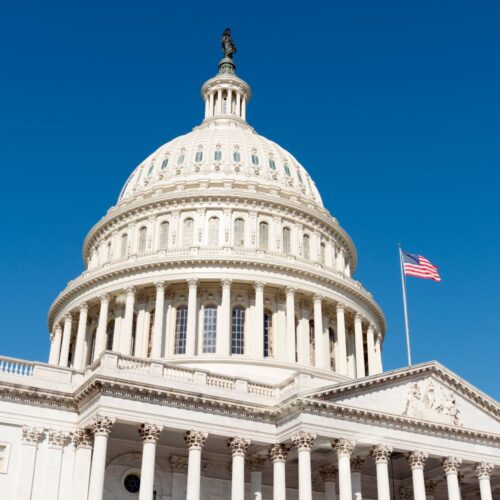
With a dozen working days left on the 2025 Capitol Hill calendar, American Music Fairness Act supporters are renewing their crusade to force AM/FM radio to pay more performance royalties, even if it means denying the public free access to emergency information.
On December 9, KISS’s Gene Simmons is scheduled to testify before the Senate Judiciary Committee’s Intellectual Property Subcommittee, alongside SoundExchange President and CEO Michael Huppe, as proponents attempt to advance the legislation.
AMFA, which has stalled in the last two Congresses, seeks to require AM/FM broadcasters to pay performance royalties similar to streaming platforms, despite radio providing free public service access. The bill is backed by royalty collector SoundExchange, which takes a 4.6% cut of royalties and would stand to directly profit if the measure became law.
The new push comes weeks after more than a dozen recording artists urged Congress to withhold support for the bipartisan AM Radio for Every Vehicle Act until radio stations begin compensating performers. That November letter, signed by Barry Manilow, Cyndi Lauper, Lil Jon, and more, argued that no AM radio protections should be passed until royalty rates are raised.
The coordinated campaign is attempting to tie the future of AM radio, the backbone of the Emergency Alert System, to the music industry’s longstanding lobbying efforts. FEMA officials, as well as first responders and emergency management personnel from coast to coast, are outspoken in their support of the AM Act, which would mandate AM radio be included in all vehicles made or sold in the US as a safety feature.
The debate continues as radio stations already face mounting royalty costs across multiple fronts.
BMI secured its largest-ever rate increase for radio in August under a new settlement with the Radio Music License Committee. The agreement, retroactive to January 1, 2022, raises the headline rate for broadcast and simulcast stations by more than a 20% from the previously agreed rate. ASCAP also secured a rise that same month.
Additionally, SoundExchange and the NAB proposed a settlement to the Copyright Royalty Board in April that increased webcasting royalty costs. The plan raises annual minimum fees from $1,000 per station to $1,100 in 2026, reaching $1,250 by 2029, and lifts the per-performance rate from $0.0025 to $0.0028 in 2026, with yearly increases to $0.0032 by 2030.
Yet, even with labels applying more pressure, more than 215 House lawmakers now back the Local Radio Freedom Act, a bipartisan resolution opposing any new performance royalty on broadcast radio. Led by Rep. Steve Womack (R-AR) and Rep. Kathy Castor (D-FL), the resolution recently picked up ten additional co-sponsors, while a companion Senate measure has 26 supporters.
By comparison, AMFA has 12 co-sponsors in the House and 6 in the Senate.

Fairness means both sides benefit. The music industry only cares about getting its money. That’s not fairness. If they want fairness, they should be willing to negotiate, and they’re not. If they want fairness, what does radio get from this? Someone needs to look at this from both sides of the equation. That’s what real fairness is.
Comments are closed.