

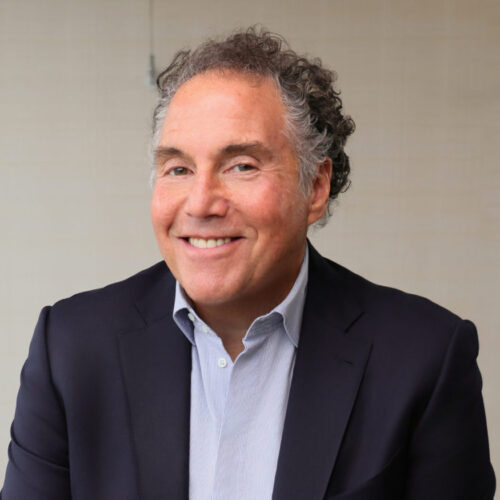
Connoisseur Media CEO Jeffrey Warshaw sat down with FCC Chairman Brendan Carr earlier this week, pressing the agency’s top official to move decisively on radio ownership limit reform as the agency continues to ponder the long-delayed 2022 Quadrennial Review.
According to an ex parte filing submitted to the Commission by Connoisseur counsel David Oxenford of Wilkinson Barker Knauer, LLP, Warshaw urged Carr to move quickly on relaxing radio ownership rules, warning that inaction risks local radio suffering the same fate as the newspaper industry. Warshaw argued that over-the-air radio does not operate in an isolated market; it competes daily against digital platforms and other local media, and that the rules governing it have not kept pace with that reality.
The filing cites a sharp deterioration in radio’s competitive position over the past decade, with radio’s share of both listening time and local advertising revenue cut roughly in half. Meanwhile, the local advertising share captured by out-of-market digital competitors has grown substantially, and time spent with digital audio now exceeds traditional radio listening.
The meeting with Carr is the latest step in a sustained lobbying effort Warshaw has waged at the FCC.
In January, Connoisseur joined a coalition of broadcasters, including Townsquare Media, Bonneville, and Midwest Communications, in filing joint reply comments calling for the elimination of the Local Radio Ownership Rule altogether. Last month, Warshaw filed additional comments in the proceeding, arguing that Spotify’s AI-driven Prompted Playlist feature, which blends music and podcasts into a single product, proves digital audio platforms compete directly with broadcast radio, making the case for repealing ownership caps outright.
Warshaw’s push for deregulation has run alongside an aggressive acquisition strategy that has tested the boundaries of the current rules.
Connoisseur won an FCC waiver to close on Bonneville International’s Bay Area cluster last month, and is seeking an even broader waiver in Lincoln, NE, where a deal to acquire NRG Media’s local cluster would give Connoisseur ownership of all 11 commercially rated stations in the market, based on Fall 2025 ratings.



I think it’s time to look at the current FCC radio station ownership laws rationally for a moment.
Their intent was not to regulate the profitability of the radio stations in an ever evolving media landscape, it was to regulate a single owner from gaining too much control over too many radio signals and therefore having a considerable advantage spreading whatever political views they chose to spread. Radio signals have always had a powerful influence on the public’s views and the intent was to keep the playing field level for more views to be heard, not fewer.
When the ownership laws were loosened up in 1996, it immediately sparked an irrational “gold rush” radio station buying spree that the industry has continued to suffer from to this day. Once highly profitable local radio stations with healthy 50% profit margins were accumulated by overzealous consolidators who over paid and took on irrational levels of expensive debt to do so. When the substantial debt payments came due, hardworking front line radio employees with families were abruptly fired to “make the numbers work.”
Stations were ruthlessly gutted of thousands people who had served their communities for decades and what was once a fun, important local business became a stressful, very uncertain career for everyone in it. These mass firings, 30 years into deregulation, continue to this day. After jamming every station into one building, making one manager over every station, voice tracking, consolidating departments, reducing staff, reducing commissions…the largest radio groups still went bankrupt. One group is experiencing its second bankruptcy.
Those are the facts.
Just so we’re clear, bankruptcy is the highest level of failure in business.
So, to hear anyone suggest that the solution to what troubles the radio industry today is to allow one company to own even more radio stations, the last 30 years would strongly suggest otherwise. The largest radio groups have not only gone bankrupt, they have continued to lose money even after billions in debt has been eliminated. Their net income (look it up, that means “profit”) has been negative for years.
In spite of “digital revenue that’s up 27%… etc” overall revenue has been inconsistent at best and far short of enough to pay the bills at most radio groups. In simple accounting terms, the largest radio groups in the industry are all in profoundly bad shape financially. They have clearly not been able to sustain a profit in spite of owning once highly profitable stations. What would be the logical outcome of allowing them to own even more stations?
Leadership today blames “soft market conditions” and the “inability to compete with big tech.”
A more rational explanation would be the radio industry’s persistent, outdated tradition of sending untrained sales people into the field while untrained sales managers expect them to come back with an order.
Meanwhile, Facebook and Google (for example) send highly trained, highly capable sales people into the field backed by some of the most competent managers, tools and processes in existence today. Those two companies generated over $600 billion in revenue in 2025—compared to $17 billion nationwide in radio. This proves two things: The market conditions for advertisers willing to spend enormous amounts of money to reach customers is anything but “soft” and having well trained sales people with great tools and highly skilled managers is a highly effective, highly profitable, winning combination.
If radio groups want to be more successful today, it would make much more sense to ponder how the most successful companies on the planet operate today and how they’re managed… then try to emulate them. They all focus on the “CX” and build their business plans around it. When I did precisely that, I grew revenue for 76 consecutive quarters and exceeded my budgets every single quarter. Meanwhile, most of the radio industry doesn’t even know what a CX is. It’s never discussed or contemplated. That’s a problem. It’s the most essential building block of any successful business.
Sundar Pichai, Mark Zukerberg, Tim Cook. Lisa Su, Jensen Huang, Mary Barra and Elon Musk all know what a CX is and how much impact it has on their profitability.
Daniel Ek knows what a CX is too. He founded Spotify and in 2024, Spotify made a profit of $1.2 billion and followed up with a profit of $2.5 billion in 2025.
So you see, this proves that here is a lot of money to be made running commercials in high quality audio content if you get the business model right, train your people, support them, equipment them and lead them effectively. People are listening to more audio content today than in the history of the world. I think that’s a great place to start. Good luck out there-
Comments are closed.