


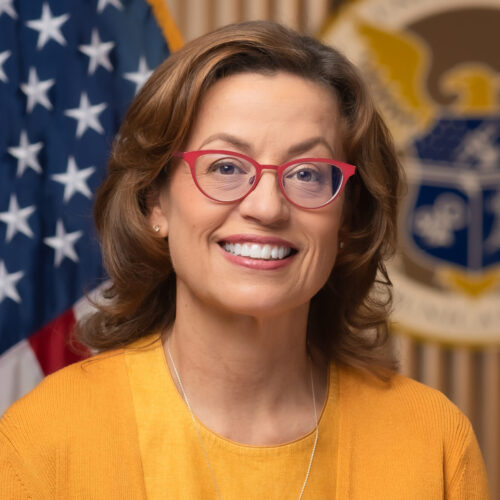
At the Technology Policy Institute’s Aspen Forum, FCC Commissioner Anna Gomez issued a sharp warning about growing political pressure on the Commission from the Trump Administration and made it clear she’s prepared to fight back if removed from office.
During a fireside chat, Gomez offered a blunt assessment of proposals to fold the FCC into the executive branch, such as placing it under the National Telecommunications and Information Administration. “Congress rejected having the FCC be part of the executive branch because it thought it was too important not to have that under one party,” she said. “We’ve seen what happens when the FCC acts at the behest of this administration. What you lose is too important.”
Gomez’s comments come amid rising speculation that President Donald Trump could attempt to reshape the FCC, mirroring his recent move at the Federal Trade Commission, where two former Democratic commissioners were dismissed.
In an interview with Law360 during the forum, Gomez added, “If [President Trump] tried to remove me, it would be illegal and against the will of Congress…So if I was fired, I would join in with other commissioners who have litigated and appealed their firings.”
As for the fate of the two vacant FCC seats, previously held by Democrat Geoffrey Starks and Republican Nathan Simington, Gomez says she remains in the dark as to any White House plans or potential nominees.
During her luncheon address, Gomez continued her accusations against the current administration of using previously dismissed FCC complaints to pressure media companies, part of what she described as an “administration-wide campaign to censor and control,” aimed at both public broadcasters and major networks.
As the FCC reviews its radio ownership rules, Gomez reaffirmed her support for the agency’s core principles of competition, localism, and viewpoint diversity. Weakening those protections, she warned, could further erode community-focused journalism.
“Local broadcasters are passionate about serving their communities,” she said. “If we don’t [support them], then what I worry is we are going to get nationalized, basically whitewashed journalism.”