


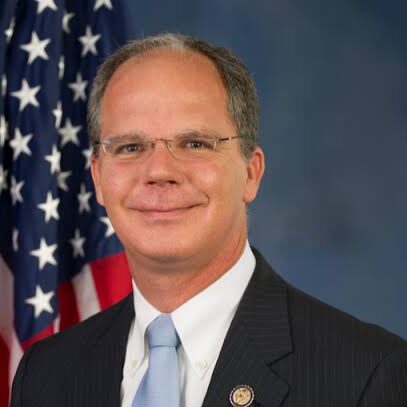
Despite a resounding defeat in the Senate, House Energy and Commerce Committee Chair Brett Guthrie (R-KY) says he is not giving up efforts to prevent states from independently regulating artificial intelligence while Congress develops a federal framework.
The Kentucky Republican expressed surprise at the 99-1 bipartisan rejection of a provision in the Senate reconciliation bill that would have temporarily barred state-level AI laws, which would have eased requirements many states now make on broadcasters, particularly around advertising. Guthrie had supported a compromise proposal from Sen. Ted Cruz (R-TX) and Sen. Marsha Blackburn (R-TN) that would have shortened the preemption window from 10 years to five.
That deal collapsed just hours before the vote, marking a major setback for those supporting federal preemption.
Last week, Guthrie told reporters he remains committed to establishing a national AI policy and avoiding what he described as a burdensome patchwork of conflicting state laws. He argued that a temporary freeze on state regulation would give Congress time to pass a federal standard within two years.
Without a federal standard, radio stations must navigate numerous state-by-state rules governing the use of artificial intelligence in content creation, advertising, and political messaging.
In New York, for example, political advertisements featuring AI-generated content must include an audible disclosure, placing the responsibility on radio stations to verify and label such material. Other states, including California, Texas, Minnesota, New Jersey, and Wisconsin, require stations to identify – and possibly reject – political content that uses AI to replicate a person’s voice without consent.
For radio, which may carry hundreds of political ads during election cycles across syndicated and local programming, these laws pose compliance risks, especially for station groups that operate in multiple states with varying requirements. The concern is that inconsistent or overlapping rules will create operational burdens, increase legal exposure, and chill innovation around new audio tools like AI-enhanced imaging, automated voice talent, or political ad personalization.
Industry advocates like the NAB have previously pushed for a single federal standard to prevent this kind of regulatory fragmentation.
With such widespread opposition, Rep. Guthrie has not made clear how or when he plans to enact a freeze.