


What was billed as a hearing centered around fairness was anything but, as the Senate Judiciary Subcommittee’s hearing on the American Music Fairness Act gave supporters free rein while repeatedly silencing broadcasters trying to explain the industry’s realities.
The Act, co-sponsored by Senators Marsha Blackburn (R-TN) and Alex Padilla (D-CA), would require terrestrial radio broadcasters to pay additional performance royalties to artists and record labels for airplay. The measure, long pushed by SoundExchange and the Recording Industry Association of America, would close what supporters call a “loophole” that exempts radio from the fees paid by subscription-supported streaming platforms.
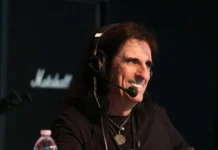
Gene Simmons, the KISS co-founder invited as a star witness, drew headlines but little clarity. His testimony veered between anecdotes about Elvis Presley, Bing Crosby’s “White Christmas”, and his relationship with President Donald Trump. “If you are against this bill, you are un-American,” Simmons declared. “Elvis and Bing Crosby and Sinatra got nothing for their performance. You cannot let this injustice continue.” At one point in his ramblings, he posited that unpaid artists are being treated “worse than slaves,” and at another, suggested “Zimbabwe gave the world no music.”
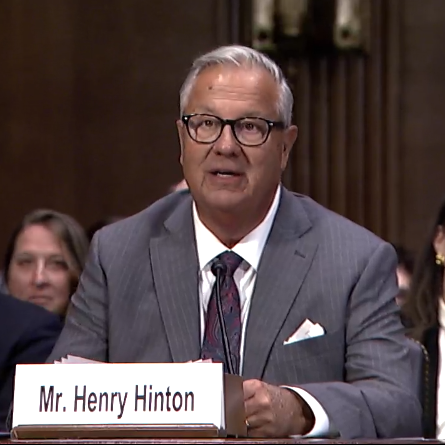
Inner Banks Media President Henry Hinton, testifying on behalf of the National Association of Broadcasters, tried to explain that small and mid-sized stations already shoulder increased regulatory and music licensing costs, from ASCAP and BMI to SoundExchange for their online simulcasts. In August, BMI secured a more than 20% rate increase under a new settlement with the Radio Music License Committee, with ASCAP achieving similar gains. SoundExchange and the NAB also proposed a new Copyright Royalty Board agreement in April that raises streaming royalties through 2030.
Hinton added that the US recording industry reached a record $17.67 billion in 2024, while radio revenue has fallen 20% since 2019 and is forecast to decline further through 2026. Each time Hinton began to elaborate, Senator Blackburn interrupted or cut him off.
“Don’t say thank you for the question,” Blackburn said sharply, as Hinton tried to answer her inquiry about whether artists suffer harm by not being paid for radio airplay. When Hinton attempted to explain radio’s community role and the promotional value airplay provides artists, the exchanges grew more adversarial as Blackburn accused broadcasters of profiting off artists without compensation.
“You’ve got an oldies station,” she told Hinton. “You’ve never paid Sam Moore’s estate a dime for “Soul Man“, and I bet you use that as bumper music – a good bet.” When Hinton tried to clarify, Blackburn pressed on, saying, “You and your son started this business not to be charity but to make a profit. The people that do not get paid are the performers.”
“Soul Man” actually falls outside the very framework her bill seeks to change. The Sam & Dave classic, released in 1967, predates the creation of any federal performance rights for sound recordings. Those rights didn’t exist until Congress passed the Sound Recording Amendment of 1971, which took effect on February 15, 1972, and were later codified under the Copyright Act of 1976.
That means “Soul Man,“ “White Christmas,” the majority of Elvis’s catalog, and all recordings made before that 1972 cutoff aren’t covered by federal law and have never carried a terrestrial public-performance right. They’re governed instead by a patchwork of state laws, and even under the American Music Fairness Act, they would remain exempt.
Despite repeated interruptions, Hinton managed to describe how his five North Carolina stations have long served as lifelines during hurricanes and community fundraisers. “I’m a little bit surprised that radio is being demonized the way it is,” he said. “We are a uniquely free service, and the backbone of our local communities is evident,” adding, “[Inner Banks] raised over $105,000 for local families this Christmas. It’s a program we do every year in partnership with the Salvation Army that gives back directly to our North Carolina neighbors in need.”
Hinton also emphasized that any new royalty would force small stations to cut staff and local coverage. “Free local radio’s only option is to cut elsewhere,” he said. “Stations have to make the choice between covering local football games or paying new fees, between making their payroll or sending more money to the recording industry. An industry currently making record profits, I might add.”



It’s disheartening to see radio being demonized in such a one-sided music fairness debate. This issue truly highlights the complexities within the music industry and the challenges faced by different stakeholders polytrack. Understanding both sides of the argument is crucial for finding balanced solutions that benefit all involved parties.
Ah, the irony! Getting judged by a guy who thinks unpaid artists are worse off than slaves… talk about a stretch! Next thing you know, he’ll say the sky is green because his last album didn’t go platinum.
I never liked KISS anyway! If this STUPID AMFA bill becomes law, it could force many music radio stations to flip to a News/Talk radio format, consisting of mainly syndicated shows that are based mostly out of New York, or even worse, to shut down completely. It would also force many local radio staffers out of work and could even signal the end of such popular music apps as iHeartRadio! It could even pave the way for shock talkers such as Howard Stern to return to broadcast radio 😢
Radio stations don’t play music, they play songs. If KISS isn’t happy with not getting paid, let them charge stations for airplay by the song. If a new artist is desperate for airplay as many are, let them pay the station. (Yes, legal payola!)
Instead of getting Congress involved, make airplay a series of private transactions. Complicated? Perhaps, but with a database of song prices from positive to negative, an astute programmer could balance revenue from a combination of advertising and music. There’s no good way to settle the royalty argument by law since both sides are right. Turn it over to the free market and reduce the level of whining.
The advertising model is breaking down. Let’s introduce legislation that requires the music industry to pay us for the airplay of the music they continue to shovel our way and beg us to play. It’s time the music industry paid their fair share. NAB lets her this introduced in 2026!
If Congress Wants Radio to Pay Artists, Then It’s Time for Artists to Settle Their Debt
When Senator Adam Schiff opened the royalty hearing by saying he wanted to talk about “Beth,” he probably wasn’t expecting what that actually means.
But he should.
Because if Congress wants to discuss what radio “owes” the recording industry, then fairness requires discussing what the recording industry owes radio first.
And that bill is enormous.
Here is the part Gene Simmons did not calculate, but every advertising manager in America understands instantly.
The Advertising Invoice for “Beth,” If Radio Billed KISS Like Any Other Advertiser
$112,500,000,000
One hundred twelve billion, five hundred million dollars.
That is the conservative minimum advertising value of the exposure required to generate the real commercial impact of “Beth.”
Not one million sales.
Not two million.
But three to four million units once you include:
• Over 1 million single sales
• Over 1.5 million Destroyer shipments by Dec 1977
• Over 2.4 million shipments by June 1979
• Another 726,000 sold in the SoundScan era
Then apply the standard advertising math the radio industry uses every day:
The rule of threes. 300 plays for three meaningful exposures to a scattered audience.
3 to 4 million sales × 300 plays = 900 million to 1.2 billion radio broadcasts.
Then assign the same dollar value radio charges a furniture store, car dealer, or hardware shop:
50 dollars per 60 seconds
“Beth” is roughly 2.5 minutes
→ 125 dollars of airtime per spin
Now multiply:
900,000,000 plays × $125 = $112.5 billion
1,200,000,000 plays × $125 = $150 billion
And that only covers the peak years.
“Beth” has been played every year since 1976.
Even modest annual replay over nearly 50 years pushes the real total exposure value into the trillions.
Congress wanted to talk about “Beth.”
This is what “Beth” really means.
Before Anything Moves Forward, This Debt Must Be Settled
If Congress believes radio must now pay record labels for performance exposure, then by that same logic:
The recording industry must settle its promotional debt to radio before any new royalty discussion proceeds.
There is no honest version of fairness where radio pays for future plays while the labels ignore the value of past plays that made their catalogs valuable in the first place.
You cannot retroactively declare exposure a billable service when radio has already provided billions of dollars of that service for free.
If radio is now a customer, then the labels are behind on their payments.
Radio Didn’t Use KISS. KISS Used Radio.
Gene Simmons told lawmakers that radio benefited from KISS. True.
But KISS benefited far more.
Radio exposure built:
• the sales
• the touring power
• the merchandise empire
• the publishing revenues
• the worldwide brand
• the cultural longevity
Radio did not just promote “Beth.”
Radio made “Beth.”
And Since We’re Talking Bills, Does Gene Simmons Want the Others?
Rock and Roll All Nite
I Was Made for Lovin’ You
Detroit Rock City
All became American fixtures through decades of free radio exposure.
The advertising invoices for these songs would dwarf even the $112.5 billion “Beth” bill.
Would Gene Simmons like those numbers too?
This hearing was not about fairness.
It was about wealthy artists and corporate rights holders trying to cash out 50 years of goodwill provided by American radio.
Meanwhile, the broadcasters who would be harmed most are:
• local AMs
• rural FMs
• and the thousands of 100-watt LPFMs serving seniors, veterans, the disabled, shut-ins, schools, hospitals, and local communities
If Congress wants fairness, then fairness requires this:
Before broadcasters are told to pay labels, labels must acknowledge and settle the enormous promotional debt they owe radio.
Because once the real numbers are acknowledged, one truth stands unavoidably clear:
Radio doesn’t owe Gene Simmons.
Radio doesn’t owe the record labels.
The foreign owned recording industry owes radio, massively.
Please settle up before asking for more handouts.
By “Executives” we are talking about multinationals like Sony and Bertelsmann, and the other companies that actually own the performance rights.
Gee, I remember warning about EXACTLY THIS HAPPENING back in 2003 when the RIAA created SoundExchange and Congress blessed it as the punitive royalty collection agency that was meant to KILL streaming audio.
That’s what this all stems from: the NAB and the RIAA had been trying to kill digital music files and audio streaming since the mid-90’s (especially following the passage of the DMCA). So, in a half-hearted admission that streaming was here to stay, the RIAA formed SoundExchange and set, with Congress’s approval, OUTRAGEOUSLY high performance royalty rates for streamers. This killed off a LOT of independent streams that had already existed for half a decade or more. Which is exactly what it was intended to do.
Radio stations don’t have to pay those royalties, either on the air OR online. That was the deal the NAB made with the Devil (the RIAA). At the time, myself and many others SHOUTED FROM THE ROOFTOPS that it would come back to bite the radio industry in the anus when the day comes that the RIAA decides to make THEM pay the performance royalties, too. It was never a matter of IF, only WHEN. We were laughed at and told “it’ll never happen.”
WELL GUESS FREAKIN’ WHAT.
Now, here’s MY deal: I don’t even really care about radio getting the rates jacked up on them. At this point, the radio business is already destroyed, and they only have themselves to blame. This is the RIAA trying to milk a dead cow. But it’s not going to get them the revenue they want, and soon they’ll jack up the rates even HIGHER on EVERYONE. You thought streaming was expensive to get into ALREADY?
What I *do* care about is that the RIAA and the labels that make it up are thieving, manipulative sacks of CRAP who take ALMOST ALL of that money FOR THEMSELVES and give EXTREMELY LITTLE of it to the actual artists. I would have ZERO problems paying whatever royalties were demanded IF the VAST MAJORITY of that money were going TO THE ARTISTS. But it’s not. It’s going to the executives.
So for that reason, I staunchly oppose this bill, and I’m not “un-American” for doing so, I’m FULLY American, and in favor of PAYING CREATORS FOR THEIR WORK. SCREW YOU, GENE SIMMONS. If you have a problem with not getting royalty checks, you should blame the REAL thieves: your record company.
“Radio stations don’t have to pay those royalties, either on the air OR online.”
Not true. Radio stations pay royalties to sound exchange for online streams. The only thing they don’t is on air.
You’re correct, I forgot that the RIAA already went back on that deal. Which SHOULD have been proof at THAT point that they would go back on this one, too.
Comments are closed.