




Copper theft isn’t just knocking stations off the air. It’s now at the center of a national conversation about public safety and whether the law is doing enough to protect America’s communications infrastructure, says FCC Commissioner Olivia Trusty.
Speaking via video at the Copper Theft Crisis: Incident Management and Prosecutorial Collaboration Summit on October 7, the newest FCC Commissioner said the scale of attacks on broadcasters, cable providers, and other networks demands stronger penalties and industry-wide cooperation.
“When I think about threats to our communications networks, my mind often jumps to sophisticated cyberattacks or foreign adversaries,” Trusty commented. “But increasingly, the danger is something far less high-tech and far more blunt: vandalism.”
She pointed to more than 5,700 reported incidents between May and December 2024, affecting 1.5 million Americans. “This is not a handful of isolated incidents. It is a growing epidemic, and it is hitting every part of the country,” she said.
In Van Nuys, CA, thieves severed 13 fiber cables, disrupting hospitals, schools, a military base, and 50,000 customers. “That is not mischief,” Trusty said. “That is a direct attack on the lifeblood of our economy and our daily life.”
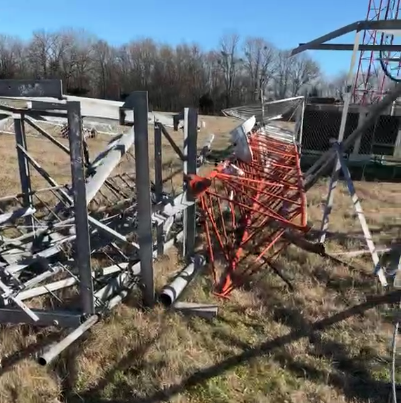
The crisis has been plaguing broadcast facilities, as well. In Oklahoma, Payne Media Group’s K95.5 (KITX) was knocked off the air in January 2024 when two individuals cut a guy-wire, collapsing its 500-foot tower. The thieves caused more than $500,000 in damage for less than $100 worth of copper.
Trusty warned that the law has not caught up with the threat. Federal statutes cover government-owned networks, but the vast majority of America’s communications infrastructure is privately owned and left to state laws, which some feel isn’t enough. For example, one member of the duo responsible for the destruction of the KITX tower was sentenced to 30 months in prison after pleading guilty to transporting stolen goods across state lines. Their partner received an 8-month sentence.
Trusty closed by calling for the industry to do more by investing in hardened infrastructure, sharing data across companies, and working with prosecutors to secure convictions.