


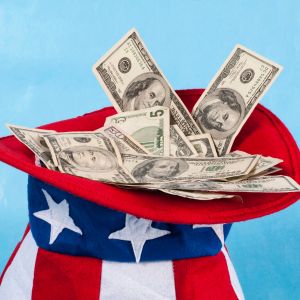
The 2026 midterm elections are on track to be the most expensive non-presidential cycle in US history – a windfall for broadcasters. While a majority will feel the lift, only a handful of states and markets are now expected to be especially fortunate, drawing the heaviest buys and the biggest gains.
The latest forecast by Assembly projects more than $10.1 billion in political advertising, driven by 33 Senate races, 36 governor’s races, 435 House seats, and over 6,000 state and local contests. This total surpasses the $8.75 billion spent in 2022 and is nearly triple the $3.8 billion spent in 2018.
For radio, the numbers present both opportunity and disruption. Political ad spending has historically delivered strong incremental revenue to stations, particularly those with trusted local news brands. With CPMs in some markets forecast to increase by as much as 80% compared to non-election years, radio is well-positioned to capture a larger slice of campaign budgets.
Georgia is forecast to be one of the cycle’s hottest markets as Senator Jon Ossoff faces re-election in what could be the most expensive Senate race of 2026, paired with a competitive governor’s race.
Atlanta carries a projected Market Intensity Index score of 8.88, among the highest in the country. Secondary markets like Savannah and Augusta are also expected to be crowded. Runoffs could push spending late into December, creating holiday-season disruption across local media, including radio.
Michigan will see open contests for both Senate and Governor, ensuring statewide saturation. Detroit is forecast with a 9.25 intensity score, Grand Rapids at 8.75, and Lansing at 8.25. House races in MI-07 and MI-10 will further flood already expensive markets.
North Carolina’s marquee Senate contest between former Governor Roy Cooper and former RNC Chair Michael Whatley is expected to start earlier than most, since both parties’ primaries are essentially uncontested. Raleigh is projected at a 9.25 intensity score, with Greenville-New Bern above 7.0.
While Senate races dominate headlines, the House may drive the most intense buying.
Republicans hold just a seven-seat majority with about 40 districts in play. Markets that don’t always top national lists like Des Moines, Omaha, Portland, ME, and Scranton are expected to see unusually heavy activity. That means mid-market radio stations could see unprecedented influxes of political dollars alongside equally unprecedented scheduling headaches.
Assembly highlights how just as there is opportunity, there is also risk.
Inventory will tighten sharply in battleground states, forcing commercial advertisers to compete with political buyers. They recommend stations stay proactive by securing commitments early, pricing strategically, and offering digital or streaming extensions to protect long-term clients.
Meanwhile, quieter markets with lower intensity scores could offer stable ground for advertisers displaced in battlegrounds, creating opportunities for stations to capture spending reallocated from saturated markets.
At Forecast 2026, a powerhouse panel with leaders from Miller Kaplan, Beasley, Hearst, WPP, and Futuri will be breaking down how and where ad dollars will move in a pivotal midterm year. Reserve your seat today before prices increase at 11:59p ET on October 31.