


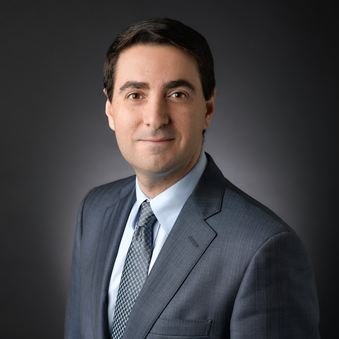
Steven Portnoy may be best known as a National Correspondent for ABC News Radio or his tenure as White House Correspondent for CBS, but behind the scenes, he’s also one of broadcast journalism’s most passionate preservationists. With a reverence for tape reels, war correspondence, and Top 40 airchecks alike, Portnoy has long been a champion of radio and television’s archival treasures – whether curating stories from the CBS vaults or advocating for the protection of network history at ABC.
This fall, that commitment will be formally recognized when the Library of American Broadcasting Foundation honors Portnoy with its 2025 Excellence in Broadcast Preservation Award.
In this conversation with Radio Ink, Portnoy reflects on the roots of his broadcast evangelism, the responsibility today’s journalists have to protect history, and the vintage clips that still inform his reporting today.
Radio Ink: To be selected by the LABF, what does the Excellence in Broadcast Preservation Award mean to you personally and professionally?
Steven Portnoy: It’s a tremendous honor, for which I feel uniquely unqualified in many respects. I am not an archivist like David Gleason, whom I so admire, and who received this honor a couple of years ago. But I am a broadcast historian, and I have a deep passion for the history of our business, dating to its founding in the early 1920s. The evolution of the broadcast medium as a town hall meeting of the air, a fireside for presidential chats, a national vaudeville hall and playhouse—to the advent of television, the creation of electronic news, the rise of rock and roll, R&B, country music—all of it amounts to the history of American culture as we have collectively experienced it on radio and television over the past century. I believe that keeping that history alive and accessible is important to anyone who wants to understand our American story. So it’s a genuine privilege to be honored for having this passion.
Radio Ink: When did that passion and that advocacy begin for you?
Steven Portnoy: Well, for me, the advocacy really is evangelism. I’m an evangelical when it comes to broadcast history. And it’s been the case in every newsroom in which I’ve ever worked. I remember when I was at WSYR Radio in Syracuse while I was in college. At the time, up on a shelf in a cabinet, there were some dusty, poorly labeled reel-to-reel tapes that contained dubs of material dating to World War II.
There was a legendary early manager of the radio station, E.R. Vadeboncoeur, who in the 1940s traveled to General MacArthur’s headquarters in the Pacific. He arranged a hookup to broadcast reports on the war from the Pacific front to his audience in Central New York. I couldn’t believe how lucky I was to have a chance to sit and listen to those tapes after finishing my regular reporting shifts.
At WMAL here in Washington, I was known as a champion of the station’s history, even though I didn’t grow up listening to the station. At CBS News and here at ABC News, I’ve frequently dug into the archives of the networks to enhance my storytelling and to remind audiences of how often history rhymes, because so much of what we report on today has echoes of what we’ve reported on in the past. And it helps the public’s understanding when we can properly put it in historical context.
But really, for me as a broadcast historian, I have to give credit to people like, I don’t know if you know these names, but people like Allan Sniffen and Jonathan Wolfert.
Allan runs MusicRadio77.com, which is a tribute page to WABC Radio and its heyday in the 1960s and ’70s. Jonathan Wolfert is the founder of a company called JAM Creative Productions in Dallas, which, through the ’70s, ’80s, ’90s, and into today, is a leading producer of jingles for the radio industry. Each of them had a substantial influence on me early in my development as a broadcaster. I remember when I was in college, listening to some of the airchecks they shared with the public. I didn’t grow up listening to fast-paced, personality-driven Top 40 music radio in the 1960s, but I feel like I did because Allan and Jonathan and others put it online decades later for people like me to listen to.
Radio Ink: That’s so true. With everything available on archival sites and YouTube, it’s wild to think how we’re not so far removed from the days of mailing money to California Aircheck.
Steven Portnoy: Or how tapes used to be traded. It’s a lot more accessible now. The challenge is making sure that material stays accessible.
Radio Ink: You mentioned how history often rhymes. Do you ever find yourself going to the archives to see how a similar situation has been covered in the past, and how does that inform the way you cover it today?
Steven Portnoy: I feel that there are moments where we in journalism can help the public understand that so much of what we focus on today is similar to things we’ve been through as a country since we began covering it in electronic journalism. As we sometimes are apt, in newsrooms and in politics, to be quick to either jump to conclusions or become outraged over something, whether it’s on the left or the right, I sometimes advise my colleagues: we should get historical before we get hysterical. Because it’s very likely that whatever it is we would otherwise call unprecedented probably has some relevance in the past.
Radio Ink: You mentioned those WSYR tapes. Is there another piece of broadcast history – a recording, a moment, an artifact – that has particularly inspired you throughout your career?
Steven Portnoy: Two years ago at CBS, I was inspired to tell the story of George Polk, who was a CBS News correspondent murdered in Greece while covering the civil war there in 1948. So on the 75th anniversary of that murder, I traveled to London to dig through hundreds of tapes from the 60 Minutes archives. I worked with archivists at CBS and a friend of mine, David Plotkin at Audacy in New York, to utilize recordings that dated to 1946 and hadn’t aired on the network since then. We unearthed rare recordings of Murrow and his core team, and I was given the freedom to turn all of that into a three-part special that aired on Memorial Day weekend in 2023. Poetically, it aired on stations like KNX in Los Angeles and WFED at AM 1500 here in Washington.
So it’s very likely that the same AM radio towers that were radiating George Polk’s voice in his reports on CBS in the late 1940s did the same thing 75 years later, as we told the story of his death.
I should also point out how we at ABC have rightly approached our own archival preservation. Lucky for us, I work with colleagues and managers who have an appreciation for our rich history at the ABC Radio Network. My colleagues in New York recently saw to the preservation of thousands of reels of tapes that had most recently been stored in the basement of ABC News headquarters, which moved in the last few months from 66th Street on the Upper West Side to Lower Manhattan. The material that was in the basement was sent to a Disney facility in Connecticut for permanent storage and for our use. And I’m very proud of the team for making that happen.
Radio Ink: In that spirit, what role do you think today’s working journalists, from the local to the national and international, play in preserving our industry’s history?
Steven Portnoy: Well, I think that everybody in the industry should have an appreciation for it because they’re each a part of it. I mean, the work we do today will hopefully be in an archive somewhere tomorrow. In news, we write the history of each day’s events.
And I’m always eager, as a working journalist, to find a pop of archival material just to remind the audience, again, that so much of what we’re talking about today, we’ve likely talked about before. Just last week, I used a clip of Peter Jennings talking about the rising national debt in 2002. Back then, it was just a mere $6 trillion, a sixth of what it is today.
So I know with more media than ever before—and honestly, with the ease of archiving these days—what are some particular moments in our broadcast history that you think might be in danger of being lost or overlooked right now?
Steven Portnoy: Well, there’s a risk that all of it could be lost. I mean, the risk is in forgetting that collections exist—so they sit on a shelf and get neglected or are never utilized, and therefore someone might decide to discard the material. There’s a great opportunity for us in podcasting and long-form storytelling now—it opens up new possibilities to market this extraordinary content we created for our own contemporary storytelling. But if the collections aren’t preserved, if they aren’t properly cataloged or maintained, if the magnetic tape isn’t carefully handled, if the material we think is safe in the cloud disappears—it could all be lost forever.
Radio Ink: What do you hope that future journalists and audiences take away from these archives that broadcast groups like ABC and the Library of American Broadcasting are building and saving today?
Steven Portnoy: Well, I hope they take the time to listen to it – to learn about the material in the context in which it was created, to see how much care was taken in producing the work decades ago, and to see and hear the kind of world-class talent that was so often on display in our industry.
Radio Ink: To close, I know you mentioned Alan and Jonathan, but who are your personal Giants of Broadcasting?
Steven Portnoy: Well, aside from those two, I would say my Giants of Broadcasting are Peter Jennings, Edward R. Murrow, Paul Harvey, Doug Limerick, Ann Compton, Vic Ratner – both of whom I worked with here at ABC – and Dan Ingram.
The 2025 Library of American Broadcasting Giants Gala is scheduled for Friday, November 14 at NYC’s Gotham Hall. More information on the event and tickets can be found here.


It’s fantastic to see a working journalist honored for this kind of “evangelism,” as his passion for broadcast history is truly infectious. This piece is a great reminder that these archives are living resources that provide crucial context for the news of today.
Comments are closed.