
FCC policy shifts, Nielsen audience data, and firsthand revenue case studies made a compelling case on Day Two of Hispanic Radio Conference 2026 that the structural problems threatening Hispanic radio are most certainly not product problems.
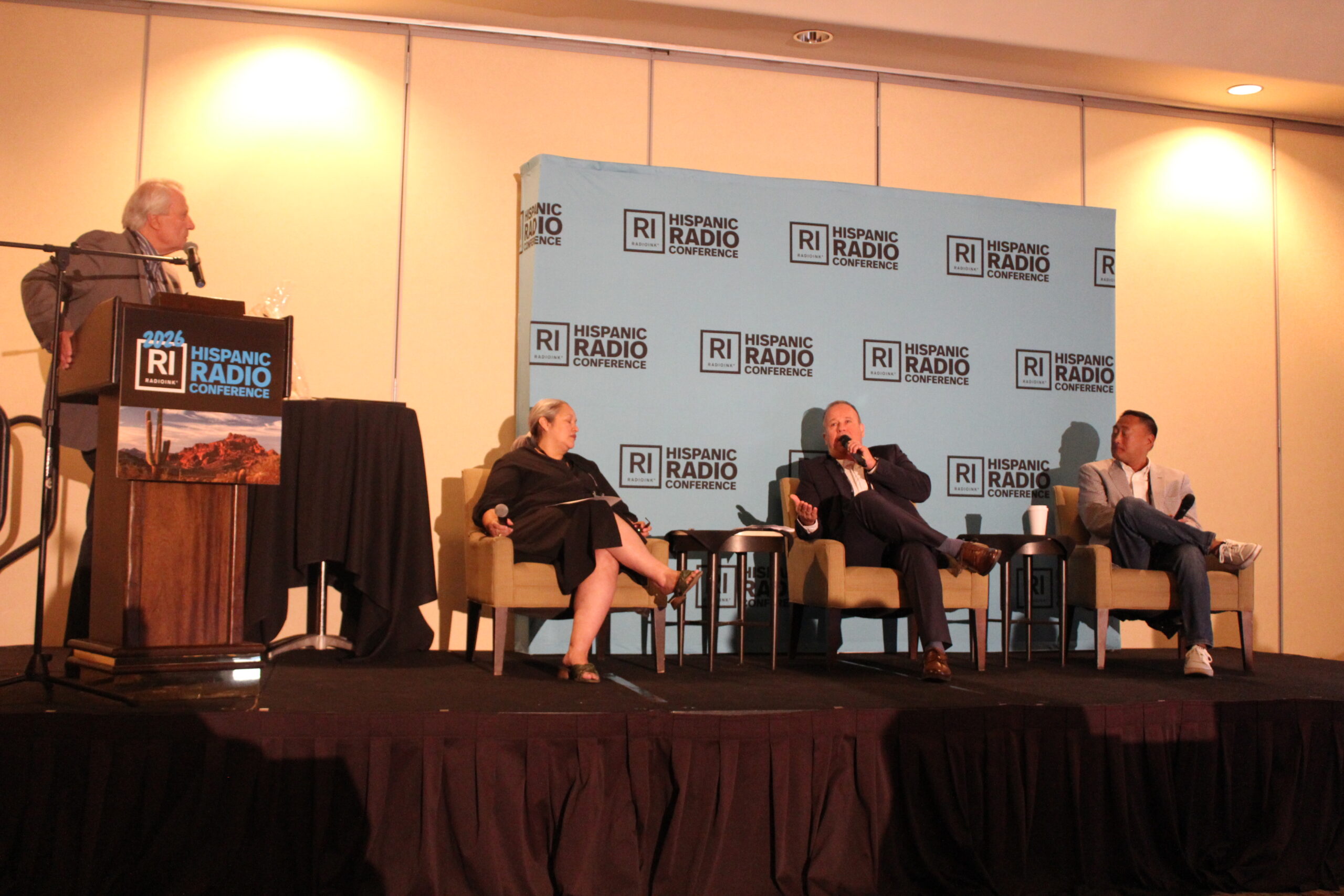
The morning opened with a legal and policy panel that put the regulatory calendar in plain terms. Axis Mundi Founder Grisella Martinez opened with the recent developments on the AM Radio for Every Vehicle Act, which was included in the Motor Vehicle Modernization Act of 2026 last week, with hopes of being attached to the larger BUILD America 250 infrastructure bill.
“There’s been incredibly wonderful support on both sides of the aisle from Democrats and Republicans about the House and the Senate,” Martinez said, adding that advocacy at the state level and direct conversations with members of Congress remain essential as turnover reshapes the legislative body.
Fletcher, Heald, and Hildreth Managing Partner Frank Montero, moderating the panel, raised the question of whether ownership rule modernization could help or harm smaller Spanish-language operators. Arizona Media Association President and CEO Tregg White said scale has become a functional requirement, but Bustos Media Holdings COO Felipe Chavez pushed back on the idea that lifting caps would benefit minority operators. “If you relax those rules, the larger groups will start buying pretty much all the markets, and therefore minority owners or Spanish broadcasters, it’s going to be tough to get in,” Chavez said.
Women In Radio: Ask for What You Want
“Women in Hispanic Broadcasting: Challenges and Opportunities,” led by Entravision Communications Sacramento GM Angie Balderas, surfaced multiple stories that captured the room’s attention and did not let go. Urban One Head of Spanish Broadcast Operations Claudia De León described buying her first radio station in Columbus by selling her house to pay off student loans before qualifying for an SBA loan, eventually merging operations with Urban One after a competitor began expanding into her markets.
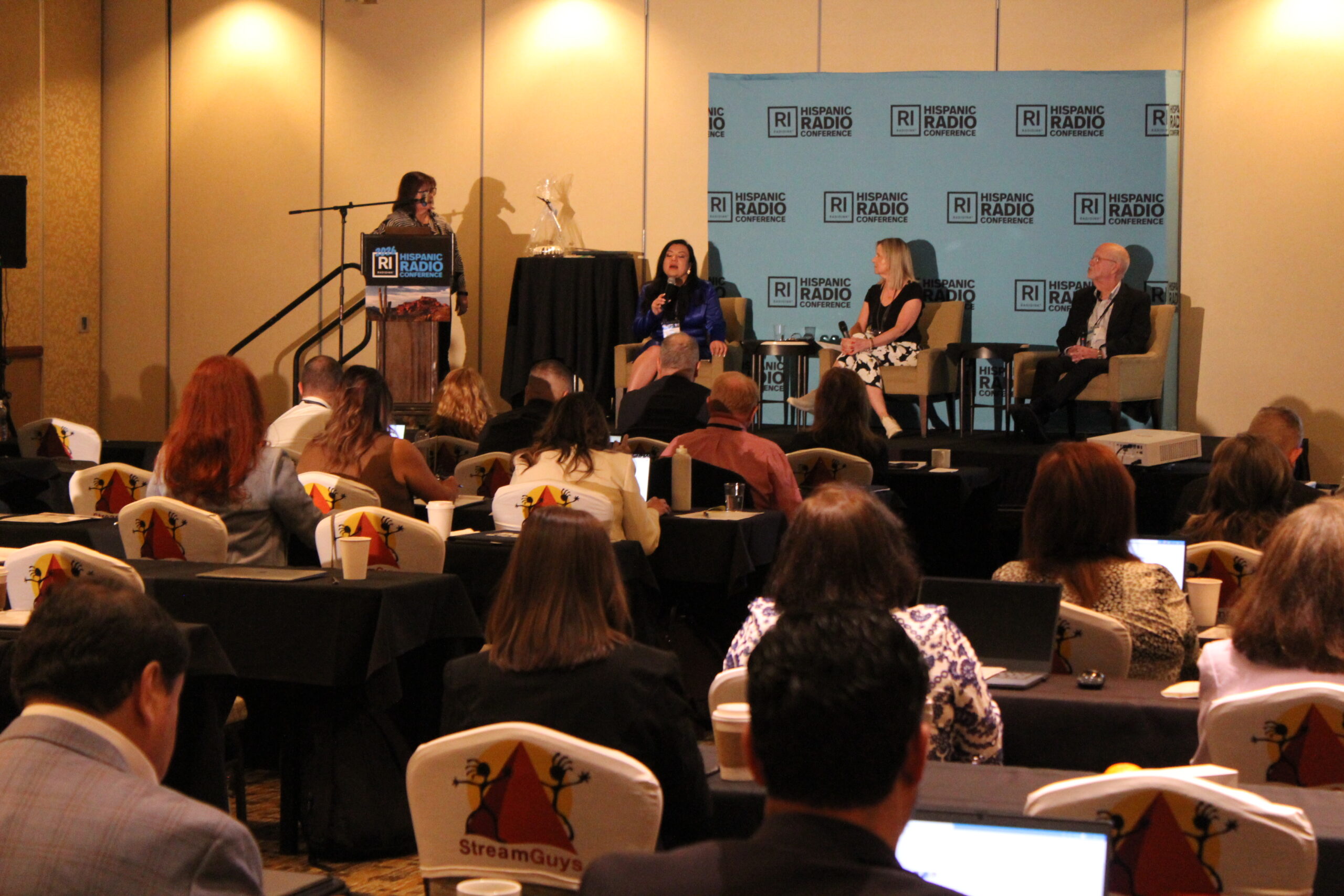
Curtis Media Raleigh General Manager Shirley Davenport, who joined the station from Univision television 11 years ago and became its first female general manager, said the single most underused tool for women advancing in radio is asking directly for what they want. “You’re not going to get it if you don’t ask for it,” she said. “Ask for a raise, ask for things for your staff, ask for whatever you’re passionate about, and ask again, just like sales.”
Solmart Media Co-Owner and CEO Tomás Martínez said roughly 70% of his staff are women and cited a top performer with four children as evidence that the industry’s flexibility, when managed thoughtfully, outperforms the perception. He recommended that station owners align holidays with school calendars and allow children in the workplace when circumstances require it.
Good Sports
The panel that followed leaned hard on revenue rather than reach when it comes to the growing money-making potential behind Spanish-language sports coverage. Entravision Executive Vice President of Sales, Brand and Partner Marketing Karina Cerda told the room, “I don’t sell hours, I don’t sell when it airs, I don’t sell ratings, I don’t sell impressions,” she said. “We sell a passion that people respond to.” Entravision enters its twelfth season as the exclusive Spanish-language national radio broadcaster for the NFL this fall.
KZSF-AM San Jose Owner Carlos Duharte described building six hours of daily sports programming around broker time, selling blocks to independent producers who then promoted themselves across YouTube and Facebook. During the 2010 World Cup, his station became the number one station in the Bay Area, outperforming general market competitors. Texas A&M Football Spanish Radio play-by-play announcer Pedro Luna described carrying games not just in Texas but throughout Mexico, with the general manager tracking listeners from Italy and South America on the iHeartRadio app. “Texas A&M is the first NCAA school to be broadcast live over the radio waves outside of the US,” he said.
Building Better Loyalty
The Marketing Masterclass panel spent much of its hour on what Novle CEO and Founder Carlos Velasco described as a confidence problem. He told attendees that walking into client meetings without asserting the value of the Hispanic market allows advertisers to set the terms. He cited Arizona’s $64 billion Latino purchasing power and said agencies that nickel-and-dime Hispanic radio are underinvesting in a market that represents most of the remaining economic growth in the country.
Trin and Associates Consulting Group CEO Harry Valenzuela Garewal Jr. described a 14-year partnership between Casino Arizona and La Campesina built on the principle that Spanish-language media requires cultural presence, not just spots. “I don’t sell products. I sell trust. And I sell voices,” he said. He described advisees coming to him for an ALS awareness campaign targeting the Latino community, and his first referral being La Campesina because of the long-term on-air relationship.
Crunching the Numbers
Nielsen Audio Managing Director Rich Tunkel presented data from the firm’s Hispanic Audio Today report during the audience insights panel that followed the lunch break, laying out a picture of sustained radio strength alongside growing digital gaps. Hispanic adults are reached by radio at 93% monthly, a figure consistent across age groups. Hispanic listeners are 76% more likely to make a purchase based on radio advertising than the general market population, and more likely than general market listeners to recommend products, visit retail locations, and follow brands on social media after radio exposure.
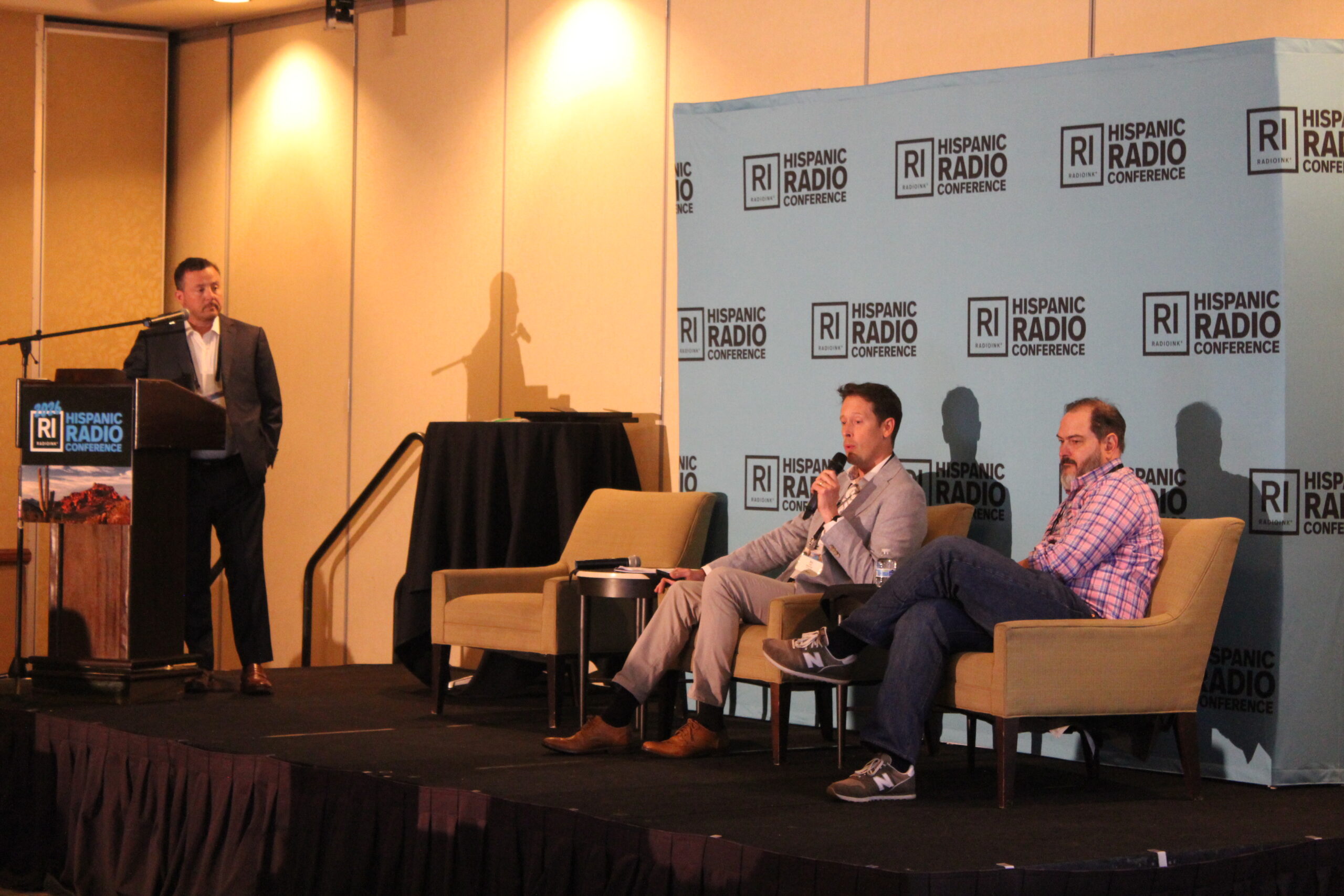
Tunkel flagged one format shift worth watching: Mexican regional’s audience share has softened over the past year, with the gap between it and Spanish contemporary narrowing. He also noted that no Hispanic podcast ranks in the top 50 podcasts consumed by Hispanic listeners, with Joe Rogan and Crime Junkie occupying the top two slots. “I think there’s an opportunity there for the marketplace to come on strong,” he said.
Ozen.fm Co-Founder and President Rodrigo Tigre argued that AI-powered tools already exist to take a morning show and strip out music, ads, and non-essential content, producing podcast-ready clips and social media cuts without adding to talent workload. “Technology is here to help you redistribute and repurpose the content you are already producing,” he said.
Tunkel added that encoded content pushed to platforms like TikTok, if consumed within 24 hours of air, can be credited back to a station’s core ratings under current Nielsen methodology, a strategy he said smart broadcasters are already exploiting.
Radio Reaches Out
Radio United Assistant Operations Manager and Program Director Mario Facundo told the community outreach panel with NOTAS podcast host Elvia Díaz and Silver State Broadcasting Owner Don Brown that three years of deliberately local programming, including two radiothons per year, had moved one of his stations from a 3.1 rating to a 9.1. “Live and local, know your audience, have fun,” he said.
“Live and local, know your audience, have fun,” he said. La Promize Company Founder and CEO Laura Madrid, who operates KNUV in Arizona with a news talk format targeting information and resources for Spanish-speaking communities, said the medium’s credibility in her market remains intact precisely because listeners trust what they hear on radio before they trust what they see on social media. “You’re going to get your information first on social media when it comes to news, but it will be trusted when you hear it on the radio,” she said.
Future Focused
The final session, on the industry’s road to 2030, produced the day’s most direct assessment of the structural moment. MediaCo Senior Vice President of Audio Sales Danny Lowry drew a line between the format’s fundamentals and the financial architecture built during consolidation. “This is why we’re seeing these bankruptcies,” he said. “It’s not radio funds all of our growth into digital video. It’s a profitable business, if you’ve got $200 billion in debt, at some point it breaks. I think that’s what’s happening. There’s going to be a big reset in radio.”
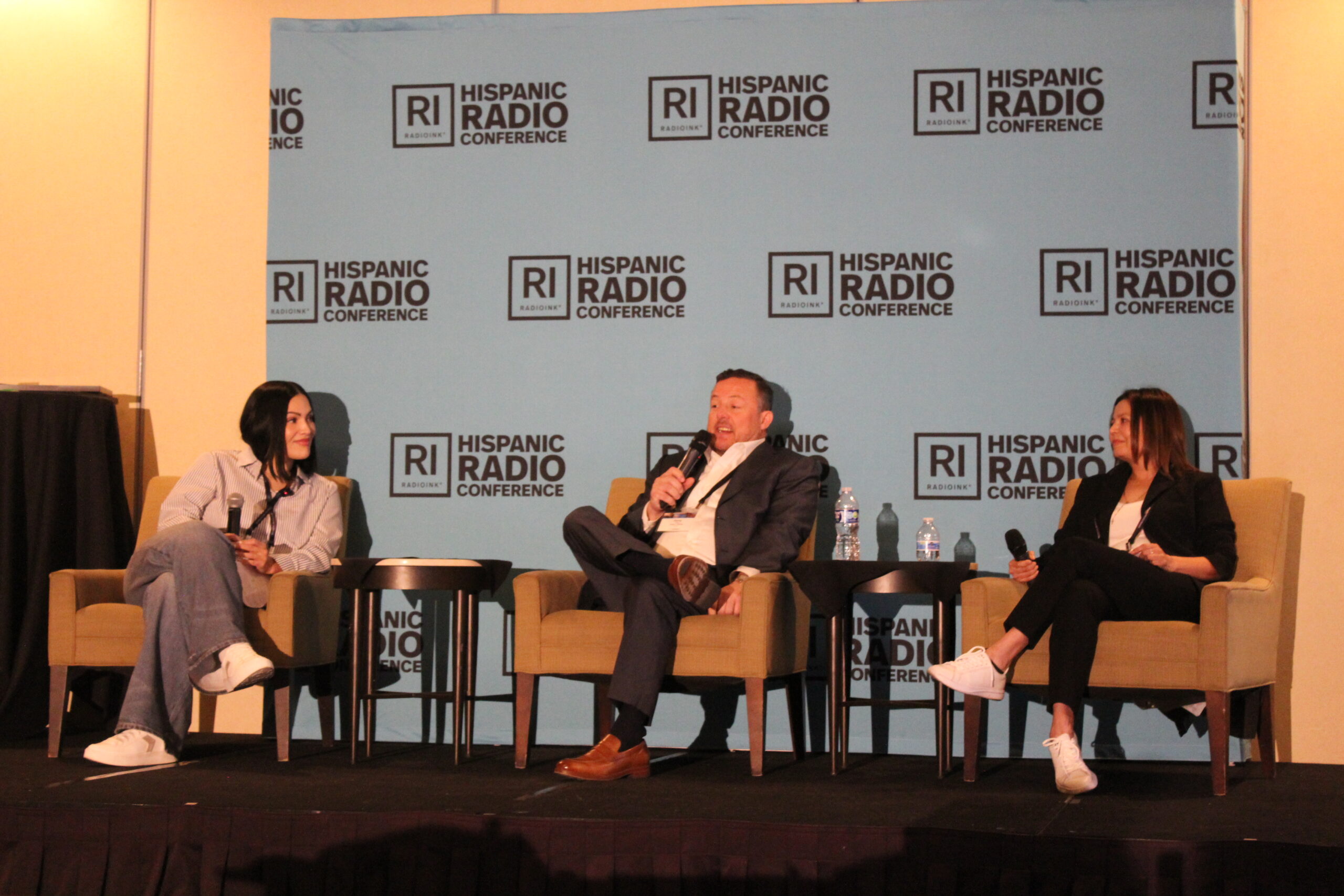
He argued the differentiation that survives the reset is loyalty, citing a Dallas car dealer who drew buyers from 19.1 miles away because that dealer had advertised in Spanish on their station. “In Dallas, you will drive by three, four dealers in 19.1 miles to go to that dealer,” he said. “Not because they got the best price, because that dealer had the common courtesy and respect to invite them into their business in language on their station.”
Futuri President of Enterprise Partnerships Erin Callaghan, moderating, posed the question of what radio would look like if it had been invented after the internet. KLAX Los Angeles and KRZZ San Francisco Program Director Elena Jovel said the answer lies in knowing the audience more precisely than any algorithm can. “AI cannot feel the butterflies that we feel. Our fears, our struggles, our emotions, how we communicate with each other,” she said. “That way is our course. AI cannot do that.”
Voice talent and HRC emcee for the day Issa Lopez recounted a layoff to illustrate to the room that relationship building is always more durable than the job. “They may have taken your job, but they did not take what you gave to this community,” she said. A contact she met at an industry conference that same year reached back out with an opportunity a decade later, its subject line reading “heard by millions.”