

Quu built on its second annual In-Vehicle Visuals Report during a Wednesday webinar. The topline? While radio is still ubiquitous in new vehicles, access is no longer automatic, and broadcasters will need strategy and strong programming to hold their place in the car.
The report provides a detailed, hands-on analysis of how audio sources like FM, AM, HD Radio, SiriusXM, streaming apps, and smartphone integrations are accessed in the 100 best-selling vehicles in the United States. Quu’s team, including Senior Director of Technical Services Joe Marshall and researcher Jackson Houchens, physically sat inside each vehicle to gather dashboard data and test audio usability firsthand.
“The entertainment system in today’s vehicles makes it a much more competitive playground for the radio industry,” said Quu CEO Steve Newberry during the opening session. “It’s not simply five buttons and two knobs anymore.”
One of the most urgent challenges for broadcasters is the rise of what Quu calls “audio forward” systems. “Radio forward is the designation that the operating systems opens to a radio screen at startup,” said Newberry. “Audio forward… those generally default back to the last audio source played. So if you’re listening to those equipped vehicles… it’ll come back to the radio station. But if it were an audiobook, it’ll go back to the audiobook or it will go back to Spotify or Pandora or XM Sirius or a podcast.”
This has major implications for content scheduling, said Jacobs Media President Fred Jacobs: “What it really means is there is no dead dayparts anymore on the radio… If people stop listening at that moment in time, what is there to actually listen to on the radio?”
“Advertisers haven’t hesitated challenging us,” said Jacobs Media VP Paul Jacobs. “They’re constantly saying radio is over, no one listens to the radio, quoting their kids. We know this isn’t true, but it will take root if our salespeople aren’t talking to our advertisers, utilizing data like this… to really show radio strength and viability in the car.”
He added, “We can’t expect advertisers to figure out what you are doing by themselves. So if you have a strong in-car strategy with ad graphics, with strong RDS, salespeople should be showing and reminding that your station, at minimum, is equal to Spotify and Sirius from a graphics standpoint.”
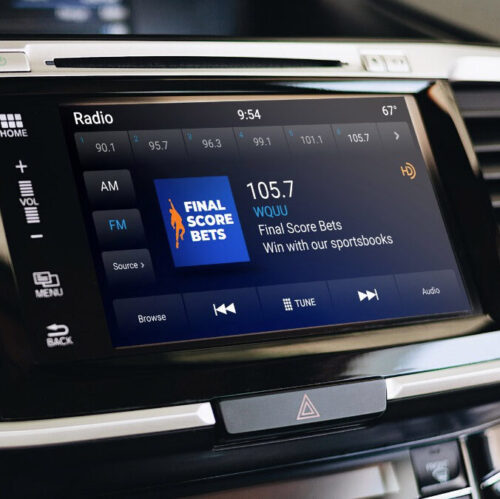
The visual dimension is increasingly critical. All 100 vehicles surveyed can display radio text, such as artist and title info, and 60% are capable of showing visuals like album art, station logos, or sponsor branding.
“Radio can be memorable by enhancing AMFM’s radio in vehicle experience by talking about things that are directed at people who are in the cars,” said McVay Media President Mike McVay. “Everything you can do on a phone can be done in the automobile.”
Xperi Senior Vice President Joe D’Angelo emphasized the need for broadcasters to compete visually and digitally in the dash: “Could you imagine if you were competing in these cars today with two knobs and a dial? The user experience that digital radio and the graphics capabilities of the car have afforded the industry is the foundation of what you’re going to do.”
And according to Newberry, the data is only half the point: “It’s not a dark cloud report for the radio industry. We think there are a lot of very positive signs in this and exciting signs.”
The full 2025 In-Vehicle Visuals Report, including dashboards, definitions, and model-specific features, is available for free at QuuReport.com.