
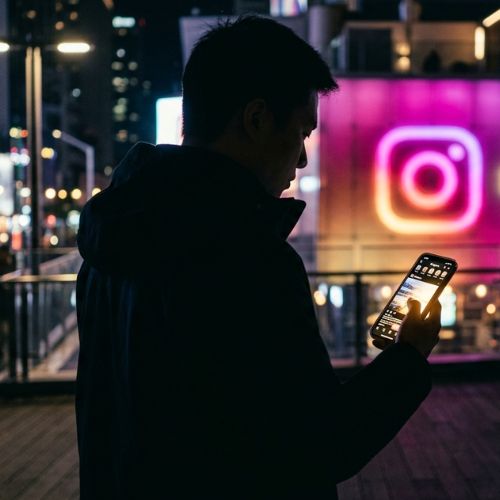
As questions about the ethics of unapproved AI-generated images of real people continue across all areas of broadcasting, Meta’s newest AI tool puts the social media leviathan inside the deepfake conversation broadcasters have been trying to get ahead of.
Meta rolled out the tool, called Muse Image, on Tuesday as the first release from its newly formed Meta Superintelligence Labs. The feature allows Meta AI users to tag, or at-mention, any Instagram account inside a prompt, pulling that account’s public photos into a generated image regardless of whether the tagged person has ever used Meta AI or agreed to have their likeness included.
Private accounts are excluded, but for radio, where on-air personalities build their brands on visible, searchable public profiles, the feature turns into an immediate, individual exposure problem. Some high-profile or verified profiles carry additional restrictions, but for the broader base of public accounts, inclusion is the default state rather than a choice. Opting out requires going into Instagram’s Sharing and Reuse settings and disabling content reuse for AI features.
What’s possibly most concerning to talent and local radio sellers is that Meta has said advertisers and agencies will gain access to Muse Image through its Advantage+ creative tools in the coming weeks, extending the same likeness-generation capability to commercial campaigns.
McVay Media President Mike McVay told Radio Ink that the development should push talent and their representation, if applicable, to revisit how identity rights are defined in their contracts.
“For some time now I’ve been suggesting to talent and their agents that NIL (Name, Image, and Likeness) should have V (Voice) added to the acronym. This new development from Meta makes it essential that talent revisit their rights in owning their Name, Image, Likeness, and Voice,” McVay said.
“It will be an annoyance to talent whose ‘Brand’ is not high level, but those whose is will be forced to protect that which they own,” he added.
Earlier this year, NAB CEO Curtis LeGeyt flagged AI content scraping and likeness protection as the next major legislative frontier for broadcasters, following the industry’s push for the AM Radio for Every Vehicle Act. Congress has also moved on the issue directly, with a bipartisan reintroduction of the NO FAKES Act, backed by NAB, that would hold platforms liable for hosting unauthorized digital replicas of a person’s voice or likeness and would preempt a growing patchwork of state deepfake laws.
How Meta’s latest moves, given its extensive Terms and Conditions for users, would be affected by NO FAKES remains to be seen.