



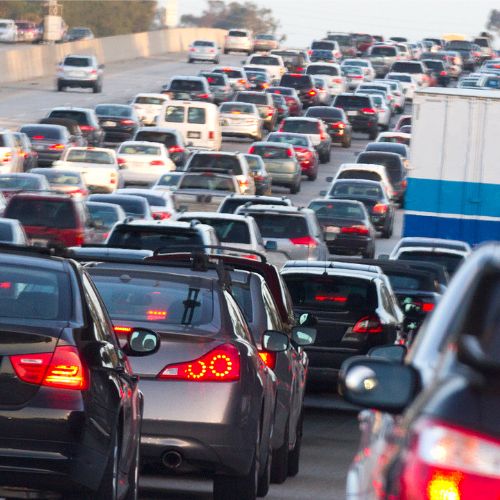
As the post-COVID commute continues to climb, daily drivers’ headaches are becoming brands’ best opportunities to connect. With commuters spending nearly two full days each year sitting in congestion, radio delivers consistent reach to engaged, captive audiences.
According to new data from transportation analytics firm INRIX as reported by Katz Radio Group, the typical US driver now spends 49 hours a year stuck in traffic, a six-hour increase from 2024. That extended in-car time creates a rare environment of sustained attention for AM/FM. Despite the growth of streaming audio, podcasts, and satellite radio, broadcast radio still captures roughly nine out of every ten minutes of in-car audio listening, per Edison Research.
More traffic means more time spent with in-car media, particularly in dense, high-value markets.
Sixteen US cities exceeded the national average for hours lost to traffic in 2025, many of them among the country’s biggest radio metros. Drivers in markets such as New York, Chicago, and Los Angeles logged congestion levels more than double the national norm, translating into long, recurring windows of in-car listening during peak drive times.
Chicago emerged as the most impacted US city, with drivers losing an average of 112 hours to traffic, surpassing New York at 102 hours and Philadelphia at 101. Delays in Chicago rose 10% year over year, while congestion in the New York urban area remained relatively flat. That stability appears tied to NYC congestion pricing.
Unlike many media moments that compete with screens and multitasking, time behind the wheel offers brands repeated exposure to listeners who are present, engaged, and reachable through audio.
Yet even as radio continues to deliver wins, marketers may remain underexposed to AM/FM, affecting their perceptions. An October 2025 study, combining Advertiser Perceptions and Quantilope research from 303 marketers and 1,600 consumers, shows 85% of marketers and agency professionals now commute to the office at least part of the week, compared to the 95% average.