



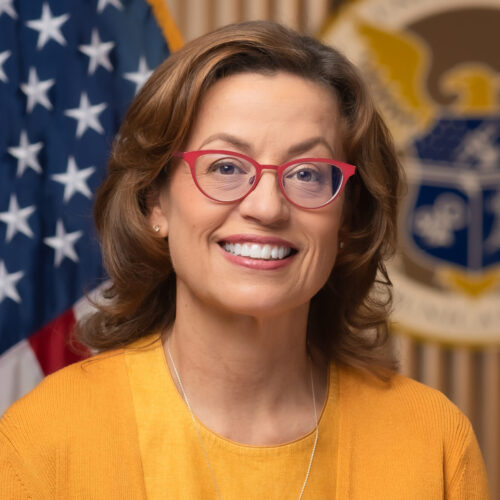
Having already expressed concerns about her job security at the FCC, Commissioner Anna Gomez will likely find little comfort in the Supreme Court’s latest ruling allowing President Donald Trump to fire FTC Commissioner Rebecca Kelly Slaughter without cause.
The 6-3 decision, with the Court’s three liberal justices dissenting, sets the stage for a December argument that could overturn nearly 90 years of precedent protecting independent agencies from presidential interference, including the very statutory protections that currently shield Gomez from removal.
The Court’s emergency order in Trump v. Slaughter not only permits the immediate removal of Commissioner Slaughter but also fast-tracks the case for oral argument in December. This procedural move bypasses the typical appeals process, underscoring the majority’s apparent eagerness to address fundamental questions about presidential power.
The Court has directed the parties to brief and argue whether statutory removal protections for FTC members violate separation of powers principles, and whether federal courts have authority to prevent removals from public office. Since 1935, Humphrey’s Executor has allowed Congress to give agency leaders for-cause removal protection, a foundation for “independent” commissions that perform quasi-legislative and quasi-judicial functions.
In her dissent, Justice Elena Kagan, joined by Justices Sonia Sotomayor and Ketanji Brown Jackson, blasted the majority’s use of the emergency docket, arguing the FTC Act’s text controls how commissioners can be removed only for “inefficiency, neglect of duty, or malfeasance in office.” She warned the Court was effectively shifting power from Congress to the President before resolving the constitutional questions on the merits.
For Gomez, the stakes are immediate and personal. She is the lone Democrat at the FCC under Chairman Brendan Carr. She has been outspoken against what she has called the administration’s “weaponizing” of FCC authority.
At NAB Show 2025, she tied federal diversity-policy crackdowns to broader attempts to control newsrooms, calling it “control of a private company’s employment practices” driven by executive direction and not the FCC’s core mission. By late spring, her language sharpened. At a Los Angeles town hall, Gomez framed the stakes as a press-freedom fight and a test of the FCC’s independence: “If I get fired, it isn’t because I didn’t do my job – it’s because I insisted on doing it.”
As partisan conflict at the Commission escalated over the summer, Gomez said she would sue if removed mid-term, telling an audience at the Technology Policy Institute’s Aspen Forum that, like Slaughter, she’s prepared to mount a legal challenge against any attempt to oust her for political reasons.
Her criticism intensified around free-speech controversies just last week. In coverage of the political backlash tied to broadcast treatment of comedian Jimmy Kimmel, Gomez stated plainly that “this FCC does not have the authority, the ability, or the constitutional right to police content or punish broadcasters for speech the government dislikes,” arguing that even floating license threats creates an “existential risk” to press freedom.
Even with concerns over a potential firing, with only two other seats filled on the five-member Commission and months of radio silence from the Trump administration on potential replacement commissioners for Nathan Simington and Geoffrey Starks, removing Gomez could leave the agency without the three-member quorum necessary to conduct official business.
It would be unprecedented for the FCC to attempt to operate without a quorum.


