




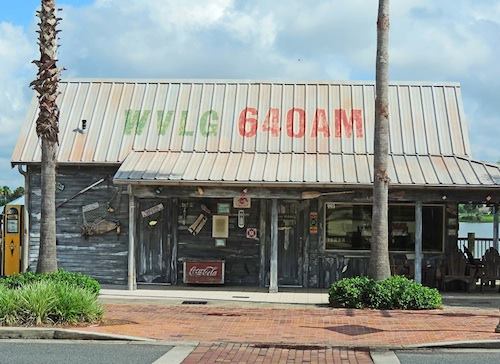
Travel to about the even center of Florida, and you’ll find The Villages – a retirement community with a larger population than Charleston, SC. And if you ask many of its residents what they’re listening to, they’ll point you to 640 AM WVLG.
What began as a public address system to promote open houses and home sales is now a commercial outlet heard across community squares, pickleball courts, and pools, incorporating local advertising and becoming a new platform for retired radio professionals who had relocated to The Villages. Many of them, some well into their 80s, still host shows today.
Radio Ink sat down with veteran radio programmer Steve Rosen, who has led WVLG for The Villages Media Group since 2020. As Rosen shares, in an industry often focused on youth, scale, and automation, WVLG’s success offers more than a case study in niche radio: it’s a reminder of what happens when you lean into community, honor experience, and meet listeners exactly where they are.
Radio Ink: Tell me about the average WVLG listener.

Steve Rosen: Our average listener – the average resident in The Villages – is around 65 years old now, so it’s getting younger. Our average listener just wants to have fun – “live the dream,” as they say here – and embrace the lifestyle of being a Villages member. There are 800 holes of golf, tons of pickleball courts, bars, restaurants, something on every corner.
It’s a lifestyle. So it’s a fun group to broadcast to. When I took over four years ago, we fine-tuned the format to a kind of a Classic Rock meets Oldies meets Yacht Rock.
And we’re kind of the only radio station that serves The Villages. We get signals from Ocala and Orlando, but they don’t do what we do. We do lost pet alerts. Who does lost pet alerts anymore? And we have like a 97% success rate connecting lost pets with their owners. We really are community-driven and community-active. The listeners are like, “You guys are a fun radio station. You’re fun on the air. You’re informed, but you do it in a way that doesn’t slap us in the face.”
Perfect example: we went round-the-clock during the last hurricane. We have a separate studio and a hurricane-safe bunker here in Central Florida.
I was there with a sidekick, Kelly Hilton, and our weather guy, Chris James. We did the Hurricane Milton Pajama Party. We had junk food, stayed up all night telling stories, and kept people informed on what was going on. “Okay, the hurricane’s now in St. Pete or Tampa,” and, “Here’s what we can expect.” But we’d mix in stuff like, “Let’s talk about our junk food now.” Then back to, “It’s moved inland, and here’s what we do next.”
We had so many people call in and say, “That was so cool because we didn’t feel threatened. We felt like we were part of your conversation.” And that’s what we try to do all the time. We try to reach people on a cognitive and emotional level. All positive, all fun – even when it’s a severe situation.
Radio Ink: You’re selling directly to a demographic that many companies and radio outlets have been accused of moving away from: 50+. What’s it like building ad relationships around an audience that’s often written off?
Steve Rosen: Well, here in Central Florida, this is where all those people who’ve been written off live now, right? So it’s not a hard sell from an advertising standpoint. The challenge is convincing businesses of the need for their services.
This station spent several years catering to folks who had already bought their final car, final house, and so on. So, now our conversations are with 160,000 residents age 55 and up who still love to do things: travel, take big cruises, redo landscaping. We’ve got a lot of advertisers who’ve been with us forever because of that audience, and we’re bringing on new advertisers every day for the same reason – they know this is the audience we serve.
We’re very fortunate. We don’t really have much competition from a radio standpoint. We’re a ‘60s through ‘90s classic hits/oldies station with a little rock. There’s some Orlando signals that bleed in, but nobody’s really listening to them here. Some Christian rock and other stuff comes through, but none of those stations have the audience eating out of the palm of their hand the way we do, because we connect with them.
Radio Ink: Another fascinating point – WVLG doesn’t run political ads.
Steve Rosen: Yeah, we don’t take political dollars. We don’t take legal dollars. We don’t want Morgan & Morgan climbing down our throats every break, saying they’re the biggest and the best and “give us a call.” We stay away from all of that.
We don’t take politics because we don’t want to add any more angst to this market. The market is shifting a bit politically. Four or five years ago, it was definitely red. Now it’s becoming more purple. And even the blues and purples are saying, “We don’t want any of this stuff. We know where to find it if we want it. You guys just play the music. Talk to us about what’s great in The Villages. Keep us informed about who’s playing in the squares tonight. Tell us what new areas are opening up. Be part of The Villages.”
Radio Ink: Do you think that approach makes it a more appealing environment for advertisers?
Steve Rosen: I think it does – and probably not for the reason most people would think.
When politicians and law firms advertise, they spend so much money that they end up taking over the station. You don’t hear anything else. It’s just that one cause or one firm over and over again. We don’t want that.
People don’t tune out during our commercial breaks. We try to keep it to three four-minute breaks per hour. Occasionally, we’ll do five minutes. But we have a phenomenal Production Director. He was at Disney for a long time, and he mixes up the voices, the styles, the approaches. He makes every commercial a customized masterpiece, if you will.
The way we balance our commercial sets, you might hear a couple of car dealers each hour, but you’re not going to hear people yelling about what’s wrong with the US or your last auto accident. You’re going to feel good listening to our commercial breaks.
And how many people can say that—“I feel good listening to the commercial break”?
Read part two of our conversation with Steve Rosen, including a candid take on rebuilding digital strategy, what modern radio operators get wrong about local content, and the one thing he says AM stations must do to stay relevant in the next decade, HERE.



The listener is the star. Always remember that. 50 + years of on-air experience speaking from Small to Major market.
WVLG’s listener‑first approach—skipping politics, uniting retirees via local lost‑pet alerts, live AM broadcasts and genuine community ties—proves that real connection and fun-driven programming still shine in radio.
You’re reminding the industry of radio’s greatest strengths: Meet the listeners where they live and tailor the content in ways that other media wouldn’t/couldn’t dream of. Thanks, Steve!
Excellent story about how radio is supposed to be-market driven, audience responsive! What a great niche!
What a great story! The Villages is the PERFECT place for a radio station. Talk about a cohesive audience! As soon as I saw the gist of the article, I KNEW they were on to something. I don’tt know if there are any other places in the country that could take advantage of this, but these folks are to be commended. Almost makes me want to move to the Villages and start selling ads again! Congratulations!
Comments are closed.