


Radio has the reach. Now, speakers at Sunday’s Nautel Radio Technology Forum argued, it needs the visuals, the data, and the metadata discipline to convert that reach into digital advertising dollars before automakers fill the dashboard with something else.
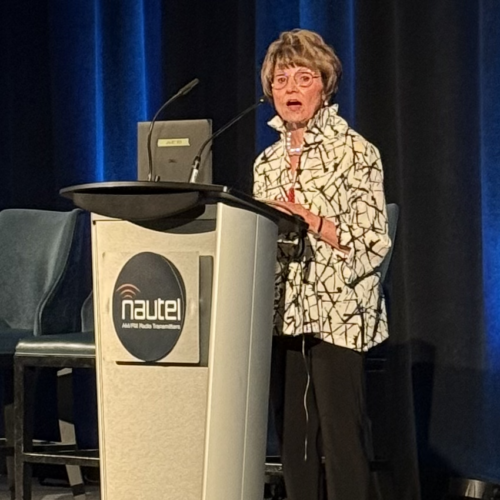
The morning session, held in the Main Ballroom at Westgate Las Vegas, featured presentations from Radio Ink Publisher Deborah Parenti, Quu CEO Steve Newberry, Max Media of Hampton Roads VP/Market Manager Keith Barton, Xperi Vice President Joseph D’Angelo, and NAB Senior Director of Science and Technology David Layer.
Parenti framed the revenue stakes.
Broadcasters can now command 10 to 30% premiums when images and text are synchronized with audio ads, she said, and the connected dashboard represents radio’s clearest path into digital advertising budgets. “Advertisers are already eyeing the car’s infotainment screen as a commerce and ad surface,” Parenti told the room, pointing to industry estimates that in-car commerce and advertising could reach hundreds of billions of dollars over the next decade. “Radio can either be sidelined in that conversation, or sit at the center of it by owning the audio and a meaningful chunk of that screen.”
Parenti pointed to studies showing synchronized dashboard visuals produce lifts in awareness, consideration, and purchase intent alongside audio. Her framing positioned the combination of Quu’s visual ad platform and the DTS AutoStage Broadcaster Portal as the tools that allow radio to compete on digital terms. “When you can walk into an agency and say, ‘Here’s a heat map of in-car listening near your stores,'” she said, “you’re no longer selling just ‘spots and dots.’ You’re selling behavioral evidence.”
In the wake of its 2026 In-Vehicle Visuals Report, Newberry interviewed Barton, who illustrated what revenue adoption looks like at the station level.
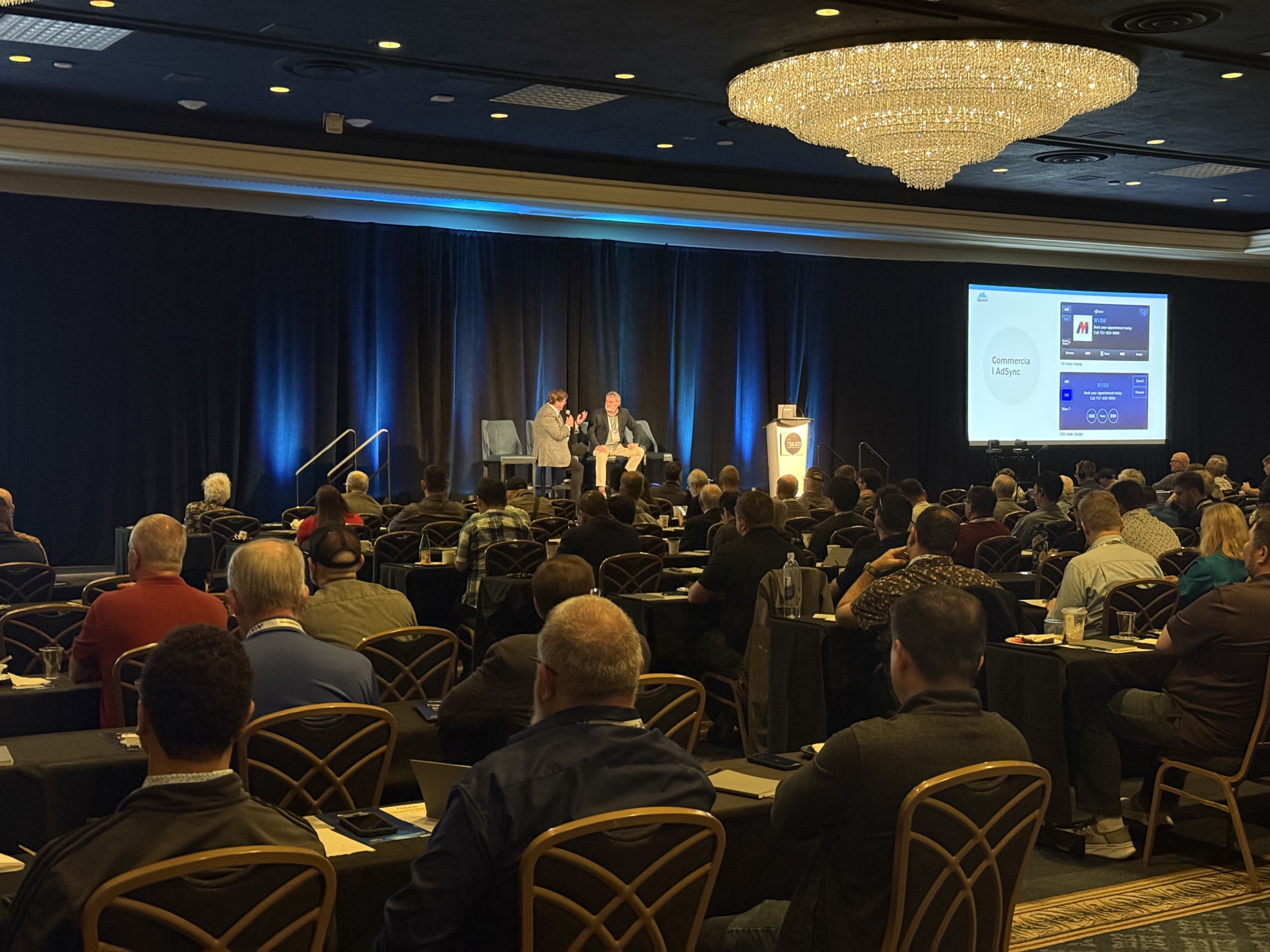
Max Media has integrated Quu visual advertising across four stations and developed an internal tracking system built around a large monitor displaying real-time visual ad status for every active advertiser. A red flag beside an account signals a local advertiser not currently buying the visual product.
Barton said the product is priced as a 10% increase on a standard buy. “If it’s $1,000 a week at $100, they get Q,” he said. “It’s pennies for the impact that it can have.” He described the overall return as approaching four-to-one. “We haven’t quite hit the five-to-one,” Barton said. “But we’re at four to one, and it’s pretty impactful.”
To move local advertisers unfamiliar with the product, MaxMedia’s sales team sends five “spec presentation” cakes per week to new businesses, each featuring the station logo, a Quu screen image, and a QR code linking to the spec spot. “You can’t get past the gatekeeper,” Barton said. “But if you bring a cake in, everybody likes cake.”
The QR code addition turned the physical leave-behind into an interactive product demo. “Just the engagement of them participating and hearing their name in lights is what we call it,” he said.
D’Angelo presented the newest version of the DTS AutoStage Broadcaster Portal, a measurement platform. He described ad attribution as the next development, with spot-level impression reporting and location-based attribution targeted for later in the calendar year. “This is not science fiction,” he said. “This is something we’re developing now that you should expect to see next calendar year.”
Layer closed the session with a call to action directed specifically at stations that have yet to act on either digital radio conversion or metadata implementation. His sharpest example involved General Motors. Layer said he conducted dashboard audits of GM vehicles and found no HD Radio, leaving those cars with a bare-bones station list and no graphical metadata display. “It’s just sad,” he said, contrasting the GM screens against vehicles running DTS AutoStage. “All the other audio services in these vehicles, they look fantastic. They have everything that you would want.”
Layer argued the disparity makes the case for why broadcaster adoption of digital radio and metadata directly influences how automakers prioritize and present broadcast radio relative to competing audio services. “It’s really up to the broadcasters,” he said. “You have to start using your metadata.”
Layer’s recommendations: register for DTS AutoStage, develop a metadata plan that coordinates assets across over-the-air, HD, and streaming platforms, and convert to digital radio where stations have not yet done so. NAB’s digital dash best practices document is available at no cost.