



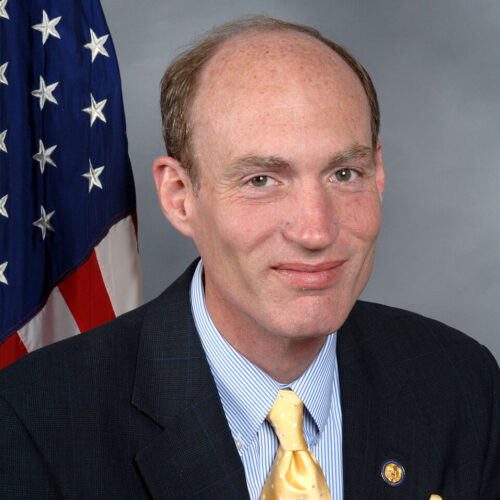
Former Michigan Congressman Thaddeus McCotter is the latest to join the throng urging Congress to advance the AM Radio for Every Vehicle Act, arguing the bipartisan measure is critical for data privacy, public safety, and preserving radio’s vital role in American life.
Writing in a new op-ed for The Daily Caller, McCotter frames the debate over AM radio in cars as part of a broader clash between consumer choice and technology companies seeking greater control over in-vehicle audio systems. He contends that Big Tech companies and automakers are pushing to replace traditional AM receivers with integrated systems powered by Google, Amazon, and Apple.
These new systems, he says, are capable of collecting and monetizing user data.
“Sure, there’s nothing wrong with knowingly and voluntarily using these systems. One can factor in the privacy risks, then choose when it is appropriate to use – or not to use – them. The present problem, however, is that corporate greed is limiting consumer choice and control,” he wrote.
McCotter, who represented Michigan’s 11th Congressional District as a Republican from 2003 to 2012 and served as Chairman of the House Republican Policy Committee, argues that AM radio differs fundamentally from connected infotainment platforms because it does not collect personal data and is freely accessible over public airwaves. If the AM Radio for Every Vehicle Act is enacted, he writes, it would preserve that option for drivers nationwide.
The bill, introduced in both the House and Senate, has secured more than 375 co-sponsors in the House and Senate and is now awaiting floor consideration by chamber leadership. Yet, as McCotter notes, it has not advanced to final passage. “As President Donald Trump recently told Hugh Hewitt, this topic ‘is a very big deal’ and his administration ‘will be doing something on that,’” he commented.
Beyond privacy, McCotter discusses AM radio’s role in the nation’s Emergency Alert System, arguing that its signal resilience makes it less susceptible to cyber disruption than internet-based communications. He also frames the issue as one of civic cohesion, pointing to the broad coalition of supporters that includes rural and urban organizations, political groups across the spectrum, and listeners of varying socioeconomic backgrounds.
“AM radio is American radio,” McCotter said. “Entire and immense cross sections of Americans converge and constitute the listenership of this endangered technology, AM radio: rural and urban residents (the American Farm Bureau Federation and the National Urban League support the bill); liberals, conservatives, and independents; well-off listeners and under-represented voices (who would lose this vital platform).”
Support for the AM Radio for Every Vehicle Act spans government, public safety, senior advocacy, agriculture, labor, and minority media, with named backers ranging from AARP and the American Farm Bureau Federation, to former FEMA administrators and a coalition of former NYPD Chiefs. The NAB has cited more than 125 supporting organizations in total.
As Congress moves deeper into an election year, McCotter argues the measure presents an opportunity for bipartisan action. “Congress needs to act to finally pass, so Trump can sign into law, the AM Radio for Every Vehicle Act of 2025 – ASAP – even if, albeit belatedly, in 2026,” he wrote in closing.
The NAB has released state-specific PSAs thanking AM Radio for Every Vehicle Act supporters, asking listeners to reach out to Congress to help get the Act passed. Get them for your station here.


