



In an era of infinite scroll and synthetic content, Americans are feeling digitally sick and looking for something real. A new nationwide study from iHeartMedia suggests the antidote may be as analog as it gets: the human voices and live connection of broadcast radio.
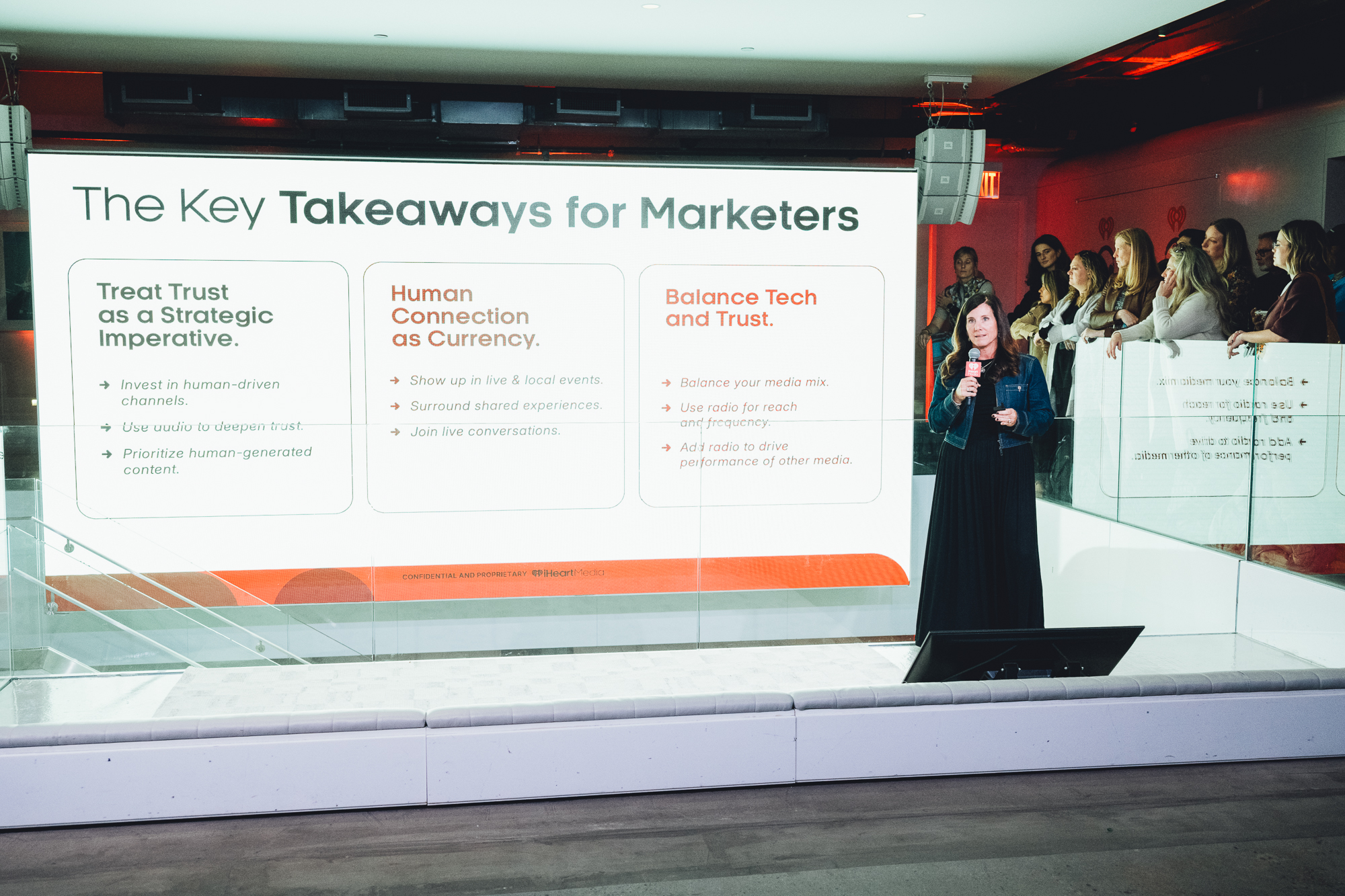
The findings of AudioCon 3.0: The Human Consumer were presented by iHeartMedia Chief Business Officer Lisa Coffey and President of Insights Lainie Fertick at the broadcaster’s annual AudioCon event. Conducted by Critical Mass Media, the findings paint a picture of emotional exhaustion and digital overload across generations.
82% of Americans worry about AI’s societal impact, and 90% say it’s important that the media they consume be created by real people, not algorithms. While 92% use social media, two-thirds say it makes them feel worse and more disconnected. Half believe social platforms are driving people further apart, with 86% admitting they argue online in ways they never would in person.
In addition, trust in digital information is eroding. Two-thirds of respondents say algorithms control what they see online, and 82% believe their feeds primarily reinforce what they already think. Meanwhile, 86% report seeing more ads than posts from friends or family; a trend most noticeable among higher-income households.
Even childhood is being reshaped by tech saturation. Among kids ages 8 to 12, 61% have never made their own plans with a friend, and 71% have never used a sharp knife, suggesting parents’ safety concerns are limiting independence. Online activity has become a substitute for real-world autonomy: 7 in 10 children stay up past bedtime using devices, 1 in 3 have chatted with AI bots, and 1 in 4 have messaged strangers online.
Attitudes toward artificial intelligence are conflicted. While 97% of adults know what AI is and 70% use it, distrust remains high. Three-quarters don’t want AI in their entertainment, and two-thirds worry it could threaten jobs or even lead to human conflict.
Yet despite this digital dependence, people still crave proximity and human connection. Eighty-six percent say being near other people makes them feel safer, and 95% say it feels good to know someone cares. Nearly all respondents (92%) agree that technology can’t replicate meaningful relationships.
iHeartMedia frames the findings as a call to action for marketers to prioritize authenticity, trust, and empathy, recommending combining precision targeting with live, human-led channels such as broadcast radio, events, and conversational media to reconnect audiences in what it calls an “algorithmic age.”
iHeartMedia CEO Bob Pittman said, “In a world of digital saturation and AI acceleration, this study reveals that consumers are not just looking for convenience—they’re searching for meaning. Sports, radio, live media, and human-led storytelling offer a rare sanctuary of trust, empathy, and shared experience. Above all, we must continue listening to Americans more closely than ever before and focus on ways to foster real connection and amplify our collective humanity.”
Fertick added: “The data shows us that consumers are emotionally driven, digitally fatigued, and yearning for authenticity in an increasingly algorithmic world. This is especially critical with rapid technology advancements and the growing use of AI in the media industry. For marketers, it creates both hurdles and unique opportunities to connect with audiences in this new environment.”