


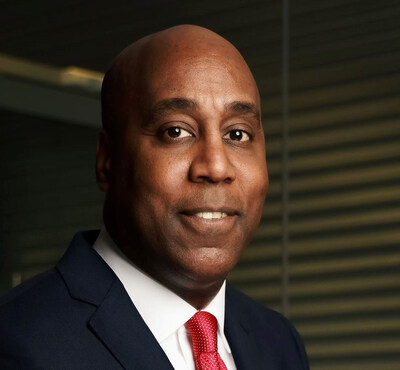
Community as an operational foundation was the focal point when Urban One Co-President of Audio Eddie Harrell sat down with RAB President Mike Hulvey to offer a look at how the company has built its identity across more than four decades of service to Black America.
“Every time our stations are connected to things in the community, that really proves that there’s something there that makes a difference,” Harrell said on the RAB’s Radio on Main Street podcast. “Whether it’s doing a free concert, whether it’s doing a health fair, whether it’s doing a job fair, whether it’s being the voice of information when there’s a natural disaster in our communities — that’s who we are.”
Harrell and Deon Levingston were tapped roughly a year and a half ago to share audio division leadership following the retirement of Radio Division CEO David Kantor.
Urban One’s cross-platform structure of local radio, TV One, Reach Media, and Interactive One informs how Harrell says he thinks about advertiser relationships. “When you combine those assets…that gives us a cross-platform opportunity to serve our advertisers. It is critical to our success.”
On competition, Harrell pushed back on the notion that radio groups are each other’s primary threat. “In this digital age, anybody can be a competitor walking down the street with the flip of a phone. We just have to prove we can do it better.” He called on the industry to collectively surface its community wins and carry that evidence to advertisers.
Urban One uses AI for commercial script writing and daily content development, though Harrell draws a clear line on its limits. “It’s not going to replace the secret sauce of sitting down with people on a day-to-day basis, whether you’re talking to a client, whether you’re interviewing a star that’s coming into the studios, but there’s a place for it.”
Harrell, who came to radio from the nonprofit sector after leading the Columbia Urban League in Ohio, closed with a challenge to the broader industry. “We have to pat ourselves on the back. We shouldn’t be shy about saying we’re here, we’re not going away, we’re viable, we’re vibrant. The whole industry has to really puff our chest up and be confident in who we are.”
Fact check
Most employees are working more and earning less this has adversely impacted the quality and quantity of all that use to be done in their respective communities.
Not sure how current leaders can pat themselves on the back for being great stewards of anything…
Comments are closed.