
The NAB and a bevy of licensees seek a relaxation or wholesale repeal of the Commission’s local broadcast ownership rules.
An advocacy group for African American station owners vehemently disagrees, and has asked the Carr Commission to leave its current regulatory limits as-is — just as it has done with every quadrennial review of the rules since the signing into law of the Telecommunications Act of 1996.
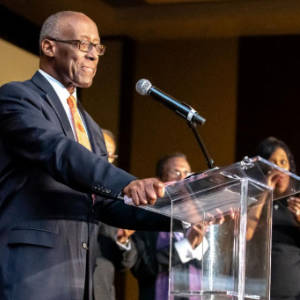
In an ex parte filing filed just in time to offer comments in response to the Commission’s long-delayed 2022 Quadrennial Review of its media ownership rules, the National Association of Black Owned Broadcasters and its President, Jim Winston, asserts that “relaxation or repeal of the Commission’s broadcast ownership rules has led to excessive concentration of broadcast station ownership and a decline in minority ownership.”
In stating its opposition to any revisions of the Local Radio Ownership Rule, NABOB contents that ownership of broadcast stations among Blacks has declined since 1995 because of Congress’s repeal of the minority tax certificate policy, the Supreme Court’s Adarand decision, and the approval by President Clinton of the Telecommunications Act of 1996.
Increased owner consolidation, in Winston’s view and that of NABOB, “reduces opportunities for minorities to enter the business or to grow.” And with most existing Black American broadcast owners in radio, keeping the rules for AM/FM ownership in place are integral to keeping Black media ownership healthy. “Because radio stations generally sell for less than television stations, radio has been, and continues to be, the gateway to station ownership for most minority entrepreneurs,” Winston writes. “Therefore, any change in the Local Radio Ownership Rule to allow increased consolidation will have a significant negative impact on Black American station owners, aspiring new entrants, and other minority station owners and entrepreneurs.”
Then there is the potential elimination or relaxation of the “Subcaps rule.” NABOB believes this would be particularly damaging for the AM radio industry as a whole, in addition to being damaging to Black American AM station owners. NABOB also believes American consumers who listen to Black-owned radio stations will be negatively impacted by further radio industry consolidation. The reason offered by Winston? More consolidation will result in Black owned stations “being purchased outright by larger competitors or denied sufficient advertising dollars to continue operations. In either instance, the audience listening to Black owned radio will lose that distinct voice.”
With a threat of “another new set of barriers to entry for new entrepreneurs … maintaining the existing rule will promote competition, localism and viewpoint diversity, which will maintain existing broadcast voices, and may provide entrepreneurs opportunities to create additional broadcast voices, which will benefit American consumers,” NABOB asserts.