


US Hispanics hold $4.4 trillion in purchasing power. The ad industry is sending roughly 4% of total spend its way. Day one of the 2026 Hispanic Radio Conference in Phoenix made the case, session by session, that the gap is possibly the biggest opportunity in radio.
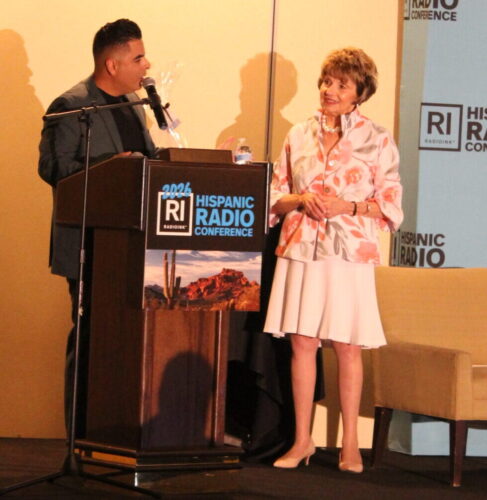
Before the first session got underway, Radio Ink President and Publisher Deborah Parenti welcomed attendees with the day’s emcee, Edgar “Shoboy” Sotelo, and urged support for the NAB Political Action Committee and pressed the importance of the AM Radio for Every Vehicle Act on the room. “If that act doesn’t get passed and auto manufacturers are allowed to take radio out of cars, they’ll start with AM radio — and trust me, according to Chrysler, it will be all radio eventually,” Parenti warned.
The Numbers Have Changed — and So Has the Pitch
PQ Media Executive Vice President and Research Director Leo Kivijarv opened the morning with the data. The $4.4 trillion figure is well ahead of the $3.1 trillion drawn from the 2020 U.S. Census that many in the room may still be citing. “They are not making it relevant to the audience they’re trying to reach,” Kivijarv said of advertisers whose total-market buying strategies and creative localization failures he identified as the structural cause of the spend gap.
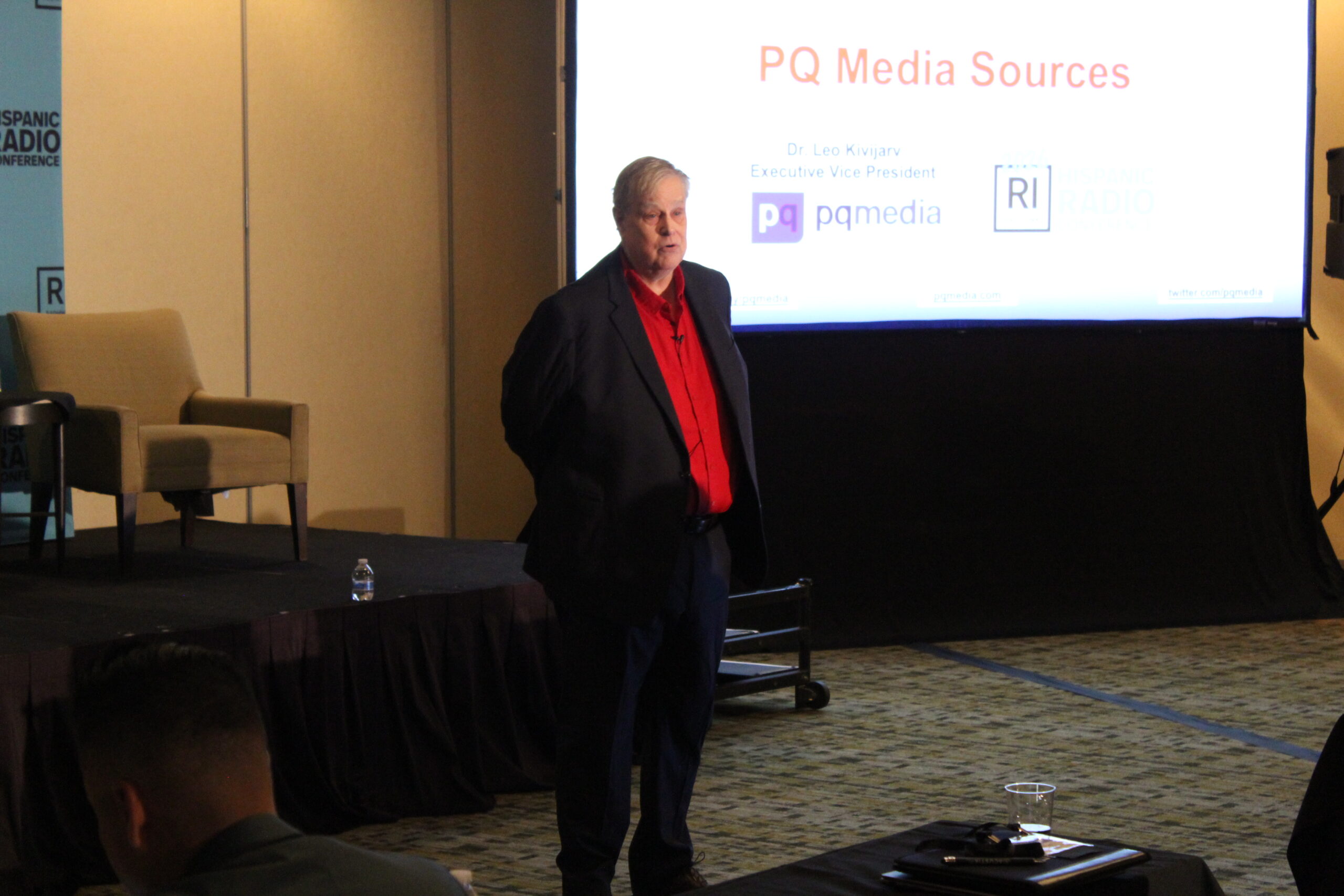
The most immediate revenue window, he argued, is already open: Hispanic radio is projected to capture $35 to $40 million in political advertising during the 2026 midterm cycle, up from $21 million in 2020. Gubernatorial races drive disproportionate radio spend in midterms, and this cycle carries roughly three times as many gubernatorial races as a presidential year. Sales staffs, Kivijarv said, should be targeting competitive House districts where Hispanic populations exceed 20% and moving fast. “60% of all spending occurs within the last month.”
The Multi-Platform Argument
The conference’s multi-platform session brought in Zach Sang Show host Zach Sang by video from his Culver City studio in conversation with Jeff Liberman, and operational details were the point. Hispanic operators, Sang argued, are building FM audiences and digital followings in parallel but failing to present advertisers with a combined impressions number. His show commands north of $80 CPMs without FM carriage. “Nobody is actively, consistently taking their show and creating it in a way that works for them,” he said. “Nobody is perfectly matching an FM radio experience with a digital experience and selling it as one holistic impressions number.”
On AI as a talent replacement, Sang drew a firm line. “AI cannot be a canonization of talent. It needs to be an answer of talent. It should never be a replacement for talent.”
Gen Z Is Already Listening
Nielsen data presented in the Gen Z session, moderated by Mama Rico Productions founder Raul “Rico” Colindres, showed Hispanic Gen Z listeners tuning in up to 11 hours weekly, at two to three times the rate of general market Gen Z. Panelists Tino Cochino, Z100 Afternoon Drive host Crystal Rosas, and Shoboy converged on a single premise: the differentiator is the personality, not the playlist.
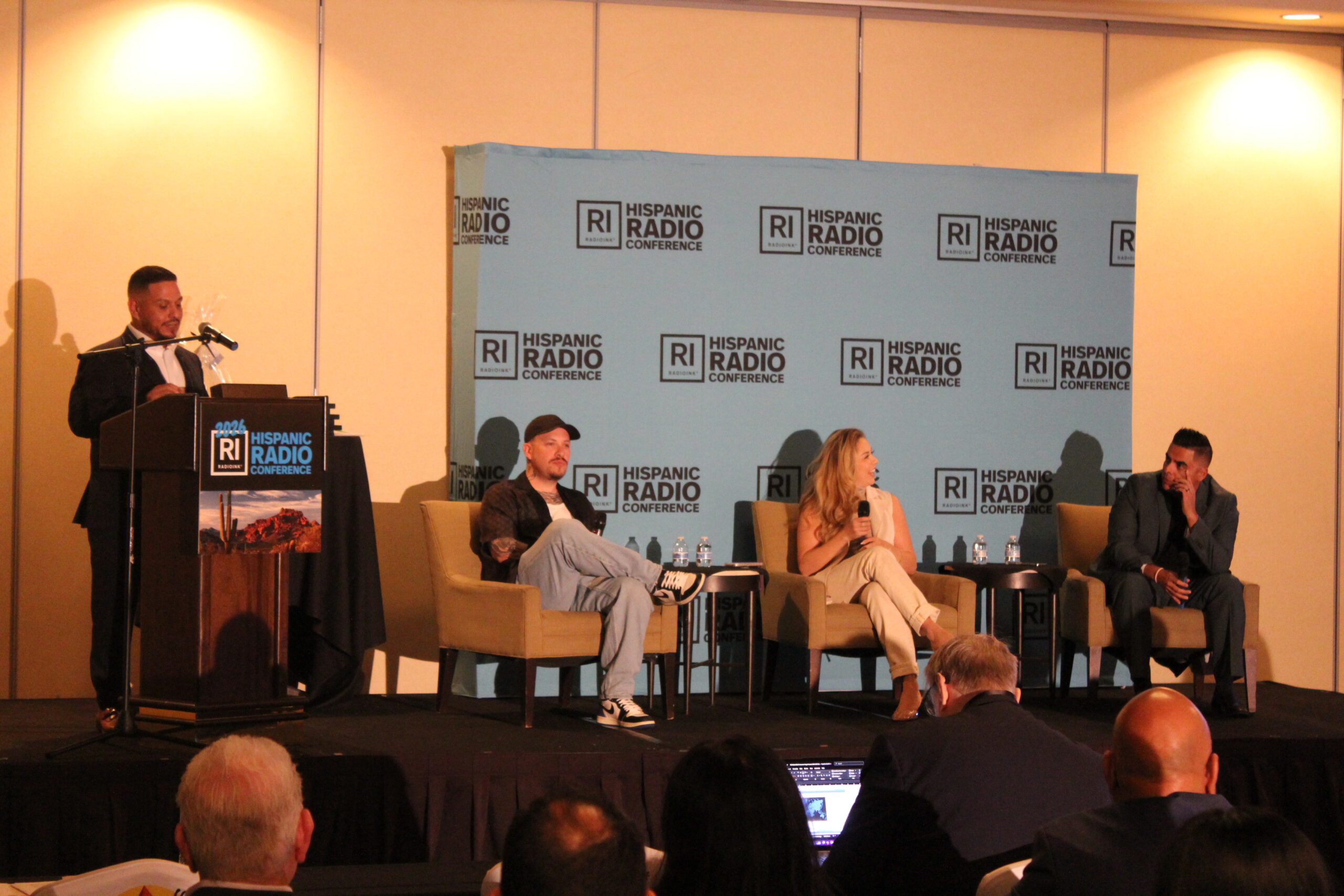
“The music is everywhere,” Cochino said. “Whatever you want to hear at any given time, there’s no more room for that being the differentiator. So if we can actually make this connection with people and make them want to ride in the car with us, just to feel that authenticity, that’s the biggest thing.”
Rosas pointed to real-time companionship as radio’s structural advantage over on-demand platforms. “When it comes to radio, there is someone there in this seat, ready to hear you, ready to tell you exactly what is trending, what’s exciting right now.” Shoboy argued the bilingual format is built for a generation more publicly connected to its heritage than any prior and called for coordinated pricing discipline across operators. “We’re not going to go anything lower than this as Hispanic radio, because we know our worth. They need us.”
Content With Purpose
The digital strategy session, moderated by StreamGuys Vice President of Technology Eduardo Martinez, produced a practical framework for closing the gap between content output and revenue. iHeartMedia Phoenix on-air talent Suzette Rodriguez mapped content by function: short-form video drives discovery, behind-the-scenes content builds connection, and long-form video produces loyalty. But her caution was pointed. “Don’t post just to post. You are training the audience to just kind of ignore what’s going up and it becomes noise.”
Townsquare Media multimedia sales specialist Jessica Reid drew a clean line between broadcast and digital functions. “On-air builds awareness,” she said. “Digital is what drives the conversion.” For multichannel campaigns, she argued the starting point should always be the client’s end goal, not a pre-selected tactic. Reach and frequency, she said, remain the core metrics worth packaging confidently. “Awareness happens with reach and action happens with frequency. Marry those together and your campaigns will win every time.”
Univision Arizona Director of Sales Keith Warren called talent endorsements the most underrated revenue line in Hispanic radio. “Audio talent endorsements are the superpower, the connective tissue that will cross all the platforms,” he said — citing a client whose digital spend grew 65% at its most recent renewal after being bundled into broadcast four years prior.
The Executive Supersession: Announcements and Hard Truths
Parenti moderated the final session of the day, and it produced the afternoon’s most concrete disclosures. Entravision Audio President Eduardo Maytorena revealed that Master Moments, a content integration product moving advertisers out of commercial pods and into program hours, has generated $300,000 in new revenue over 90 days across Los Angeles, Phoenix, and Sacramento.
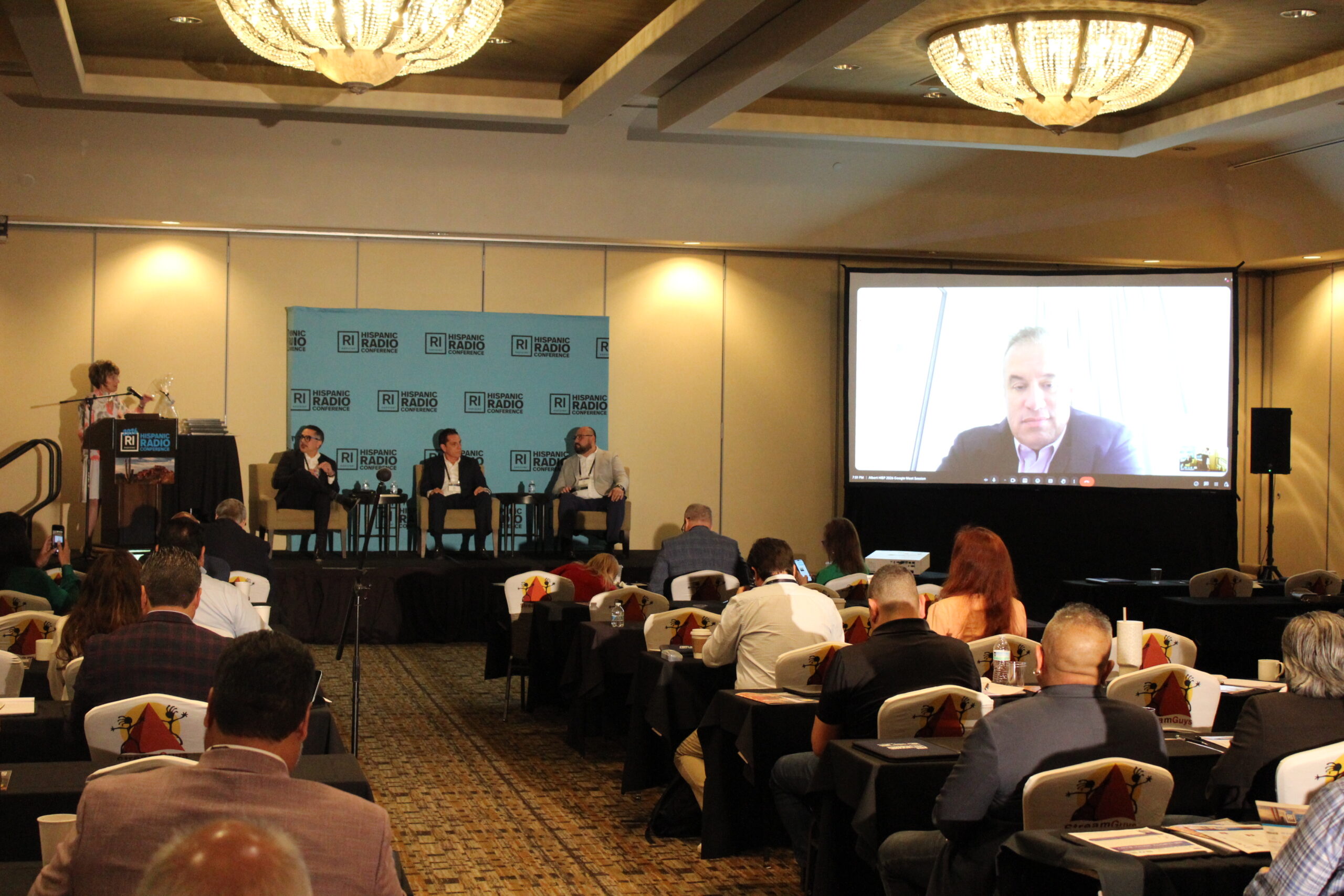
Bustos Media President John Bustos argued the audience’s spending behavior makes the sale self-evident for any advertiser serious about growth. “If your company is at all serious about really growing market presence, this is an audience you can’t avoid,” he said. The pitch, he added, now leads with foot traffic data and campaign response case studies rather than ratings. “It’s not just a ratings issue. The reaction and the engagement of our market is one like no other.”
Norsan Media President Edgar Saucedo called for regional independents to consolidate. “We need to coalesce,” he said, estimating six or seven operators of significance outside the publicly traded tier and citing mixed-format portfolios like those of Lotus and MediaCo as models.
MediaCo CEO Albert Rodriguez used the session’s closing minutes to redirect the industry’s measurement frustrations inward. The challenge of Nielsen coverage gaps and CPM transition pressures, he said, will not be solved by blaming outside parties.
“Stop pointing the fingers at other people when things aren’t getting resolved,” he said. “We are not showing the strength of radio, in particular Hispanic radio right now, when we’re the ones that are driving the growth of population in America.” His instruction to advertisers threatening budget cuts was equally direct. “Cut it somewhere else. You’re not going to cut it with me because I have all this data that shows that I’m growing.”