


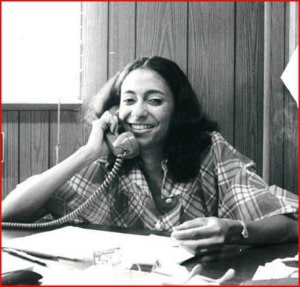
Cathy Hughes is a radio pioneer. She used to have dreams about walking around with a microphone talking to people and having them ask her things. Hughes had a dream of having a megavoice that would reach everybody in the United States. At WHUR she created a radio show called The Quiet Storm which was heard on hundreds of radio stations. And of course, that was just the tip of the iceberg…
 Radio One was launched in 1980 with the purchase of WOL-AM with Hughes’ own cash and money from 10 local investors. Hughes’ relentless desire to succeed in building a company set the groundwork for what we see today, now run by her son Alfred Liggins, a public company with 53 radio stations in 16 markets, a TV One, which is the premiere destination targeting African Americans and an Interactive division. Radio One Founder Cathy Hughes and CEO Alfred Liggins are on the cover of the next issue of Radio Ink magazine. It’s a great success story and here’s an excerpt of what Radio Ink subscribers will read on March 7.
RI: When you started, did you have a vision of the company becoming anything like it is right now?
Liggins: The answer is no, in terms of thinking that it would be this large. I remember when I was in my 20s, writing down on a yellow legal pad the things I wanted to accomplish in life and in business. I still have the piece of paper. At that time, the ambition was to have four or five radio stations in Washington, Dallas, Los Angeles, and Chicago — this was actually before duopoly.
At that time, I also had an ambition to be in the record business. I wanted to have a record label that had a major distribution deal, and that was the extent of the ambition at that time. Then, to look at where we are now, we have certainly gone well beyond that, because life happens to you, right?
It was four radio stations because you couldn’t really own very many, and that was all that, at least, I could see, down the horizon. Although I can tell you that when I was about 18 or 19, I’d always had a dream that one day I’d be involved in a company that was a multimedia company, along the lines of what Universal and MCA were at that time. They had film, they had a television division, they had a music division. It was just a dream. My path had crossed a number of people that worked for Universal when I was living in Los Angeles. I said, “Wow, what a great opportunity something like this would be.” And then you go to work.
Somewhere along the way, things happen, and you end up building this company that somehow was stuck in the far reaches of your brain that you’d thought about in earlier years. That’s kind of how it unfolded for me. Mom obviously has her own thoughts about when she went into business and where she thought she would be.
Hughes: I always thought I would be in charge. I was 18 years old and had come from a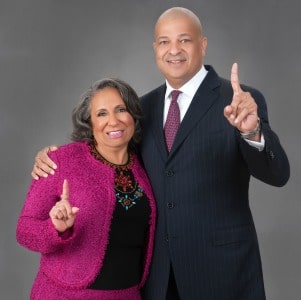 long line of entrepreneurs. My grandfather was an entrepreneur. My father was an entrepreneur. Being in business was not exactly a goal, it was something I just took for granted. I used to have this goal before I reached my teen years of being the first African American woman with a nationally syndicated radio show, and I used to practice in the bathroom, with my toothbrush being my microphone.
I was probably well into my 30s when I realized Hattie McDaniel had not only been the first African American woman to win an Academy Award, she had also been the first black woman to have a nationally syndicated radio show. But I always saw myself in charge. I had never been in a radio station, but I used to have dreams about walking down the hallway, and it was interesting because I would be carrying my microphone, not realizing that you didn’t carry your microphone with you.
But I always had this vision of me walking down the hallway and people coming out of these offices to ask me things. I always saw myself being in charge of this microphone and having this megavoice that would reach everybody in the United States. It’s interesting because as you grow and you mature, you realize that your dreams take on different forms and different meanings. I realize now that this syndication dream of mine as a child actually dealt with being able to reach the entire African American public.
RI: You’ve both created a big, successful company, but you’ve also created a company that is the voice for the African American community.
Liggins: I tell people all the time that I sell advertising. That’s probably what’s going to be on my epitaph. But when I sell advertising, when I talk to clients, I tell them that the difference between doing business with us and doing business with somebody else is that we take our role as a voice of the black community very seriously. This is not just an entertainment platform for us. This is a platform to inform, educate, entertain, and advocate for the African American community. And we do that.
This was started by my mother and her vision. We take positions in support of the black community and use our assets to move issues forward and make things happen. We are not passive stewards of this audience and these assets. We are heavily linked to all the civil rights organizations, local community organizations, business communities — that’s how we view ourselves. We don’t just play records. In fact, the records are actually a means to gather the audience in order to actually empower them and move them forward.
Hughes: And to inspire them and to tell their stories from their perspectives. That’s what’s always been missing. Many years ago I recognized that it’s not someone else’s community and culture that has the responsibility to get your story correct. It’s your responsibility to tell your story from your perspective and have it correct. Oftentimes things that are considered “racism” just are really not understanding the nuances and the idiosyncrasies of a different culture. It doesn’t have anything to do with anyone getting up one morning and saying, “Oh, we’re not going to mention this.” Well, they didn’t know how important that was to your people, to your community. It’s very important, we think, to allow our community to have its story told from its own perspective and for us to get it right.
RI: How does it feel to own a company that’s 35 years old now?
Hughes: I was 33 years old when we opened the doors of the company, with just the one station, WOL. It dawned upon me that I have been in business now half my life. I was like, “Wow!” The interesting thing is, it doesn’t seem like it. It’s as if it was yesterday that we started out. It went so fast. So quickly. So many memories.
Liggins: Yes, it really has. The company was founded in 1980 and I actually joined full-time in 1985, so I have been around for a good chunk of that 35 years, and it really is hard to believe that it’s been that long.
Hughes: It’s been over half your life.
Liggins: I feel fortunate and blessed. They have a statistic that 95 percent of new businesses that get started, fail. The idea that we’ve been in business this long and have continued to be able to prosper, expand, and fulfill a mission is a blessing. It’s really the fulfillment of a dream that we’ve had and that many Americans have, and that very few actually get to see come true.
To subscribe to Radio Ink magazine in time to receive this issue, which also includes 20 Future African American Leader in Radio, GO HERE.