
As of this month, “Welcome South, Brother” is 100 years old. WSB in Atlanta hit the airwaves on March 15, 1922. What’s it like to work at a 50,000-watt legacy station? Radio Ink had a chance to talk with a few leaders and staff at the Cox Media Flagship Station.
Radio Ink: What were your thoughts when you first found out that you would be working at a station with the legacy and history of WSB?
Jaleigh Long, Vice President/General Manager: I’ve been fortunate to work for great companies that value talented people and legacy brands. I couldn’t wait to join the organization that I had heard so much about since I started working in radio in college.
Radio Ink: Does it put more pressure on you working for a station that is so ingrained in the community?
Long: We have a winning culture and pressure is present, but how this team navigates, perseveres, and performs is what separates us from the rest. Sustaining success year after year doesn’t happen by accident. We work hard to earn our audience and our customers’ business, and even harder for growth.
Radio Ink: What is it that has enabled WSB to sustain the success that it has experienced over the years?
Drew Anderssen, Director of Branding & Format Leader: The people. We have a dedicated team that cares about the future of the brand and knows that they are responsible for keeping the success alive today. From a content standpoint, we ask listeners what they want. That may be oversimplifying, but that’s the basic formula. For that formula to work, we constantly evolve as a brand. The success of the product contributes to the results that our advertisers see. And our sales teams have a long history of helping local businesses grow and develop. Ultimately, the two have worked in tandem to contribute to the financial success.
Radio Ink: How does WSB fit into the fabric of Atlanta? How important is the community, the city to making the station a success?
Anderssen: Community service is at the heart of what we do. It always has been, and year after year, we continue to build upon our legacy of positive impact on Atlanta. Community service comes in many forms. Fundraising for charitable causes is certainly a part of it. But it’s also about advocacy and about creating conversations and change within our community’s culture for a better future. That type of community commitment can only happen when you’ve identified a need, developed local civic and business allies, and used the brand to rally audience support for the cause(s).
Radio Ink: Radio has gone through so many changes in 100 years. How has WSB managed to weather those changes?
Anderssen: We’ve been extremely fortunate to have a long line of phenomenal local leaders, responsibly shepherding the WSB brand and taking calculated risks for ‘the long game’ as opportunities presented. Our distribution has evolved, historically at the right time, from AM only to FM and the many digital platforms in which our content can be consumed today.
Radio Ink: What will enable WSB to be around for another 100 years?
Long: Diverse, talented people will keep WSB around for another 100 years. The best ideas for innovation and what the market needs come directly from our team. We have strategic partnerships with business owners who depend on us to grow their business, increase leads, and develop long-term marketing solutions. We have creative relationships with cultural influencers and community leaders to improve lives. We have the credibility to inform on today’s most important issues through news, weather, traffic coverage, and original content. And we have a steady tradition of service to the Georgia community through time-tested campaigns.
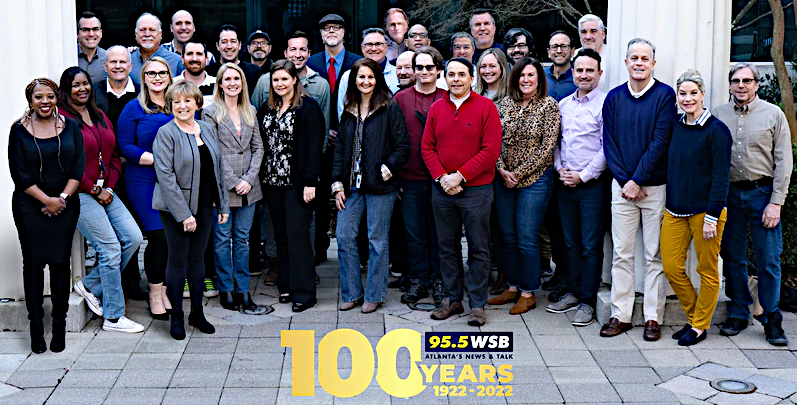
Racking up 100 years of broadcasting, WSB has reported on a wide variety of major local and national events. Some staffers have some remembrances they shared with Radio Ink.
Scott Slade, Host of Atlanta’s Morning News for 20+ years: I think of all the historic moments that have taken place in real time through these microphones. In just my time, that includes the devastating Orly plane crash in 1962 that wiped out Atlanta’s philanthropic community; the birth of the civil rights movement and the voice of Dr. Martin Luther King, Jr., being heard on the airwaves for the first time; the weather emergencies that have paralyzed and galvanized the city; the nonstop hours of broadcasting on and after 9/11/01; the Braves worst-to-first season in 1991; Hank Aaron’s 715th home run; two UGA football championships; and the day-to-day breaking news that makes us one community.
And, then there were the nights as a kid listening to WSB in the 1960s on a transistor radio on my pillow as I fell asleep. I can’t recall specifics, but I can recall how I felt. I felt like I knew what was going on, that Atlanta came home through that little speaker.
Condace Pressley, Former Assistant PD: I have a memory of Hurricane Hugo in 1989. The destruction to South Carolina was so devastating that the only radio signal they could hear was ours all the way in Atlanta. That was back in the day when WSB was a 50,000-watt clear channel signal that could be heard in more than 48 states at night. It was an incredible responsibility to broadcast life-saving information to thousands of people devastated by the storm.
Sabrina Cupit, Anchor/Reporter: I remember 2014 and how WSB played a major role in calming drivers stranded on the interstate in that massive snow and ice storm. During “Snowmageddon,” we were more than a radio station—we were friends with our listeners.
Chris Chandler, Anchor/Reporter: We get ‘I listen to y’all’ or ‘I heard you’ all the time, but after the ice storm that so paralyzed the city it’s now remembered as ‘Snowmageddon’, I had people coming up for weeks to grab my arm and say ‘Thank you!’, both for our coverage and for just keeping them company on a frightening night. ‘A friendly voice,’ one woman told me. It really hit home how much a vital institution this station is.”
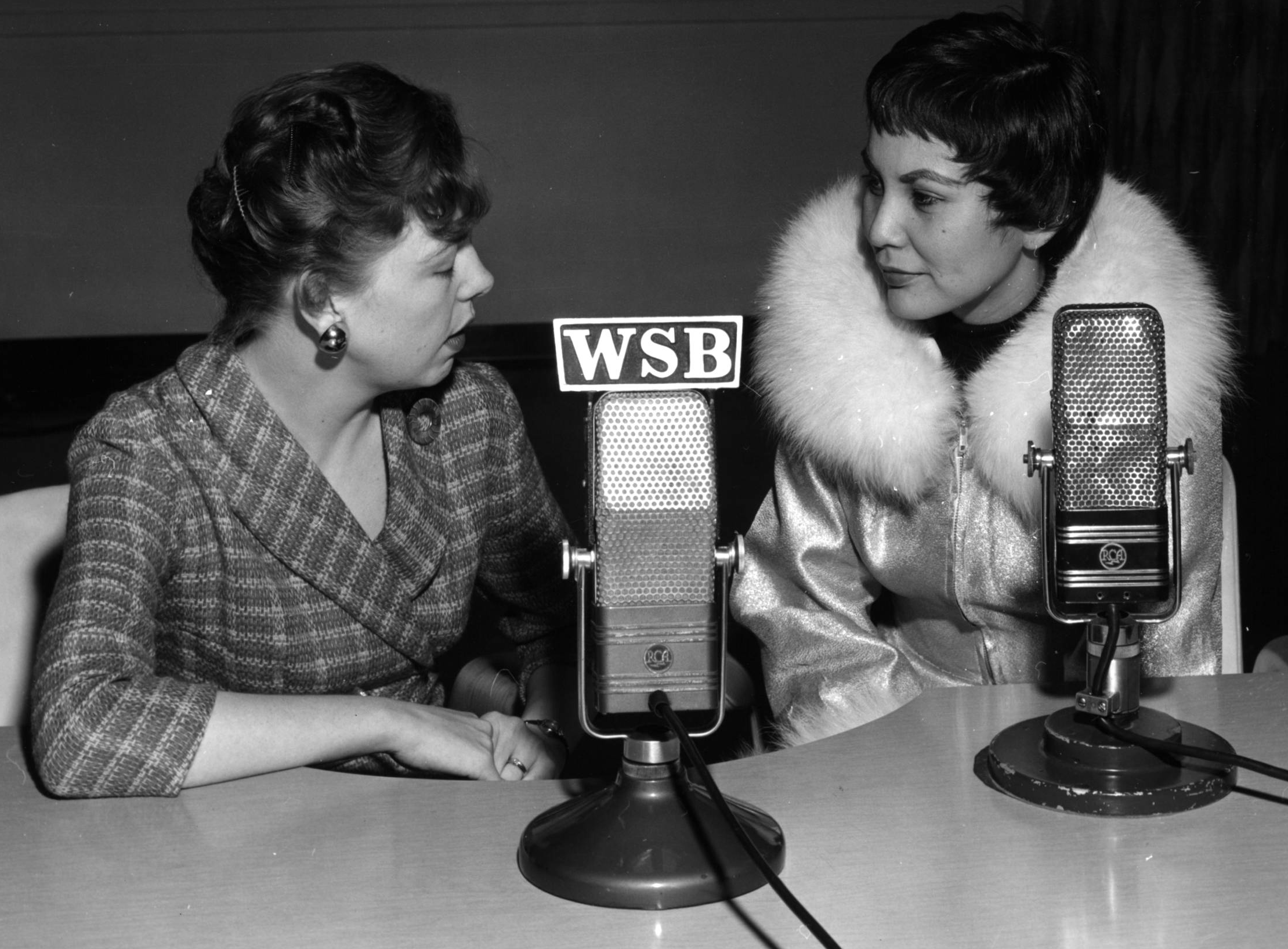
Shelley Wynter, Co-host, “Word On The Street”: While doing show prep and lining up interviews about the George Floyd Atlanta Protests, we hit the air as the riots broke out at 6pm. We remained on the air through 1am. We were able to bring an emotional, real-time coverage of this historic event alongside our news anchors and reporters, while at the same time allowing callers to vent or share their thoughts. It was at this point that I realized that I was employed at a legacy station which had spent 98 years doing exactly what we were doing at this moment. And it was then that I truly felt I had arrived as a talker and newsman I dreamed I could be.