

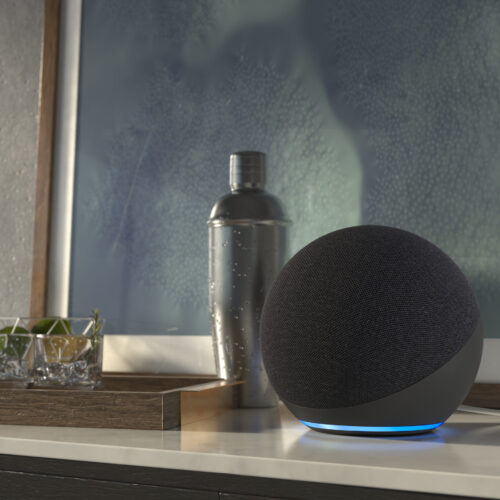
Thirty-five percent of US adults own a smart speaker, and just 6 percent turn to AI chatbots for news, according to a Pew Research Center report that complicates both the threat and opportunity narratives radio has been weighing as AI adoption accelerates.
Pew surveyed 5,119 US adults in February. The results show smart speaker ownership peaked among adults 30-49, with 41% in that group reporting a device, a range that maps directly onto radio’s core advertiser targets. Adults 65 and older reported the lowest ownership rate at 24%.
Chatbot adoption itself has climbed sharply, rising from 33% of US adults in 2024 to 49% today. News, however, remains a peripheral use case. Among chatbot users, 13% said they turn to AI for news. Translated across all adults, that figure lands at roughly 6%.
Radio’s heaviest listeners are the least exposed to AI altogether. Jacobs Media’s Techsurvey 2026 found that one in three P1 radio listeners is now 65 or older. The Pew data shows 77% of adults in that age group report never using a chatbot, and just 20% of that group say they have heard “a lot” about AI chatbot tools.
Search behavior may represent the more direct financial threat. 60% of US adults now say they read AI-generated summaries at the top of search results, a format that displaces the role journalists and content producers have historically occupied in news and entertainment information cycles. That figure reaches 72% among adults 18-29 and still holds at 38% among adults 65 and older.
Public anxiety about AI’s pace runs broadly across age groups. 63% of Americans believe the technology is advancing too quickly, and 40% expect AI to have a net negative impact on society over the next 20 years. Younger adults, often assumed to be more enthusiastic adopters, held similarly pessimistic views, a finding that may complicate station strategies built around AI-voiced talent or AI-generated content aimed at next-generation listeners.
71% of respondents said they believe AI will make their personal information less secure. For stations deploying AI-driven listener targeting, personalization tools, or smart speaker integrations that collect behavioral data, that trust deficit is a pre-existing condition among the audience they are trying to reach.