


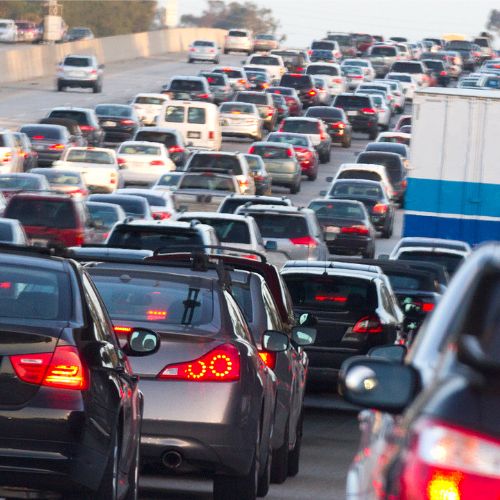
If 2024 brought “The Podcast Election,” will 2026 be known as “The Commuter Election”? New data from 1,000 registered US voters taken in June found that voters stuck in traffic are angrier about the economy and more likely to vote – and radio reaches them first.
Audacy commissioned the underlying survey with YouGov, which found half of likely voters name the economy and cost of living as the single most important issue shaping their midterm vote, a margin more than four times larger than the second-ranked issue, immigration and border security.
Audacy’s argument is that no medium captures that voter better than radio.
Nearly 90% of American workers commute by car, and AM/FM and podcasts account for most ad-supported in-car listening, giving radio a captive audience during one of the most consistent, attentive stretches of a voter’s day. That audience also happens to be unusually engaged with the issue driving this election.
Among radio listeners, 60% name the economy as their top voting issue, versus 58% of podcast listeners and 54% of all likely voters. A separate Ask Suzy survey commissioned by Audacy in July found those listeners were more than twice as likely as non-listeners to cite the cost of living when asked what advice they would give candidates.
That commuting audience is also bigger than it has been in years, which widens radio’s opening. Audacy found 78% of employed Americans commute at least twice a week, 73% three or more days, and 45% five days a week. Placer.ai has reported nationwide office attendance hit a post-pandemic high in June, up 9% year over year and approaching 80% of pre-pandemic levels, while MRI/Simmons estimates 66 million Americans are commuting in 2026, the largest commuting workforce of the post-pandemic era.
Radio and podcast listeners are also more likely to actually vote. AM/FM listeners register as likely voters at an 86% rate and podcast listeners at 87%, both ahead of the 83% mark among all respondents. Audacy points to Nielsen Scarborough data showing radio reaches more self-identified consistent voters in local and statewide elections than linear television and every major streaming or CTV platform, including Amazon Prime, YouTube, and Netflix, a point that tracks with Edison Research Share of Ear data Radio Ink covered in March showing AM/FM commands 64% of ad-supported audio time among registered voters.
The findings come from Audacy SVP of Research and Insights Ray Borelli, who made a similar case for radio’s political strengths in April, arguing All-News stations reach Democrats and Republicans more evenly than cable news.