
The discussion of radio’s need to be more than over-the-air… being more than radio… continues.
It’s really out of necessity that radio become a part of multiplatform content distribution given the ongoing decline of time spent listening to the medium, the inaccessibility of some stations because of an ostrich-like acknowledgement of the audience embracing new technologies, and perhaps a stubbornness founded in pride.
There are many reasons to be proud of radio’s rich history, but we shouldn’t be cherry-picking the moments from the past that reinforce our strength versus other media platforms. Instead, we should be conscious of and embracing the opportunity to be seen and heard everywhere. That starts by being everywhere that media is consumed. Audience habits have changed greatly over the last decade, and where and how they get content is now, in many cases, second nature to them.
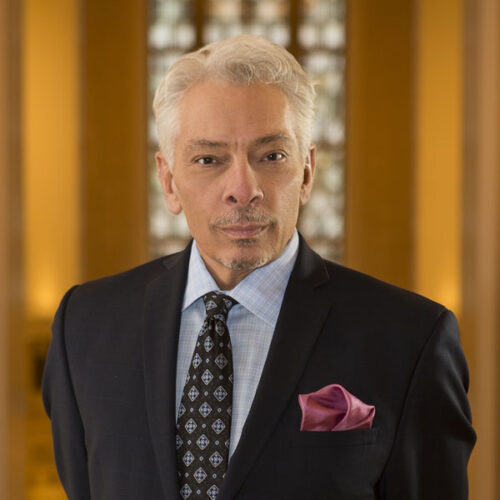
Podcasting is one such platform. Steve Goldstein, Founder and CEO of Amplifi Media, focuses on and offers guidance and intelligence when it comes to podcasting. His Amplifi Media is an advisory firm launched during podcasting’s first wave and focused on helping media companies, brands, and creators navigate a content landscape where audio, video, and social media increasingly converge.
Goldstein also teaches The Business of Podcasting at New York University, which is the first accredited university course dedicated to the podcast ecosystem. Like our guests in Part 1 and Part 2, broadcasting is in his DNA. Steve is acknowledged as co-founder of Saga Communications.
Goldstein started the discussion by declaring, “Podcasting isn’t nice to have. It’s the most effective way to recapture the listening you’re already losing and to keep your audience engaged when they’re not in the car or near a radio. This isn’t about adding an extra platform. It’s about retention.”
We turned the discussion to where some broadcasters make mistakes. That included talent who ramble on their podcast, without the discipline or planning that goes into an OTA show, and they feel it’s an opportunity to say those things the FCC forbids, which may include profanity. I offered up the “Show After The Show” concept, to which Steve replied, “Many shows struggle to fill four hours with great content, and now you want them to do a fifth hour?” Tough to argue against that point when it comes to some shows. Especially when talent are multitasking, and the end of a daily program means they now shift to addressing the other work they have to complete.
To that end, the suggestion that Goldstein made is to go beyond making your show “Audio on Demand,” where a program is turned into a podcast, and build a podcast that’s the best breaks of the day. Use the “Best Of” from that day’s show. Turn the audio and video of those breaks into the podcast. “Too many shows simply drop full, unedited episodes into feeds. That’s not a strategy. That’s a digital junk drawer. Others overload feeds.” Best Of content enables posting the various parts of the episode everywhere.
Video Is Eating the World; in last year’s State of Video Podcasting study (conducted with Coleman Insights), 85% of respondents said a podcast can be audio or video. And YouTube, now the #1 TV network in America, is where the next generation spends its time. If you’re not there, you’re invisible to them. Steve emphasized the research he shared. “Television figured this out years ago.
Saturday Night Live doesn’t just air live. It slices, packages, and pushes its best bits everywhere people watch. SNL makes its highlights shareable and impossible to miss on-demand, bite-sized, and optimized for discovery. Radio has the same opportunity.” We are living in the “clip economy.” Last season, an average SNL episode generated about 9 million television viewers versus roughly 80 million subsequent YouTube clip views—a ratio of nearly 9:1. The audience expects curation.
It’s an opportunity that should be considered seriously. The technology exists today that can help edit a program, create the type of excerpts that Steve noted, and can be quickly distributed to the many platforms consumed by the audience. Parts 1 and 2 of this series touch on but two of the tools that can be engaged to accomplish such expansion. Yet, there will be those that believe their resources are limited, both human and financially, and they won’t invest the time in exploring such advancements. Therein is one of my greatest frustrations.
I do believe that there are opportunities for talent and stations to create uniquely different programs for podcasting that build off of the talent or station’s brand. I am a fan of the HBO program Real Time with Bill Maher. I am a bigger fan of his podcast Club Random. The two programs have one similarity. Bill Maher hosts both. On one, he follows a traditional “Late Night” model where there’s a monologue, discussion with guests, and comedy segments. On the other, he gets stoned while speaking to one guest. While loosely disguised as a format, the show rambles only slightly, and the conversation is always more open and enlightening than a traditional program.
To be fair, it requires a special talent to emulate what Maher does on “Club Random,” but I believe there are talent on radio that have those skills.
Goldstein identified a revenue opportunity and market connectivity angle that can bring success to those broadcasters who are dipping their toe into podcasting. “Your Market Is Wide Open. National podcasting is crowded, but local is underserved. And make no mistake, new players are already entering your market to fill the gap. Graham Media, the former owners of The Washington Post and an early podcast innovator, has City Cast, a podcast and newsletter initiative in 13 markets. Locked On Sports has 210 local daily sports podcasts covering pro and college teams.” The examples continue. We’re seeing more and more broadcasters develop podcasts based on local community news.
Steve put a spotlight on the advantage that radio has with an existing audience, local brand trust, and daily relevance. He warns, “Those assets only matter if you apply the same rigor to creating and promoting on-demand content as you do to your live radio show.” That brings us back to those talent and stations that create a podcast because it’s a company mandate versus a thoughtful strategy with a high level of professional competence.
When it comes to content, he points to the acronym “HVC” (High-Value Content), and he underscores its importance with what should be seen as logical. “The median age of podcast listeners is 39. That’s a generation younger than most linear media audiences. They gravitate toward the cultural influence and personality of hosts they feel aligned with. To reach them, curate, don’t dump. Treat your podcast feed like Netflix: highlight the best content, make it easy to find, and package it for binge-worthiness.”
One of the benefits of interviewing a bona fide professor is the education that comes with it. “Metrics matter; stop chasing artificial numbers. For podcasts, a download is not a listen. An alarming number of podcasts are downloaded but never played. For radio, the recent Nielsen 3-minute rule addition, where three minutes of real listening is credited for 15 minutes, is artificial sweetener. It might look good in a report, but it hasn’t built audience growth or loyalty. It’s a math game competing against second-by-second metrics in video and digital.”
Meanwhile, PUMM levels are declining. Fewer people are listening to the radio at any given moment. Without a strong, intentional digital strategy, your share of attention is likely to continue to shrink. Amplifi Media, Goldstein’s firm, analyzed the 25-54 audience of the top 7 shows in a top 30 market; on average, 59% tuned in one day of the week, and only 18% of listeners caught two days of a morning show. When you add it all up, listeners hear only 17% of a show across a week. Thus, the contention that radio needs to be more than radio.
Steve closed out our discussion by embracing the medium that’s been very good to both of us and with a warning. He said, “I love the radio business. I spent more than three decades in radio and the past decade guiding major media companies, networks, and talent through the transition from linear to on-demand—designing strategies, building workflows, and putting real metrics behind the results.
This is a pivotal moment for broadcasters. The audience is shifting, habits are changing, and the window to seize digital leadership is narrowing. This will not be the right strategy for every show or station, but if you need to be ready to start building a sustainable, high-value on-demand strategy.”
The Goldstein Golden Rule: The Local Podcast Playbook
- A winning approach isn’t just “putting the show online”
- Time-shift with intention
- Capture listening you’d otherwise lose
- Video-first thinking; meet audiences where they already watch
- Strategic curation – post only high-value content, packaged for discovery
- Create a real digital strategy, not as a “bolt-on”
- Treat YouTube, podcasts, and social media as destinations, not afterthoughts