


Far beyond job security and trust fears, AI could pose another threat to radio broadcasters, per FCC Commissioner Olivia Trusty. Trusty warned that AI tools are being used to mine public FCC filings to identify and specifically target communications infrastructure.
“Copper theft is the gateway,” Trusty said at the 4th National Summit on Protecting Critical Communications Infrastructure in Philadelphia. “The onramp to something much more serious.”
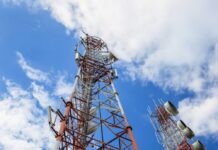
Between June 2024 and June 2025, nearly 16,000 incidents of theft and vandalism targeted US communications infrastructure, disrupting service for approximately 10 million customers. In the first half of 2025 alone, there were 9,770 reported incidents, nearly double the prior six months. More than half of copper theft incidents are concentrated in California and Texas, but Trusty pushed back on any regional reading. In fact, rural America bears disproportionate exposure.
“This is a nationwide crisis that impacts every state and every American in some form,” she said.
As for the AI angle, Trusty outlined four threat vectors: targeting optimization, in which AI mines publicly available data, including FCC filings, to identify high-value network nodes and pinpoint where a single attack causes maximum disruption; operational scaling, which lowers the barrier to coordinating simultaneous multi-site attacks; evasion, helping attackers analyze and avoid detection patterns; and what she called the dark web ecosystem, where AI tools and marketplace access together lower the barrier to entry for organized attacks.
“We are not seeing widespread, confirmed misuse of AI in domestic infrastructure vandalism cases, yet,” Trusty added, “but the trajectory and potential for harm is clear.”
Trust called on Congress to pass H.R. 2784, the Stopping the Theft and Destruction of Broadband Act, which would extend federal criminal protections to private communications networks delivered by wire or radio. Whether traditional broadcast infrastructure falls clearly within the bill’s scope remains an open question, but its broader aim is to close the gap in federal law that currently protects government-operated systems far more robustly than privately owned networks.
Currently, 28 states classify communications infrastructure attacks as felonies; Trusty noted that 22 have not, a gap she said bad actors are actively exploiting.