




By Chris Brunt
Working at Jacobs Media takes me to a lot of college towns, like Madison, Lincoln, Ann Arbor, Columbus, East Lansing, and Charlottesville. Each of these towns has something in common besides a giant football stadium and students carrying around large backpacks and even larger student loan debt. They all have a Graduate Hotel.
Upon entering one of these hotels, you realize that each of the 33 locations is the epitome of hyper-local. The lobby at the Lincoln location has a tribute to Nebraska alum Johnny Carson; a lounge in Columbus has a slew of brass instruments hanging from the ceiling in tribute to Ohio State’s marching band; and in East Lansing, your keycard may be a replica of the student IDs of former Spartans Magic Johnson or Kirk Gibson.
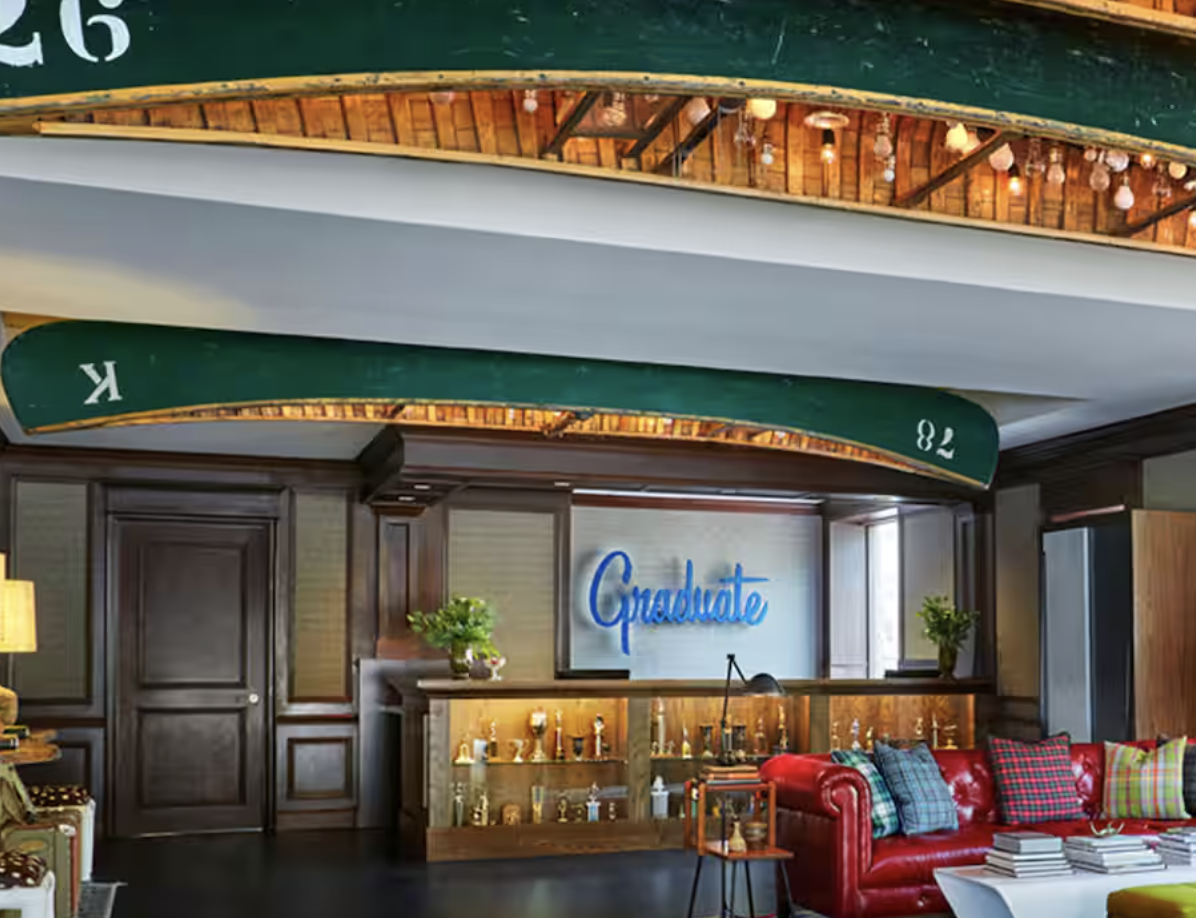
Graduate Hotels were founded a dozen years ago to create a “sense of place” through decor and experiences whose value may be difficult to quantify but is essential to the brand’s differentiation. That investment in localism and customization creates a unique, premium experience, a mission much like local radio’s.
Every year, 2,000 new hotels are built in the U.S., so some homogenization is inevitable among the many brands.
When a guest enters her room, can they tell whether they are in a Holiday Inn Express, a Hyatt Place, or a Hampton Inn? Even the free breakfasts are indistinguishable.
Big hoteliers looking to get travelers hooked on their loyalty programs need a differentiating factor. In 2024, Hilton paid a premium price to acquire the Graduate chain, praising its hotels as “thoughtfully designed to reflect the unique character of their local universities.”
As I stared at my souvenir Kirk Gibson keycard from a recent stay at a gleaming new 10-story Graduate across from the MSU campus, I remembered two questions I am regularly asked when speaking with broadcasters:
“Why should I sell digital when everyone else is selling the same thing?”
“How important is my broadcast product to the sale of digital?”
A station’s broadcast content provides customization that no digital agency, freelancer, Google, Meta, or media competitor can offer. It is what makes radio sellers’ digital offerings distinctive, relevant, and difficult to duplicate. It gives radio’s advertisers access and credibility that digital-only channels lack.
The local component may not represent the bulk of a client’s buy, but it can be the differentiator that ties the campaign together and seals the deal.
Just as a Hilton Honors member may spend most business travel nights at a Hampton Inn but value the occasional stay at a Graduate, a radio client may spend most of a campaign budget on digital inventory available from many vendors. But the station’s local audience, personalities, content, and credibility may be the reason the client entrusts the entire campaign to the radio seller.
Much of the digital inventory may be interchangeable. The station is not.
Chris Brunt is Director of Digital Revenue Generation and AI for Jacobs Media. He has thirty-plus years’ experience in radio programming, digital content creation, and digital sales.
This was originally published in the Jacobs Media AI Edge blog. It appears here with permission from the author.

