
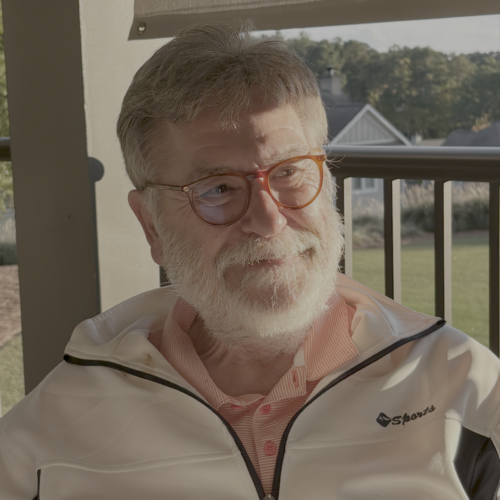
By Greg Tantum
Throughout history, every major leap in communication has been met with a wave of existential dread. When the printing press arrived in the 15th century, cultural elites feared the mass democratization of text would dilute scholarship and rot society’s collective attention span.
Yet, the printing press didn’t destroy literature—it liberated it.
The medium was never the message; the ink and paper were simply the delivery mechanism for the stories, news, and ideas that mattered.
We face a nearly identical psychological barrier today with radio.
The Medium Is Not the Message
For nearly a century, we have conflated “radio” with a physical box sitting on a kitchen counter or a dashboard dial tuned to AM/FM frequencies. But radio has never been about the copper wires, transmission towers, or Hertzian waves. Radio is, and always has been, a delivery platform.
Clinging to the traditional transmission method as the sacred keeper of audio’s soul is like Gutenberg-era critics mourning the loss of hand-copied monastic manuscripts. When audiences migrated from live terrestrial broadcasts to podcasts, streaming apps, satellite radio, and on-demand audio, the panic alarms sounded. Industry traditionalists warned of the death of the medium.
They were looking at the wrong thing. The audience didn’t abandon audio; they simply upgraded their delivery preferences.
Embracing the New Reality
Accepting reality requires a fundamental mindset shift: The transmission tech is fungible, but human connection is permanent. Just as the printing press forced writers to shift their focus from the scarcity of books to the quality of what was written inside them, modern audio platforms force us to look past the signal and focus on the substance. The proliferation of digital distribution channels isn’t a threat to radio; it is its ultimate liberation.
By detaching audio from a localized broadcast tower, creators and communicators can now reach hyper-targeted communities across the globe—or deeply engage micro-neighborhoods with surgical precision.
The Core Mandate: Compelling Content
When delivery mechanisms multiply, the value of the actual content skyrockets. In a crowded digital ecosystem defined by endless choice, mediocre programming gets ignored instantly.
To thrive in this new reality, creators, journalists, and entertainers must refocus on what truly drives loyalty:
- Relentless Authenticity: Communities crave voices that speak directly to their lived experiences, values, and localized needs.
- Uncompromising Craft: Great storytelling, razor-sharp reporting, and genuine entertainment will always cut through the noise, regardless of whether they arrive via an FM antenna or a fiber-optic broadband connection.
- Intentional Community Focus: Instead of broadcasting blindly into the void, modern audio platforms allow us to build reciprocal relationships with defined audiences who feel genuinely seen and heard.
History teaches us that platforms evolve, panic subsides, and culture adapts. The fear surrounding the printing press faded because the content it enabled was too valuable to suppress. The anxiety surrounding the evolution of radio will fade for the exact same reason.
The box may change, the waves may shift, but the human desire to be informed, entertained, and connected remains entirely unchanged.
Greg Tantum’s radio career spans senior programming and editorial roles at Westwood One, Cumulus Broadcasting, KGO Radio, Washington Post Radio/Bonneville, and CBS Radio. Since 1990, he has also run his own consultancy, Tantum and Associates.