


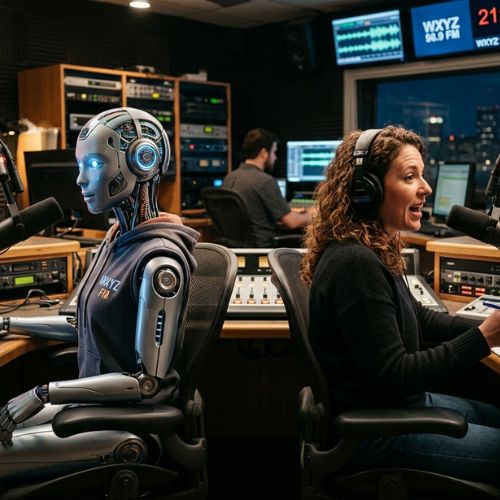
From AI-voiced radio shifts to cloned podcast hosts, the audio industry keeps questioning how far synthetic voices can go before audiences push back. That line is closer than many expected, with listeners recoiling at the idea of an AI stand-in for a favorite host.
Edison Research at SSRS asked US weekly podcast consumers age 13 and older how they would feel if their favorite host started using an AI-generated version of themselves to host the show. Two-thirds (66%) selected at least one negative response.
Deceived and upset tied as the top answers at 33% each, followed by skeptical at 32% and betrayed at 28%. Respondents could choose more than one option. Positive reactions trailed well behind. Excited and impressed each drew 14%, while 12% chose optimistic and 10% said fascinated. Another 18% said they would be indifferent.
The figures come from Edison Podcast Metrics’ Q1 2026 fielding. In June, Edison’s Podcast Consumer 2026 report found that a generative AI voice as host drew the lowest approval of any production use tested, and 62% of respondents called AI at least somewhat of a threat to podcast credibility.
Those results put numbers to Edison’s qualitative Evolving Ear research from January, in which several listeners said they would feel “cheated” or “robbed” to learn a host they believed was human was actually AI. That coverage also cited Sounds Profitable findings showing 47% of listeners would be less likely to keep listening to a favorite podcast if AI voices were introduced.
The findings land as radio’s own audiences send mixed signals. In July, a blind-listening study from Harker Bos Group’s Crowd React Media found 47% of 1,326 weekly radio listeners said a station using AI voices would make no difference, while 33% said they would feel less favorable. In December 2025, iHeartMedia cited internal research showing 90% of consumers prefer their media from real humans, driving its “Guaranteed Human” pledge.
The industry isn’t uniformly against AI hosts, though. Entravision says its Coyotec co-host on José 97.5 (KLYY) in LA drove a 75% weekly cume jump among Hispanic men 25 to 54. The show expanded to five Fuego Network markets in August.
Jacobs Media’s AQ6 survey found 77% of on-air personalities worried about losing their jobs to AI.