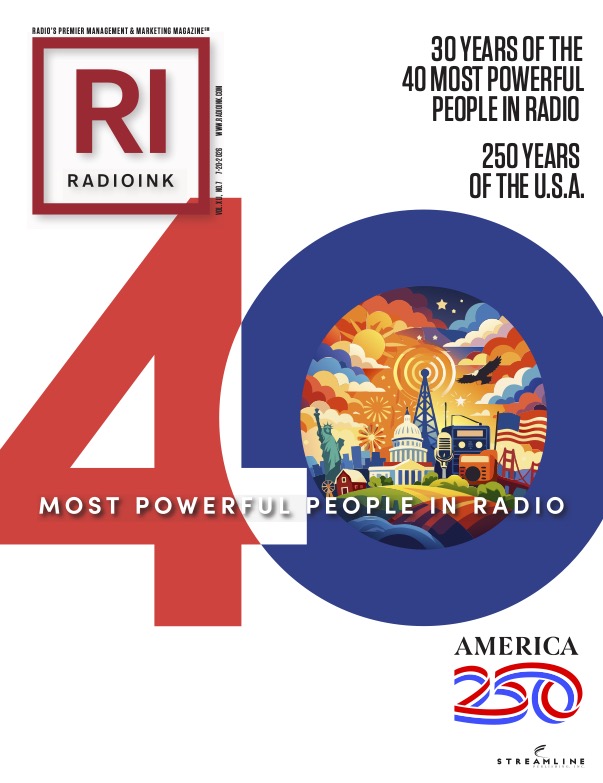



This month’s Radio Ink magazine celebrates managers: the occasional arbiter between programming and sales, liaison between the station and its community, chief complaint officer, and cheerleader for all of the above. Most important, though, managers are guardians of the license that allows the station to operate.
Like so many roles in radio today, however, the manager is becoming something of an endangered species. Some groups are eliminating the position; others are shifting responsibility to regional leaders overseeing multiple markets or states. I am not in those decision-making meetings, so I will not second-guess them. But my experience as a market manager affords me a perspective on why the role remains essential to a station’s success.
At their best, managers are the connective tissue of a radio station — keeping programming, sales, promotions, digital, engineering, and community outreach moving toward the same goal.
It is a role that requires a rare mix of business sense, patience, leadership, and judgment. A manager must support talent, coach staff, listen to advertisers, solve problems, and keep the station mindful of its responsibility to listeners and the community. On any given day, that may mean settling a programming-sales disagreement, meeting with a client, attending a civic event, checking in on an employee, or responding to a community need with urgency and care.
That leadership is difficult to replace because it is rooted in relationships. The best managers know their people, their clients, their station’s strengths, and the market they serve. More importantly, they know how to bring those worlds together.
They are not simply administrators or budget keepers. They also set the tone. They celebrate wins, absorb frustrations, and provide perspective when the pressure is high. And as guardians of the license, they carry a responsibility beyond revenue and ratings: helping ensure the station operates with integrity, serves the public interest, and remains worthy of the trust placed in it.
As the business continues to evolve, the manager’s role may evolve with it. But stations still need someone who can see the whole picture — the revenue goals, the programming ambitions, the people doing the work, and the responsibility that comes with serving a community.
The best managers do more than keep the trains running on time. They create the conditions for a station to matter — to its employees, its advertisers, and the audience that has entrusted it with a place in their daily lives. In an industry built on connection, that kind of leadership is not a luxury. It is essential.