

Stations that spent the fall tracking a Fourth Circuit ruling, two Supreme Court stays, and an FCC comment window now have a third front to watch. The RNC and the Texas GOP are asking a federal court to further widen the lowest rate to political parties.
The Republican National Committee and the Republican Party of Texas, along with four Republican candidates, filed suit in the US District Court for the Northern District of Texas, Amarillo Division, challenging the federal requirement that broadcast stations give candidates their lowest unit charge for political advertising.
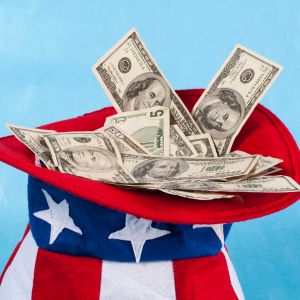
Under the law, stations must charge candidates no more than their lowest rate for the same class and amount of time in the 60 days before a general election and the 45 days before a primary. The complaint says party committees do not receive that rate, even when they run ads about the same race, and argues the split discriminates against parties by speaker in violation of the First Amendment. It also argues the rule burdens candidates who coordinate ads with their party, and that it favors Democratic candidates, who the plaintiffs say generally have more cash than Republican candidates but lack party committees with comparable resources.
The other plaintiffs are Rep. Ronny Jackson of Texas’ 13th Congressional District, Texas Rep. Caroline Fairly, and congressional nominees Jace Yarbrough and Eric Flores.
The defendants are the FCC, Chairman Brendan Carr, and Commissioners Anna Gomez and Olivia Trusty; the Justice Department and Attorney General Todd Blanche; and the Federal Election Commission and Commissioners Shana Broussard and Dara Lindenbaum.
The plaintiffs ask the court to declare the law unconstitutional to the extent it entitles only candidates to the lowest rate, and unenforceable unless parties receive it too. They also want an order barring enforcement that excludes RNC and Texas GOP purchases, independent or coordinated, and barring in-kind contribution enforcement against broadcasters that offer parties the rate or against the committees that accept it. If the court will not extend the rate to parties, the complaint says eliminating it for everyone, candidates included, would also resolve their injury, though the plaintiffs say they prefer extension.
The complaint cites rate differences it says it found in station records. At Amarillo’s KVII-TV, it says a campaign paid $1,050 for a 30-second ad in local evening news while an ineligible advertiser paid $1,300. At Houston’s KTRK-TV, it says ineligible advertisers paid $2,600 for 30 seconds in the 11a news, compared with $400 for a campaign. It says the rate is generally three to 13 times cheaper than the ordinary price of a campaign ad.
Stations have exposure on both sides, according to the complaint. A broadcaster that denies the rate to an eligible buyer faces a penalty of up to $25,000 a day, it says, while one that grants it to an ineligible buyer could face in-kind contribution liability under campaign finance law.
The filing follows a separate fight over FCC Media Bureau guidance issued March 30 saying candidate-party coordinated ads qualify for the lowest rate and independent party ads do not. Four Democratic candidates took the guidance to court in June, and the Fourth Circuit set it aside August 25. The Supreme Court stayed that ruling September 4, the FCC opened a short public comment period September 15, and the Supreme Court stayed a follow-up Fourth Circuit order October 14. The complaint says the government told the Supreme Court the rate does not cover party ads after “mere consultation” with a candidate.