
A federal appeals court has sided with four Democratic candidates, voting 2-1 to set aside a Public Notice from the FCC Media Bureau that would have extended the lowest unit charge to political parties and joint fundraising committees ahead of this fall’s midterms.
The three-judge panel of the Fourth Circuit voted to grant a petition for review filed by former Ohio Senator and current Ohio Senate candidate Sherrod Brown, Georgia Senator Jon Ossoff, former North Carolina Governor and Senate candidate Roy Cooper, and Michigan Rep. Kristen McDonald Rivet.
Radio Ink first reported the lawsuit in June, when the four Democratic candidates challenged a March 30 Public Notice from the FCC’s Media Bureau.
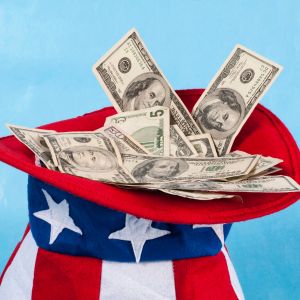
At issue is the lowest unit charge, a statutory requirement that during the 45 days before a primary and 60 days before a general election, stations must charge qualified candidates their lowest advertising rate for the same class and amount of airtime. The Media Bureau’s notice held that the requirement also extends to political parties and joint fundraising committees with non-candidate members in certain circumstances, an interpretation the FCC defended and that the National Republican Congressional Committee and National Republican Senatorial Committee joined as intervenors to support.
In an opinion distributed late Tuesday, Circuit Judge Robert Bruce King wrote that the LUC requirement and campaign finance statutes are clear that neither political parties nor joint fundraising committees with non-candidate members are entitled to the discount, granting the petition and setting the Public Notice aside.
With the ruling, the Public Notice, originally set to take effect September 4, is effectively on hold.
Circuit Judge J. Harvie Wilkinson III dissented, arguing the majority lacked jurisdiction to hear the case at all. Because the FCC was still weighing the candidates’ own application for review of the same Public Notice, Wilkinson wrote that “the Public Notice before us is not a final order,” and that the court could not act until the Commission completed its review.
King’s opinion also found that Media Bureau-level orders are reviewable in court, a position that breaks with a prior DC Circuit ruling in Free Press v. FCC, which held that the Bureau’s clearance of Nexstar Media Group’s merger with TEGNA could not be challenged because the full Commission, including Commissioners Anna Gómez, Olivia Trusty and Chairman Brendan Carr, had not yet voted on it. The resulting split among circuits could give ammunition to parties still seeking to unwind that merger, including California Attorney General Rob Bonta.
The FCC also notified the court that Chairman Carr circulated a proposed order on August 14 to Commissioners Trusty and Gomez that would dismiss the candidates’ Application for Review as an “improper vehicle” for challenging the Public Notice, rather than rule on its merits. The FCC never acted on that April application; the candidates instead pursued the Fourth Circuit petition.