



A Supreme Court stay just reopened the door to a controversial FCC policy change for political party committees and joint fundraising groups to claim candidates’ discounted ad rates on radio, days before the pricing window opens for the general election.
The order paused a Fourth Circuit ruling that had stripped away that eligibility.
On March 30, the FCC’s Media Bureau released a Public Notice reinterpreting the agency’s lowest unit charge, or LUC, rule, extending eligibility beyond individual candidates to political parties making coordinated expenditures and to joint fundraising committees that include non-candidate members. That rule, once it takes effect, lets qualifying advertisers buy broadcast airtime at the same discounted rate the law already guarantees candidates in the weeks before an election.
Four Democratic candidates, Ohio Senate candidate Sherrod Brown, Georgia Senator Jon Ossoff, North Carolina Senate candidate Roy Cooper, and Michigan Representative Kristen McDonald Rivet, challenged the notice in the U.S. Court of Appeals for the Fourth Circuit in June. On August 25, a divided three-judge panel agreed with them. Circuit Judge Robert Bruce King wrote for the majority that neither political parties nor joint fundraising committees with non-candidate members are entitled to the LUC, and the panel set the Public Notice aside as unlawful.
Circuit Judge J. Harvie Wilkinson III dissented, arguing the court lacked jurisdiction to hear the case at all.
The Fourth Circuit itself declined the Republican committees’ request to pause its own ruling and ordered the mandate to take effect immediately. Facing the September 4 opening of the general election’s 60-day discount window, the National Republican Congressional Committee and the National Republican Senatorial Committee asked the Supreme Court to intervene.
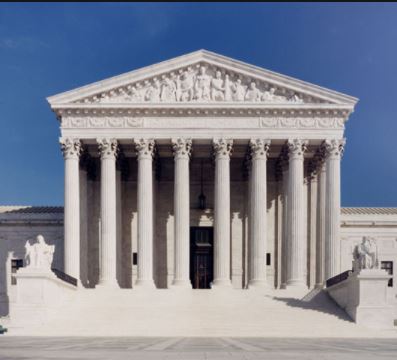
Days later, the justices granted that request. In an unsigned per curiam order issued September 4, the Court recalled and stayed the Fourth Circuit’s mandate pending a possible petition for certiorari, finding the appeals court likely lacked jurisdiction because the candidates’ own administrative appeal was still pending when they went to court. The Court noted that this jurisdictional theory conflicts with rulings from every other circuit that has weighed in.
US Supreme Court Justice Ketanji Brown Jackson was the only member of the Court to note a dissent. She wrote that she was not convinced the Republican committees were likely to prevail on their jurisdictional argument, pointing to a concurring Fourth Circuit opinion and a 2023 Supreme Court precedent on exhaustion requirements.
Lone Democratic FCC Commissioner Anna Gomez criticized the stay, saying it “keeps in effect unofficial and unlawful FCC guidance” that expands the LUC discount to parties and joint fundraising committees. Gomez argued the timing leaves broadcasters and campaigns with almost no time to prepare for the rate change, and warned the ruling could unleash a wave of coordinated political spending on broadcast advertising, with local stations, many already under financial pressure, left to absorb much of the cost.

