
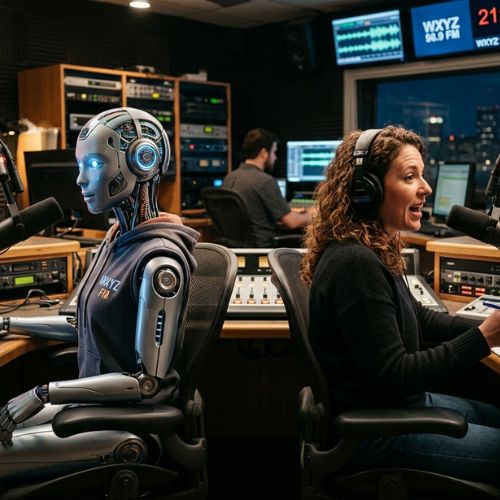
An attorney is warning radio talent that AI voice cloning is becoming a major blind spot and largely unregulated threat in broadcast employment agreements, with many current contracts offering little protection when it comes to protecting talent’s own voices.
Denise Shackelford, founder of the Primacy Law Firm and legal counsel for Country Radio Broadcasters, walked air talent through the risk during a CRS360 workshop. She illustrated the problem with a hypothetical: a morning host loses his job, moves to a new station, then hears an AI-generated version of his own voice still on the air at his previous home.
“Even if the station is setting this up as morning show Mike 2.0 and confessing to the audience that this is, in fact, a voice clone of Mike, that still is not going to be great for Mike. He did not get his job renewed, and yet they’re still having him on the air,” Shackelford said.
The concern Shackelford raised isn’t abstract for most air talent. Jacobs Media’s AQ6 survey, released in 2024, found 77% of on-air personalities worried about losing their jobs to AI, even as nearly three in ten said they use AI tools weekly. Half of respondents viewed AI-generated voices negatively, though 20% said they’d lend their own voice to such a project if compensated for it. A blind-listening study published in July found that more than half of radio listeners couldn’t reliably distinguish an AI-generated voice from a professional human read, though trust dropped once listeners learned which version they’d heard.
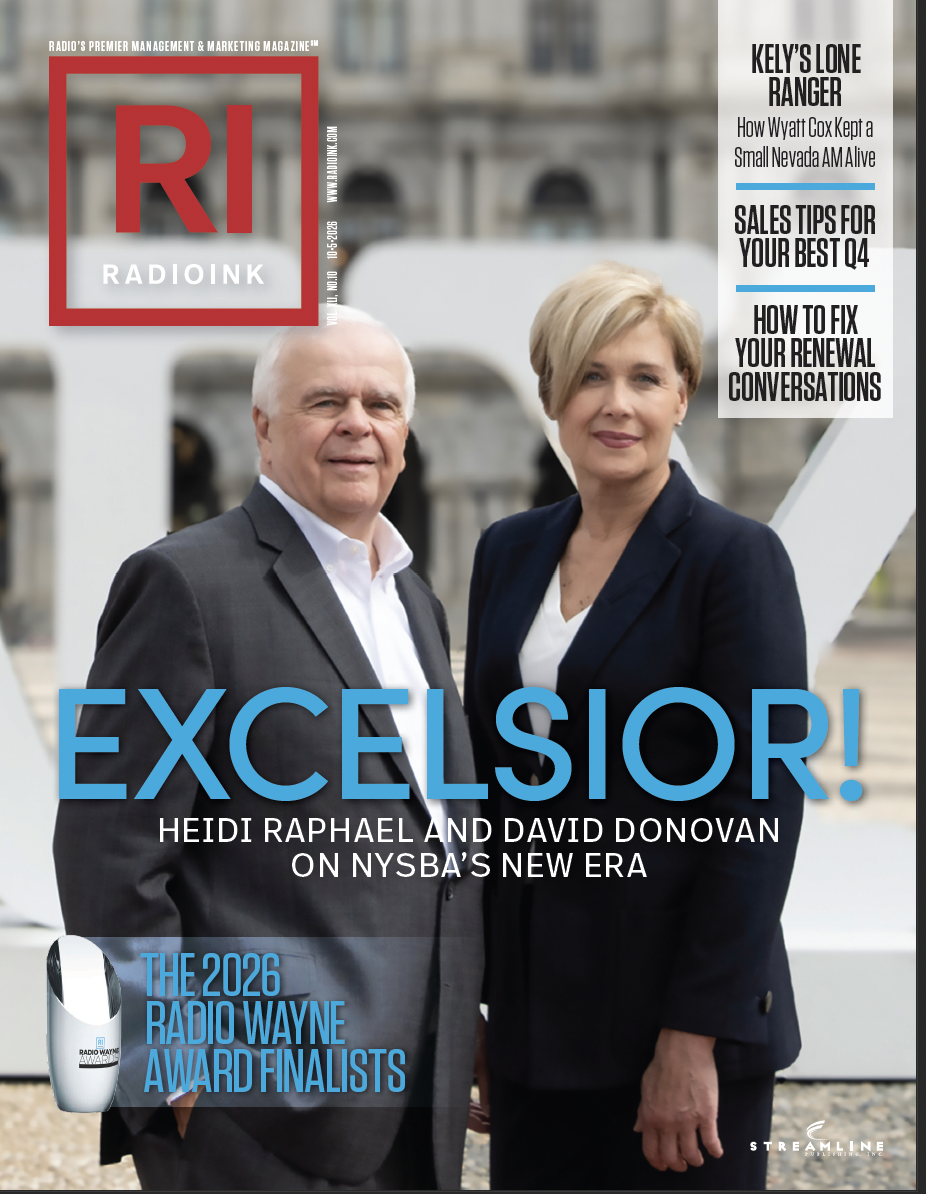
Program directors are already navigating that tension, as covered in this month’s Radio Ink magazine.
She stated contracts need to explicitly bar a station from using or cloning a personality’s voice after they leave, and that most current agreements simply don’t address it. Beyond AI, Shackelford urged talent to think of themselves less as employees and more as a brand to protect, particularly around ownership of the content they create. Most on-air material, from jingles to catchphrases, falls under the work made for hire doctrine and belongs to the station by default, she said, unless a contract specifically carves out exceptions.
She used comedian Jeff Foxworthy’s “you might be a redneck” bit as an example of a catchphrase that could have been tied up by a station if it originated on the air without a clear ownership carveout.
On non-compete clauses, Shackelford said courts have grown increasingly skeptical of broad restrictions that make it difficult for personalities to keep working after their contracts end. “Our courts are more and more kind of pushing back on non-competes. They want them narrowly defined, narrowly in terms of geographically, and then narrow also in terms of the time.”
The same ownership questions extend to podcasts and social media, Shackelford said, where the answer to who owns a talent’s side projects almost always depends on how specifically the employment agreement addresses outside work.
CRB Executive Director RJ Curtis, who hosted the session, said the organization plans to spend more time on AI-related legal questions at next year’s Country Radio Seminar.