

(By Andy Bloom) In a recent column, Sean Ross, author of Ross on Radio Newsletter and VP music and programming of Edison Research, wrote about the discussion about local and national radio the industry needs to have after the coronavirus pandemic.
Why wait? Most executives will never have this much time to reflect on the big picture. And frankly, this discussion is a long overdue.
Sean frames the conversation saying, “The better local through national” camp, which dismisses local as a dated, romantic notion of radio which vanished when Howard Stern won in Philadelphia. Well, I had a good seat at that table. We need to revisit the origins of the Howard Stern Show simulcasts.
The point of putting Howard Stern on WYSP, Philadelphia, and KLSX, Los Angeles, for that matter, was NOT to save money. The objective was to obtain the best morning show possible and create the biggest audience, which in turn, brought more sales and revenue. It just so happened that the best show was on the air in New York and wasn’t available as a local show in Philadelphia or even in Los Angeles.
The solution became simulcasting the Howard Stern Show. Conceiving and executing it required creativity, imagination, chutzpah, patience, vision, and money. The plan was difficult to accomplish. The first conversation I had about it with Howard, WYSP GM Ken Stevens, and Infinity CEO Mel Karmazin was the week of Thanksgiving 1985. It took until July 1986 for Howard to announce the simulcast on David Letterman’s Show. Los Angeles started attempts to simulcast Stern before I arrived in January 1991. It took until July to complete the deal.
WYSP was in a tough competitive situation. We believed “listening in” as we said at the time, to Howard doing his New York show was better then our alternatives. We pioneered the Stern simulcast, and Howard learned how to broadcast to multiple cities. It was successful almost instantly, but it took over four years to top the market and bring the “Victory Funeral Party” to Philadelphia.
We went to KLSX, Los Angeles in 1991, with much more experience. Scott Segalbaum, (the best marketing, and promotions person in the industry) joined me from WYSP. Howard and his crew really wanted Los Angeles. In LA, Gary Garver recorded (using tape) and packaged the show for replay at 6 am. Gary helped localize the show doing wacky interviews as Howard’s Los Angeles’s “Stuttering John.” KLSX was an 18-month rocket ride for Howard, the show, me, and a lot of great people at the station.
The Stern-simulcasts were better local through national, but they were never about “saving money.” Super-agent, Don Buchwald, is the toughest negotiator on the planet. Scott Boras, Drew Rosenhaus, and Ari Gold/Emanuel got nothing on Buchwald. The Howard Stern Show simulcast was many things, but a cost-cutting task was not one of them. The cost of mornings went up significantly in both cities, as did ratings and revenue.
Both WYSP and KLSX won because they committed to air the best product, not reducing headcounts. As another better local through national, but not less expensive talent, Rush Limbaugh, might say, we made a “commitment to excellence.”
Better local through national only works if the listeners believe the content they are receiving is an improvement. There still is only one Howard Stern. There is a lot of mediocre syndicated programming with the dual purpose of satisfying talents’ egos and reducing costs.
Local is still a powerful weapon. WIP, Philadelphia, carries the Eagles play-by-play. The station syncs its broadcast to the TV network on Comcast, the largest cable provider in the region. The ratings demonstrate the massive number of people turn down the national audio to listen to hometown announcers, Merrill Reese and Mike Quick.
Angelo Cataldi continues to do mornings at WIP after 30 years. Angelo sets the city’s sports agenda as no national show could and is among the best radio personalities anywhere. But the WIP Morning Crew is not an inexpensive solution.
Before cutting people who tie stations to the communities, be honest. Dollars aside, are the cuts under consideration for the listeners or shareholders? If it’s the latter, the shareholders will end up paying, as the price of radio stocks recently demonstrate. Making choices that will capture and hold the most massive audiences will increase loyalty and revenue. It may not be the best answer for Wall Street this quarter, but it’s the right answer if the company hopes to be viable long-term.
Saving a few dollars at the expense of content is part of radio’s decade-long death spiral. There is now an infinite number of alternatives where content still is king, replacing programming weakened by cost-saving tasks. Many talented people who help built multi-million dollar brands have found homes on satellite that continue to grow its audience.
The industry would be wise to recall when a commitment to excellence drove content. Remember, the search for the best content, not cost-cutting, is the lesson of the Howard Stern simulcasts. If by now the people leading the industry haven’t figured out they can’t cut their way to prosperity, the boards of directors need to make changes before the companies are lost for good. The post-mortem analysis will rule the industry’s death by suicide.
To close, I would like to acknowledge two companies that are showing a commitment to their employees and markets during these challenging times: NRG and Bonneville.
NRG President, Mary Quass, issued a letter to employees and the industry stating there will be no layoffs during the coronavirus crisis.
Bonneville, President Darrell Brown, also committed not to cut any jobs during the crisis added that the company is, “taking advantage of this time to provide employees with additional training and we hope all employees with extra time will look for safe ways to serve within their neighborhoods and communities.”
Their employees are lucky to work for such class organizations. Ms. Quass, Mr. Brown, both of you and your companies are the leaders this industry should look to for inspiration. Much respect!
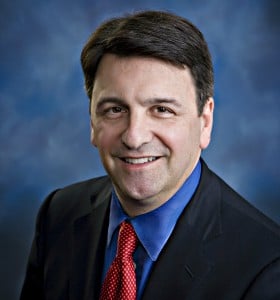
Andy Bloom is president of Andy Bloom Communications. He’s worked for Emmis and Greater Media, as well as communications director for Rep. Michael R. Turner (R-OH). Reach him at [email protected] or visit www.andybloom.com
This article, in addition to being spot-on, brought back great memories. I first heard Stern on KLSX and had a crazy thought: He’d be great on a station I had recently purchased in Las Vegas. My first call was to Andy Bloom, KLSX’s PD. We hadn’t met, but I introduced myself and we got together for lunch. I learned about how expensive the show would be and how challenging it could be dealing with Don Buchwald. So, crazy as I was, it was off to New York and a day dealing with Buchwald and also (via phone) Mel Karmazin.
I returned with a signed agreement for an extraordinarily expensive show. Next step was one of the luckiest in my radio career — asking Andy Bloom to consult and help us launch the show. With Andy’s guidance and road-map (and a terrific first-time GM named Scott Seidenstricker), Stern debuted #1 — 12+, 18-34 and 25-54. The revenue soon reflected that. Of course, there were challenges. First from the FCC. Then some advertisers wanted nothing to do with such a naughty show. But others paid Vegas’ top rates to be part of it. Andy guided us, including Scott and our sales staff, through the challenges. As Andy points out in the article, Stern didn’t help a station save money. But he sure helped us make money. The show did so well for us in Vegas that I later signed up to bring Stern to Reno, where again he did great. We would have done OK without Andy’s help, but not nearly as well. His wisdom, guidance and friendship were invaluable. I’ll forever be grateful.
Well thought out, Andy, and a great read. The President of Southern Broadcasting (Winston-Salem, NC, Richmond, VA, Houston, TX) back in the 70s, Gick Johnson, said it best. He said that radio was a simple business. Get listeners, sell advertising and keep the expenses down. The trick was you had to do it in that order. Profitability by expense cut is a vicious circle…sort of like a toilet flushing.
A great story, Andy, and well told. Local matters, of course, especially in the heart of the pandemic. But a great radio show – especially during a high-commute daypart – can be the difference maker. Ultimately, it still comes down investment in people and content – the two elements that just can’t be faked or mailed in.
Comments are closed.