



Smart speakers gave radio a foothold in the home, and a new forecast says that foothold is holding steady rather than expanding. Apple and more capable AI could shift where listeners tune in next, with connected TVs already gaining ground for AM/FM streaming.
S&P Global Market Intelligence Kagan expects US smart home device shipments to grow an average of 4.6% a year from 2025 through 2030, reaching 105.8 million units, up from 84.4 million in 2025. Shipments are forecast to rise in eight of nine device categories.
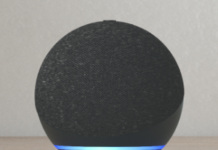
Speakers and hubs are projected to reach 83.8 million installed units, but annual shipments are expected to increase only marginally to 14.4 million as household penetration is forecast to hold at 36%. Lighting is forecast to remain the largest category by volume at 20.4 million annual shipments in 2030, followed by cameras and motion sensors at 18.7 million.
Across the whole market, Kagan expects the US installed base of smart home devices to grow from 398.8 million units in 2025 to 563.7 million in 2030, a 7.2% annual pace. A larger installed base creates a bigger pool of devices ready for replacement.
Kagan estimated that 582 million installed Apple devices worldwide support Siri AI as of the first quarter of 2025, led by 364.0 million iPhones. Nearly 76% of Apple devices shipped in the first quarter of 2026 supported the platform. Kagan said Apple and better AI can create upside, particularly if consumers add more endpoints to established ecosystems or replace older devices to gain new capabilities.
Edison Research Share of Ear data, shared by Audacy, showed AM/FM streaming minutes on connected TVs up 23% since 2020 as of August 2025, compared with 73% on smart speakers. Gen Z accounted for 38% of AM/FM streaming minutes on connected TVs, while Boomers accounted for 38% on smart speakers.
S&P Global Market Intelligence TMT Industry Analyst Neil Barbour said, “Smart home adoption has been gradual rather than explosive, but the category has shown staying power where devices are already installed. That makes the market strategically important for companies like Apple, which can use the smart home to strengthen ecosystem integration and expand AI touchpoints.”