


(By Andrew Colton) I’ve been thinking a lot lately about Keystone Volvo and Suburau — a Philadelphia-area car dealership. That may sound strange for a guy who hosts a daily four-hour morning drive news program in South Florida on AM News/Talk WIOD, but it’s clear to me why. When I became addicted to news radio as a child of the ’80s growing up on KYWNewsRadio in Philadelphia, ads for the dealership aired non-stop. They were creative. They were effective. They engaged. They were a world away from the crude erection, gold, and end-of-the-world ads that have taken over the news/talk airwaves of 2023 — and often air during my show multiple times an hour. I’ve been back in radio for seven months after more than a decade away. It is clear to me that AM radio is fine with its own demise — and the ads are to blame.
The Keystone Volvo and Subaru ads represent why AM radio was successful in the past and made a great station like KYW only better. In the 80s, owning a Volvo was aspirational for half of a news audience that looked at it as a safe, luxury car that maybe someday could be in its future. For the other half, it affirmed that KYW was the right station — it promoted products targeting their socioeconomic demographic. It was a perfect example of radio — and its advertisers — connecting with its listeners.
While I was away from full-time broadcasting, I launched two successful businesses that remain in place. The most important lesson I learned? Make your customers feel important while providing a product that represents their value.
When I’m constantly told that non-stop ads targeting men with erectile dysfunction are perfect for an audience of men over 60 interspersed with PSAs from the NAB demanding that AM radio be saved, I feel as if I’m the only one getting the joke. If you target a demographic with offensive, crude ads, you might as well be digging your own grave. Instead of bringing in younger, engaged, intelligent listeners, — like KYW did with Keystone Volvo and Subaru — AM radio has embraced ads that push desirable listeners away.
No parent in the world wants to explain to their 9-year-old what it means to “Make Sex Great Again,” as one advertiser promotes. That means the days of a parent checking in on the news for ten minutes are gone. The alert tones that once signaled an important story on an all-news station are now used as an attention-getter for a competing national men’s medical practice that promises a special toy as a gift that “you can use in the bedroom.” Ads for these two companies compete throughout the morning on stations nationwide.
Between those ads: ads for Gold IRA’s which the Washington Post recently revealed as being questionable at best. And then there’s a disaster preparedness company that reminds you to buy 2000-calorie food kits to keep in your bunker because the world is coming to an end. The irony: if your bunker is any good, you probably won’t be able to receive AM radio.
Despite messaging from the National Association of Broadcasters, AM radio isn’t just the backbone of the emergency broadcast system. It was — and should still be — a place where communities come together. Instead, it’s become a bad neighborhood. Not because of anything that talk show hosts say, but because of what happens when their microphones are off. Today’s ads undermine the very credibility of the programs in which they air.
It seems to me that AM radio has two choices: complain about automakers killing the product, much like travel agents complained in the days after Travelocity and Expedia launched. Or clean up its act and make it so relevant, so local, that the free market system leads consumers to tell carmakers that they’ll only buy cars in which using AM Radio — or streaming AM Radio stations — is simple.
But that won’t happen until AM Radio stops running ads about “making sex great again,” and instead efforts to make the AM Radio product relevant again.
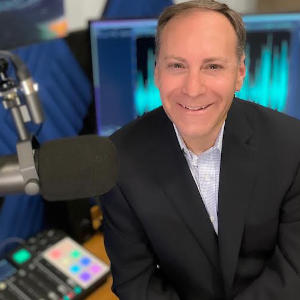
Andrew Colton has been reporting South Florida news since the late 1990s. He served as a lead, late news reporter for WFOR-TV before joining ABC News Radio as a national correspondent. Today, Andrew hosts South Florida’s 1st News on iHeartMedia’s WIOD-AM. He can be reached at [email protected].


Unfortunately AM and FM have too many commercials! And the music is too repetitive. They have a very limited selection of music. That they play. I am talking about the stations. That play music from the last 55 years! The pop stations are expected to do that! Since they only play the new music 🎶
“Not because of anything that talk show hosts say…”
Riiiiiight.
Just another great comment on the shape of radio. In 2023 it’s possible to hear stimulating content without ANY of this (arguably) offensive content. Couple that with mainly irrelevant content (“injured in an accident?”). Time wasting content (12-15 minutes of traffic every hour when you CAN’T solve the issues?).
Jim Schulke and Marlin Taylor went the extra effort to insure that the commercial content didn’t negatively affect the mood their station created. Radio entertainment -in the way it’s consumed by the listener-isn’t much different than a movie or a stage production. Marlon Brando, in “The Godfather” didn’t say “I’ll make him an offer he can’t refuse” and then pass gas. Radio can set up a very deep topic -and then here comes “Kars 4 Kids”. Top 40 radio in the day had Coca Cola and Pepsi running “branding” spots that fit the programming it was in the middle of. “The Real Men of Genius” sold beer like no other. In the 90s and 00’s broadcasters competition was nothing like it is today. Radio seems to think that I can’t tune out and go to Satellite or Youtube audio – but I can and frequently do. When I find something compelling there -it’s a long time before I hit up my local AM or FM station. As Earl Pitts would say (before he retired) “WAKE UP UHMERRIKA”.
Let’s not forget about the ads your company runs promoting podcasts on the IHR app. It’s almost like they don’t want you listening to radio anymore.
Nicely stated, Andrew. Couple of things. Unfortunately, AM will never draw younger listeners in desirable demos. Those subway cars left 59th Street/Columbus Circle awhile ago. Its only hope is serving upper middle age and older folks, many of whom have stopped listening but would return if they had a good reason.
Which brings me to my second point. Andrew, you say AM’s become a bad neighborhood “Not because of anything that talk show hosts say…” I beg to differ. The misinformation, disinformation, outright lies and visceral hate being spewed over so many AM (and FM) frequencies screws up our radio neighborhood far more than ads advising how to put more bang in one’s boxers.
Most readers of this column recall good, engaging talk on AM. Larry King on Mutual. Jim Bohannon. Jean Shepherd. Bruce Williams. No bias. No bombast. Good listening. And currently we have Clark Howard and Dave Ramsey who fit that description. Plus, there’s the ageless Cousin Brucie and his weekend oldies show with terrific special guests. Tremendous listenership and well-sponsored.
Who’s to say there aren’t successors to these folks out there, waiting to be signed to syndication contracts? What if they become the new voices of the senior band? Sure, a certain segment of the AM audience will still tune, in to those who will tell them how to think today. Right now there’s really no alternative other than religious stations and ethnic (Spanish, Korean, etc) broadcasters. But what if there were?
The debate about AM radio and FM Translators often gets mis-directed. AM in smaller communities is different than those owned by large and niche companies in large
rated markets.
In many smaller markets, an FM translator added to a local AM is a life saver. In many cases the programming has been outstanding, but local businesses have believed that no one listens to AM. Thus, AM locally (and certainly not from national) had/has no advertisers and over time can not be viable. ADD an FM translator rebroadcasting the same AM programming and the local businesses become interested and are willing to spend. Thus, good programming is preserved and the
public is served. It’s not bad programming…it’s the fact the businesses don’t believe that anyone listens to AM….even though Nielsen says almost 50% do in Chicago.
In major markets there are the well known brands….WGN, WLS, etc, etc…and there are tons of niche formats (religious, ethnic, etc) that can survive. Those usually do not exist in small towns. They fit in large communities.
FM Translators in small towns keep AM programming in place and viable and make local advertisers happy. How bad is that.
Dare you to publish this. Agreed – commercial content is infotainment. Agreed – no standards for decency in radio any more – thank you Howard. Agreed – Dick Orkin broke the mold. DISAGREE In Real Life Radio weekly reach holding at 80% +. TV weekly reach below 50% . Fake News ? Digital is the future with Digital response To any display ads 0.1%. Radio is the Reach Activator.
By the way, those Keystone spots way back when we’re written and performed by the great Dick Orkin and the Radio Ranch.
To be fair, I hear the same ED commercials on FM. Granted, they’re on “sports talk” radio, but still……
Comments are closed.